
China VAT Invoices: Special vs. Ordinary
Understand special and ordinary Chinese VAT invoices, distinguish digital formats and choose the right invoice or company check.
Start with the Chinese legal name or USCC. Confirm the matching company before opening its profile.
A Chinese ordinary invoice is not a lesser version of a special VAT invoice. Both are tax-invoice categories. Their uses differ, particularly for input VAT deduction, but the words ordinary and special do not tell you whether a particular document is genuine or a supplier is trustworthy.
If a supplier asks which fapiao you need, or sends a type you did not expect, start with the Chinese title and the purpose of your request. This guide compares common Mainland Chinese VAT invoices for overseas buyers. It helps you identify the document, clarify what your finance team needs and move to the appropriate invoice or company check.
1. Identify the invoice category
The two expressions to recognize are 增值税专用发票, special VAT invoice, and 普通发票, ordinary invoice. In English-language supplier portals, an ordinary VAT invoice may also be called a general VAT fapiao. That translation does not mean the supplier has general VAT taxpayer status.
Keep the Chinese title beside the English description in your records. It resolves a surprisingly common ambiguity: one colleague says “general invoice,” another says “normal invoice,” and a third assumes they are discussing three different documents. Compare their original titles before asking the supplier to issue anything again.
| Wording to find | Meaning in this guide | Useful first action |
|---|---|---|
| 增值税专用发票 | Special VAT invoice | Record the category and confirm the intended recipient and use. |
| 普通发票 | Ordinary invoice, often called general fapiao | Keep the original title; do not reject it because of the English word “ordinary.” |
| 电子发票 followed by a category in parentheses | An electronic invoice whose title identifies its category | Read the parenthesized wording as well as “electronic invoice.” |
The national verification platform's invoice classification describes ordinary and special VAT invoices and their electronic forms. Use these labels to classify a received document. A file named “VAT invoice.pdf” or a salesperson's English description may leave out the very distinction you need.
If the heading is cropped or blurred, request the complete original file. Do not infer the type from its colour, a visible tax amount or the presence of a stamp. Those visual clues are a poor substitute for reading the title. If the file is actually a commercial or pro forma invoice, use the fapiao and commercial invoice comparison first.
2. Understand the different uses
The main distinction concerns tax use. A special VAT invoice can serve as an input VAT deduction document under the applicable rules. An ordinary invoice generally does not perform that function, although tax law provides exceptions for specified transactions. The tax authority's explanation of the two categories expressly preserves those exceptions.
That is different from saying a special invoice guarantees a deduction. The recipient, transaction and applicable rules still matter. It is also different from expense reimbursement: a company's decision to reimburse an employee and its ability to deduct input VAT are separate questions. Ask finance which requirement it is trying to satisfy.
| Question | Special VAT invoice | Ordinary invoice |
|---|---|---|
| What category is it? | A tax invoice with a specific VAT function. | A tax invoice used to document transactions. |
| Does it settle input VAT deduction? | It may support deduction when the applicable conditions are met. | Generally not, with exceptions under the tax rules. |
| Does its title establish authenticity? | No. The particular invoice still needs checking. | No. The particular invoice still needs checking. |
| Does it prove a reliable supplier? | No. Company identity and transaction performance remain separate. | No. Company identity and transaction performance remain separate. |
For an overseas purchasing team, the useful question is often more concrete than “Which one is better?” Specify who will receive the document and what it is needed for. Your overseas head office, a Mainland subsidiary and an employee submitting expenses are different recipients; do not transfer one recipient's requirements to another without checking.
Consider a hypothetical request from a finance colleague: “Please obtain the special invoice.” Before forwarding it, confirm the exact buyer name to appear and why this category is required. If the purchase belongs to a different entity, substituting a related company's details is not an administrative shortcut. Resolve the purchaser and purpose with finance and the issuer.
Likewise, a document can be readable and match an invoice record while still failing to answer an internal accounting question. Record the successful comparison accurately, then send the unresolved question to the person responsible for that use. Repeating an authenticity lookup will not establish a recipient's tax treatment.
3. Separate category from format
“Electronic” describes the form, while “special” or “ordinary” identifies the category. The State Taxation Administration's nationwide digital-invoice announcement, effective from December 2024, includes both special and ordinary fully digitalized invoices and gives digital invoices the same legal effect as paper invoices.
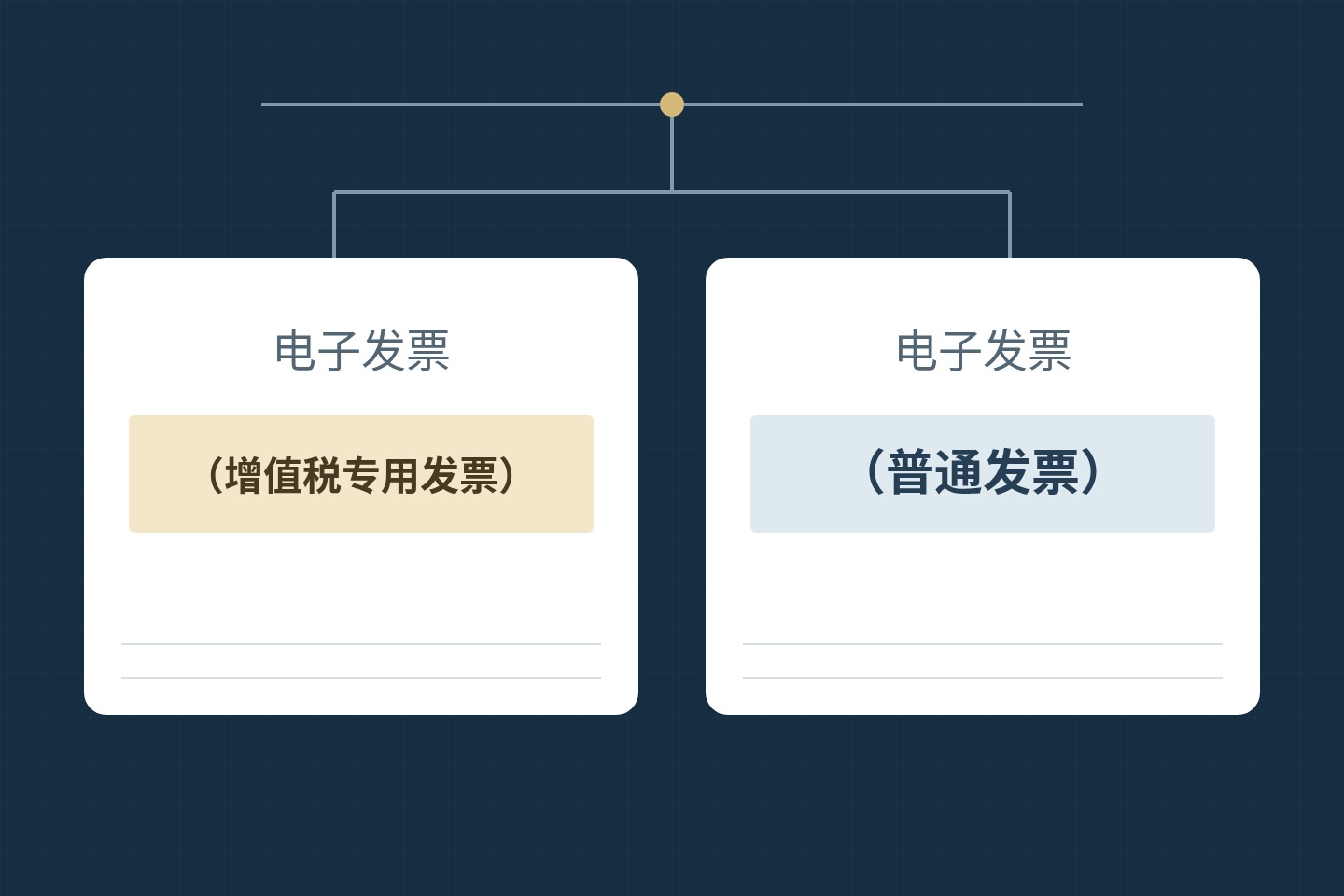
The two common fully digitalized titles are 电子发票(增值税专用发票) and 电子发票(普通发票). Reading only the first four Chinese characters loses the category. Conversely, reading “special” does not tell you that the document must be a traditional paper form.
| Dimension | Examples | What it helps establish |
|---|---|---|
| Invoice category | Special or ordinary | The type stated in the invoice title. |
| Issuing form or system | Paper, earlier electronic, fully digitalized | Which document layout and verification instructions apply. |
| File supplied to you | A PDF attachment or a photograph | How you received the information, not its tax category. |
A practical example appears in AWS China's digitalized fapiao guide. It explains that customers can receive either general or special digitalized fapiao, and describes its delivery of XML and PDF files. Those are that issuer's arrangements, but they demonstrate why “PDF invoice” cannot identify a single category.
AWS also explains that its digitalized invoices omit the seller-seal field used on older paper forms. An unfamiliar layout therefore deserves identification before judgment. Do not ask a supplier to paste a seal image onto an electronic file merely to make it resemble an older example. Retain the file as received and check its actual record.
Picture two hypothetical attachments. Both are PDFs and both have electronic-invoice titles, but one title specifies special VAT and the other ordinary. The attachments share a delivery format while their categories differ. Now print one of them: the printout does not turn an ordinary invoice into a special invoice.
When a supplier sends a screenshot instead of the original, ask for the original electronic file if available. That improves legibility and preserves useful details. It does not decide the category for you. For the separate upload task, the invoice PDF guide explains how to move from a received file to verification.
4. Resolve common supplier questions
Most confusion can be resolved by identifying the missing fact before requesting a replacement. The following situations are illustrative, not accounts of actual customers. None assumes that every overseas purchase requires the same Chinese tax document.
An unexpected ordinary invoice
Start by checking what you requested. If the order correspondence only asked for an “invoice,” the supplier and buyer may have understood different things. Confirm the document's intended use, the named purchaser and any agreed category. An ordinary title alone is not evidence that the supplier sent a false invoice.
If finance needs a different document, describe that need precisely rather than asking for a “more official” version. For example: “Our finance team requested [invoice category] for [purchaser and purpose]. Please confirm whether the attached invoice meets that request and explain the appropriate correction process if it does not.” Keep any correcting documents with the original.
Special invoices as proof
A supplier might say that issuing a special invoice proves it is a general VAT taxpayer. That inference is unsafe. The tax authority's 2026 announcement allows small-scale taxpayers, in the stated circumstances, to forgo relevant relief and issue special VAT invoices. The title alone cannot establish the issuer's taxpayer category.
If that status matters to your supplier record, use the separate VAT taxpayer-status guide. It addresses the company qualification and relevant dates. Keep that answer separate from checking one invoice, and do not treat either answer as a grade for manufacturing ability or delivery reliability.
The word “general”
Clarify whether the sender means a general fapiao or general taxpayer status. These phrases sound related in English but identify different things. A short reply can remove the ambiguity: “Do you need an ordinary invoice, or evidence of our supplier's VAT taxpayer status?” Keep the corresponding Chinese term in the message if useful.
For example, a procurement form might contain a box labelled “VAT status,” while an email requests a “general invoice.” Uploading the invoice to both fields does not explain whether the form requires qualification evidence. Ask the form owner to define the field rather than inventing a conclusion from a familiar English word.
Buyer and purpose
Before requesting a change, name the entity that actually bought the goods or services. Check whether the document concerns your order or something the supplier bought upstream. If your supplier appears as buyer, the seller on that invoice may be another company. The document's category does not resolve those transaction roles.
A useful request states three things: the order concerned, the purchaser's correct details and the document's intended use. Let the issuer explain any applicable requirements. Do not invent a Chinese tax identifier for an overseas customer or borrow another company's number to fill a form. The invoice field guide helps locate the two party blocks.
5. Check the invoice and issuer
Once the category is clear, choose the next check from the question still open. If you need to establish whether the invoice details match a recorded invoice, use invoice verification. If you need to establish who the seller is, use its company identity. A translated title is useful orientation, but it does not complete either task.
- Verify the supported invoice. ChinaValidate Invoice Verification supports standard Mainland VAT ordinary and special invoices, including their electronic and fully digitalized versions. Follow the fields requested for the actual type. The verification guide covers the detailed inputs and returned results.
- Identify the invoicing company. Take the seller's Chinese name and taxpayer identifier from the seller block. Use Company Search to investigate that Mainland entity. Do not use the invoice number as a company identifier or substitute the purchaser's details.
- Use the licence when relevant. If the supplier provides a business licence, Business License Verification offers a separate comparison with company information. It does not determine the tax treatment of the invoice or replace the invoice check.
Our invoice tool does not support every document carrying the word fapiao. Retail receipts, toll invoices, vehicle invoices and air or rail tickets are outside its stated coverage. An unsupported document needs the appropriate route; it should not be labelled false because this particular tool cannot check it.
For a clear handover, keep the original file, its Chinese category, the purchaser and seller, the check performed and any remaining question together. A colleague should be able to see whether you identified the type, compared the recorded invoice or investigated the company. Then the next request can address what is actually missing.