
Fapiao vs. Commercial Invoice in China
Understand the difference between a Chinese fapiao, a commercial invoice and a pro forma invoice, and choose the right way to check each document.
Start with the Chinese legal name or USCC. Confirm the matching company before opening its profile.
A Chinese supplier may send you a pro forma invoice, a commercial invoice and a fapiao for different purposes. The word “invoice” does not make them interchangeable. A fapiao belongs to China's tax-invoice system; a commercial invoice is a trade document, while a pro forma invoice normally sets out a proposed transaction. Identify the document before choosing how to check it.
For an overseas buyer, the practical question is: does this file describe the offer, document the sale for trade purposes, or represent a Chinese tax invoice? That distinction helps you ask for the right document without treating an unfamiliar format as evidence of fraud.
Three documents, different purposes
“Fapiao” is the pinyin rendering of 发票. In this guide it means a Mainland Chinese tax invoice. China's invoice administration measures define the documents within their scope and place them under tax-authority administration. They recognize both paper and electronic invoices. Fapiao is therefore not simply a Chinese name for any PDF a supplier calls an invoice.
| Document | What it is for | What to compare |
|---|---|---|
| Pro forma invoice (PI) | A proposed sale, with quoted goods, prices and terms. | The agreed quotation, quantities, payment terms and proposed delivery. |
| Commercial invoice (CI) | Trade documentation for the sale, including information used for customs clearance. | The order, seller and buyer, goods, value and relevant shipping documents. |
| Chinese tax invoice (fapiao) | An invoice issued under China's tax-invoice rules. | The relevant tax-invoice record and the transaction it is supposed to describe. |
The International Trade Administration describes a pro forma invoice as a quotation in invoice form. It may help a buyer arrange matters such as import licensing or a letter of credit. Receiving one does not, by itself, show that the goods have shipped or that payment has been received.
A commercial invoice provides information used in export and import clearance, including the value on which customs authorities may assess duties and taxes. Specific requirements depend on the destination. A Chinese VAT-invoice lookup is not a general register of suppliers' commercial invoices.
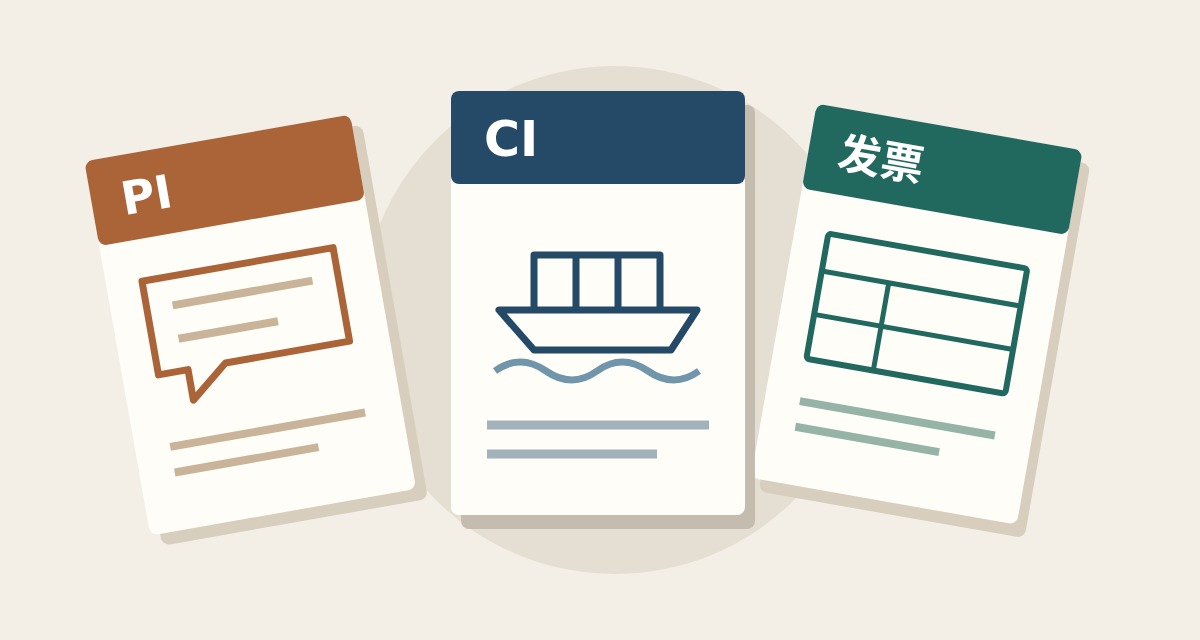
These documents can relate to the same purchase without being substitutes for one another. Nor should the comparison be read as a rule that every cross-border order must produce all three. The documents required for your transaction depend on its circumstances and the relevant trade, tax and accounting requirements.
Recognize the file you received
Start with the title and the fields inside the document, not its filename. A file called “invoice.pdf” gives you little information. A pro forma invoice may prominently show proposed payment and delivery terms; a commercial invoice may include shipment and goods information. Ask the supplier to identify the document if the title and contents leave its purpose unclear.
On a Chinese VAT fapiao, look for the invoice type and the seller and buyer fields. Common fully digitalized VAT invoice titles include 电子发票(增值税专用发票) and 电子发票(普通发票). Keep the original Chinese wording when asking which type you have; a translated heading can lose a useful distinction.
For fully digitalized fapiao, the invoice identifier is a 20-digit number. Older VAT formats may show a separate invoice code and invoice number. The seller's taxpayer identifier is another field: it identifies the business, not this particular invoice. Do not use a purchase-order reference or seller tax number as if it were the invoice number.
The appearance of a fapiao has also changed. The tax authority's explanation of fully digitalized invoices describes flexible presentation and XML, PDF and OFD formats. One actual issuer, AWS China, explains the 20-digit number and the removal of the seller-seal field from its digitalized fapiao. A missing familiar stamp or a different file format is not enough to decide whether a document is genuine.
Equally, an official-looking heading is not proof. Chinese text, a logo or a stamp image can be copied. Use appearance to identify what the document claims to be, then verify that claim through the appropriate route.
Match the check to the document
For a supported Chinese VAT fapiao, use the applicable tax-invoice verification channel and compare the returned details with the original. The Chinese VAT invoice verification guide explains the number, date, amount and verification-code combinations. It also covers the difference between a matching result, inconsistent details and a missing record.
For a commercial or pro forma invoice, start with the company and transaction documents. Does the named seller match the supplier you agreed to buy from? Do the items, quantities, currency and terms match the order? A Chinese tax-invoice search cannot answer those questions merely because the supplier's file has “Invoice” at the top.
Consider a hypothetical first order. A supplier sends a PI requesting an agreed deposit, and the buyer tries its reference in a VAT-invoice search. That is the wrong check for the document. The buyer needs to confirm the offer and supplier details and follow the agreed payment checks. The failed lookup does not establish that the PI is fake, and the existence of the PI does not establish that paying is safe.
If a tax invoice is later supplied, check that document on its own terms. A matching fapiao does not independently confirm shipment, product quality or permission to pay a different company. If the invoice seller differs from the supplier, the supplier-name mismatch guide explains how to investigate the two identities.
Ask for the document you need
Instead of asking vaguely for a “real invoice,” explain the purpose. You might need a pro forma for the proposed order, a commercial invoice for shipment documentation, or clarification about a Chinese tax invoice. State the buyer details and order reference that should connect the response to your purchase.
A simple request is: “Please confirm whether the attached file is a pro forma invoice, a commercial invoice or a Chinese tax invoice. We need it for [purpose]. If it is a Chinese tax invoice, please send the original electronic file and confirm the invoice type.” This is example wording to adapt, not a claim that a particular document must be issued for every overseas order.
Once you have identified a supported tax invoice, use ChinaValidate's invoice verification tool and compare the response with the file. If the unresolved question is who the seller is, begin a company search with its Chinese legal name or identifier. Choosing the check starts with knowing which document is in front of you.