
China Pro Forma Invoice Checks
Read a Chinese supplier’s pro forma invoice with two worked examples covering quantity units, deposit calculations, seller identity and revisions.
Start with the Chinese legal name or USCC. Confirm the matching company before opening its profile.
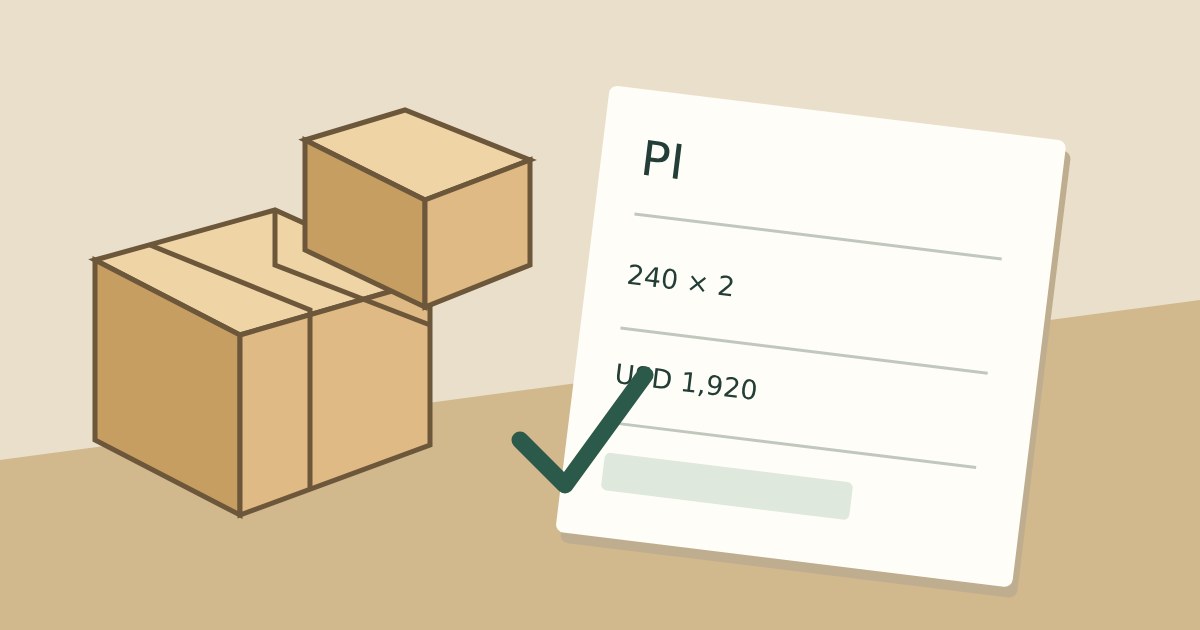
A supplier sends a pro forma invoice with a tidy total and a request for a deposit. The arithmetic looks right. Yet the purchase order says “sets” while the invoice says “pieces,” and the delivery promise starts from an event nobody has defined. These are useful problems to find before the order moves forward.
Checking a China pro forma invoice means reading the proposed order, identifying its seller and resolving the terms that remain open. There is no Chinese tax-invoice lookup that authenticates every supplier quotation called a PI. A company check helps establish who the seller is; the actual order still needs its own review.
This guide uses two fictional purchases to show that review in practice: a small order of stock goods and a custom production order. The illustrations are teaching worksheets, not real invoices, customer transactions or official templates.
A quotation in invoice form
The US International Trade Administration describes a pro forma invoice as a quotation presented in invoice form. It can supply information a buyer needs to arrange a proposed import. That explains why a PI often arrives before production or shipment and carries payment and delivery terms.
Do not infer the document's legal effect from its title alone. An order can also involve a purchase order, accepted quotation, correspondence and a separate contract. If the PI will be your main agreement, obtain advice on the applicable law and the terms you are accepting. Calling it “pro forma” is not a reason to ignore obligations.
A PI is also different from a Chinese tax invoice, or fapiao. Do not enter its order reference in a VAT-invoice verification tool and interpret the absence of a tax record as fraud. Our invoice comparison explains the document categories. Here the task is narrower: make the proposed purchase clear enough to check and agree.
The stock-order example
Imagine buying reusable storage boxes from a Mainland Chinese seller. Your purchasing note requests 240 sets, with two boxes in each set. The supplier's first PI lists 240 pieces at USD 8 each. Both sides may see a total of USD 1,920, but they have not necessarily priced the same quantity.

Ask for the unit to be stated explicitly: 240 sets, two boxes per set, USD 8 per set. That describes 480 boxes. It does not mean the supplier must accept that price; it makes the disagreement visible so the parties can settle it. Do not silently reinterpret “pieces” in your own approval sheet.
The product description also needs a useful reference. A product photo may show color but leave dimensions, material or included accessories unclear. For this fictional order, attach the agreed stock-item specification and identify its version. If the offer includes lids, write that down. A photograph with an accessory in the background is a poor substitute for a stated inclusion.
Next compare the total with what the quote actually covers. If USD 1,920 is only the goods value, separate freight, insurance or other agreed charges. Do not assume a headline total covers delivery to your warehouse. Currency symbols are another avoidable ambiguity: record USD if that is the agreed currency rather than leaving an unexplained dollar sign.
This example needs a corrected quantity unit and a clear description, not a longer company report. Registration information cannot decide how many boxes belong in a set. Keep that distinction when assigning follow-up work: procurement resolves the order description; the company check resolves the seller's identity.
The custom-order example
Now consider a fictional custom order: 1,000 units at USD 12 each, plus USD 600 for a separate setup charge. The goods subtotal is USD 12,000 and the combined total is USD 12,600. A line saying “30% deposit” is incomplete until both sides agree what amount the percentage applies to.

| Agreed basis | First payment | Remaining amount |
|---|---|---|
| 30% of the combined USD 12,600 total | USD 3,780 | USD 8,820 |
| 30% of USD 12,000 goods, plus the full USD 600 setup charge | USD 4,200 | USD 8,400 |
The difference is USD 420. It comes from the payment basis, not an arithmetic error. Ask the supplier to separate the goods deposit from any charge due in full and to show the remaining balance. If a fee is refundable, credited against a later order or payable only after sample approval, record that condition where both parties can see it.
A payment schedule also needs release conditions. “Balance before shipment” identifies a broad stage but may not say which evidence your team expects first. Agree what will be provided, who reviews it and how unresolved discrepancies affect the next step. Do not assume a photograph, inspection report and shipment booking are interchangeable forms of evidence.
For the custom product itself, reference the approved specification or drawing revision and any agreed sample. Avoid putting a complete technical contract into one overloaded description cell. The PI can identify the controlling attachments and the quantity for each variant, while the attachments carry the detail needed to manufacture and inspect the order.
Finally, read the lead time with its start condition. “Ready in 30 days” can mean 30 days after deposit, after sample approval, or after both. Those are different promises. Ask for the agreed trigger, whether the period uses calendar or working days, and what “ready” means for this order. This is a proposed drafting check, not a claim that every supplier uses the same convention.
The company behind the offer
Both examples still need an identified seller. A PI headed with an English brand may not show the Mainland company's registered name. Ask for its full Chinese legal name and Unified Social Credit Code, or USCC, and obtain a written connection between that entity and the name used on the offer.
SAMR's registration implementation rules list the name and USCC among business-license fields. Those identifiers give you something more specific to compare than a logo or an English spelling. The PI reference identifies an offer; the USCC identifies the registered business. Keep them in separate fields.
Use a company search to inspect the matching record, or start with business-license verification when the supplier has sent a license image. Compare the returned identity with the proposed seller. A found company is not proof that the person emailing you represents it, or that the company has accepted this particular order.
If a factory name appears in a product catalogue but a trading company issues the PI, ask which entity is selling and which is making the goods. Do not erase the distinction by choosing whichever name is easier to search. The same approach applies if the PI issuer differs from the party in your purchase order: settle the roles before treating the documents as one agreed transaction.
The receiving account requires a separate check. A registration search does not establish account ownership or collection authority. Our bank-beneficiary guide covers that review. Keep a revised PI that changes payment instructions out of routine approval until the instructions have been independently confirmed.
Delivery terms and revisions
Read the delivery term together with the named place and the agreed rules version. The ICC's Incoterms guidance explains their role in allocating costs, risks and obligations. A short term does not, by itself, define your product specification, payment schedule or every other term of sale.
If the PI contains only a three-letter term with no location, ask the supplier to complete it. If you are comparing offers, normalize the delivery basis before comparing their totals. A lower goods figure can accompany a different allocation of freight or other costs. Your freight provider can help interpret the proposed transport arrangement; a company report cannot price it.
Revisions deserve the same attention as the first version. Suppose the custom order changes from one color to two. The supplier may alter the quantities, setup charges and lead time together. Ask for a revised PI with a clear reference and date, then compare all changed fields with the approved request. A chat message accepting the new color does not explain an unrelated change of beneficiary.
Save the earlier file, the change request and the accepted revision. Name the accepted version in your purchase record so finance and operations do not work from different attachments. If a validity date has passed, ask whether the offer still stands before relying on its price or lead time.
Changed bank details are especially important. Australian government business-email-compromise guidance describes invoice manipulation and the need to verify payment-related requests. Confirm through a contact channel you already trust; the email delivering a changed account should not also supply the only confirmation.
A useful correction request
Send a request that names the unresolved fields rather than asking the supplier to “make the invoice official.” A seal image or a new PDF design would not resolve the unit problem in the first example or the deposit basis in the second.
Please revise PI [reference] to show the agreed seller's Chinese legal name and USCC, the quantity unit and specification reference, and the currency and included charges. Please state the amount and basis of each payment, the agreed delivery term and named place, and the event that starts the lead time. Identify the new revision and confirm which earlier version it replaces.
Adapt that wording to actual gaps; do not ask every supplier to reissue a complete document when one point is already clear in an accepted attachment. For a disputed seller identity, ask for the supporting company information. For a quantity difference, state the quantities in both records. A focused request makes the response easier to assess.
When the response arrives, review the corrected fields and any other changes. Preserve the original supplier file rather than editing the PDF yourself. The working copy used for comments should be clearly separate from the file the supplier issued and the version both sides accepted.
From quotation to shipment
The agreed PI becomes a useful reference when later documents arrive. Compare the commercial invoice and packing information with the accepted order and its amendments. The International Trade Administration's commercial-invoice guidance explains that document's role in clearance and the need to check destination-specific requirements.
A difference can be legitimate, such as an agreed partial shipment, but it should have an explanation in the order record. Do not force later documents to match an obsolete quotation or accept unexplained changes because the first PI looked professional. Likewise, a tax invoice received later needs its own applicable verification; it does not retrospectively prove the goods met the agreed specification.
The useful outcome is a purchase you can describe precisely: the identified seller, the agreed goods, the actual price basis, the payment stages and the delivery promise. Begin with the company if its identity is missing. Then resolve the commercial gaps using the order documents and the people responsible for those terms.