
China Company Verification Tools
Choose company search, business-license verification or invoice verification, then compare the company identities across their results.
Start with the Chinese legal name or USCC. Confirm the matching company before opening its profile.
For Mainland Chinese companies, verification starts with choosing the right object to check. A company search identifies a registered business. A business-license check compares details on a document with company information. An invoice check examines a particular Chinese tax invoice. Each produces a different answer, even when all three concern the same supplier.
If you already have a Chinese company name or registration identifier, start with company search. If your starting point is a license photo, use the license tool to extract and compare its fields. If you need to check a Chinese VAT invoice, use invoice verification. Add another check when it answers a remaining question about the material in front of you.
1. Start with your material
A supplier's website, sales email and documents may use different names. Before opening a tool, separate what you have received from what you want to establish. Looking up an English trading name, comparing a Chinese license and checking an invoice number are different jobs.
| Your starting material | Your immediate task | Useful first tool |
|---|---|---|
| Company name or registration identifier | Find the intended company and read its available information | Company search |
| A Chinese business-license image or PDF | Read the company fields and compare them with the company record | Business-license verification |
| A Chinese VAT invoice | Check that invoice's details and returned status | Invoice verification |
A full Chinese legal name or Unified Social Credit Code usually gives you a clearer identity reference than an English brand. Preserve the original Chinese text when a supplier sends it. An English translation helps colleagues read the record, but it should not replace the original name in your comparison.
If a copied code appears incomplete or mistyped, the USCC validator can check its structure and check digit before a company search. A structurally valid code is a better input; it is not evidence that the company exists or that the sender represents it.
For several suppliers, the batch supplier list helps organize and deduplicate entries before you open their individual checks. Keep a separate row for each intended company. Similar English names should not cause you to combine two businesses before you have compared their Chinese identities.
The document category matters too. An export commercial invoice or pro forma invoice is not automatically a Chinese tax invoice, often called a fapiao. Identify the material before trying to enter its reference number into a VAT-invoice checker. The fapiao and commercial invoice comparison explains that distinction.
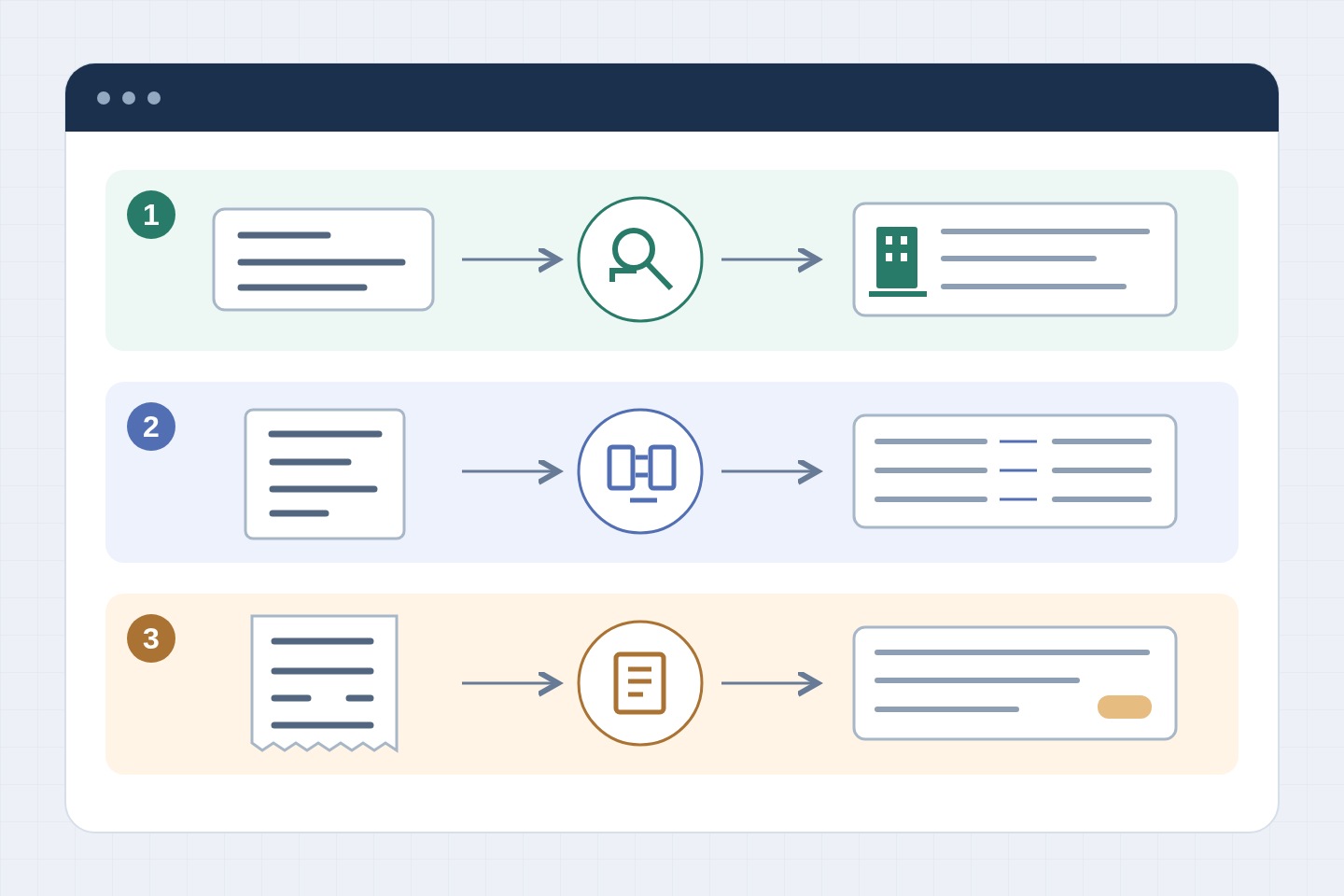
2. Compare the three checks
The practical difference is the scope of the result. A clear company-search result does not answer whether an invoice has been verified. A successful invoice check does not tell you whether a license image reflects the company's current registered address. Read each result against the task that led you to it.
| Tool | What you submit | What you examine | Useful follow-up |
|---|---|---|---|
| Company search | Name, registration number or USCC | The selected company's identity and available company information | Confirm that the record belongs to the business you intended to check |
| Business-license verification | A readable license file | Extracted license fields and their comparison with company information | Resolve unreadable text or a specific field difference |
| Invoice verification | The invoice file or the requested invoice details | The invoice information and status returned by the check | Read the result and connect the relevant invoice party to your supplier |
Company search
Use company search when the main uncertainty is the business behind a name or identifier. Check the selected result before reading its details: a plausible name match is less useful if you have chosen a different company in the same city or industry.
Retain the Chinese legal name and full code from the selected record. Then read the available registration information relevant to your task. If you only needed to identify the company named in a supplier introduction, a company lookup may answer that immediate question without a license or invoice check.
The separate company-search guide covers search inputs and result selection. This is also the appropriate place to return when another document gives you a company identifier that you have not yet looked up.
Business-license verification
Use the business-license tool when you have received a license rather than reliable typed company details. It reads the document and compares seven fields, including the name, USCC, legal representative, registered capital, address, establishment date and business scope.
Inspect the extracted text before interpreting a difference. A blurred character and a genuine difference between the document and the company record call for different follow-up. Requesting a clearer image addresses the first; asking about the specific field and checking its dates addresses the second.
This comparison does not authenticate the image or its seal. An official electronic business license is a digitally signed credential with its own validation arrangements under SAMR's electronic-license rules. A photograph of a license and verification of that official credential serve different purposes.
Invoice verification
Use the invoice tool for a supported Chinese VAT invoice. Choose the available file or manual-entry route, supply the fields requested for the invoice type, and read the returned information and status together.
China's official invoice-verification instructions define the result around the queried invoice's information. That scope is useful: record the actual invoice result, then use a company lookup for a separate question about the issuer's business identity.
If the check does not produce a usable result, keep that state distinct from a successful verification or a finding of falsification. Review the input and the returned explanation first. The VAT invoice verification guide explains the detailed input and result workflow.
3. Connect the company identities
Once you have more than one result, compare them yourself using the Chinese legal name and complete company identifier. The aim is to establish which documents refer to the same registered entity, while keeping the individual checks visible.
The USCC is useful here because the national code-management rules provide for a unique, lifelong identifier. A company name can change, so a name difference deserves investigation alongside the code and relevant dates. Do not silently rewrite a supplier's documents to make the names agree.
- Keep the original name and full code. Compare every character. A shortened name in an email or a translated name in a report is not a substitute for the Chinese legal identity.
- Select the relevant invoice party. An invoice contains buyer and seller information. When checking the issuing supplier, compare the seller's name and identifier, rather than accidentally using the buyer's details.
- Compare dates and fields separately. Note when you received the license, when the invoice was issued and when the company information was checked. A document can describe an earlier state.
- Explain differences with specific evidence. Identify the field, its two values and their sources. Ask for clarification or updated material without treating every difference as the same problem.
Company registration and documents can change at different points in time. The Company Law's registration provisions distinguish registered particulars, the business license and changes to recorded information. For a reader comparing documents, the practical consequence is to check the specific change rather than assuming that an older copy is the current record.
| What you observe | What to check next | What to retain |
|---|---|---|
| The code agrees, but an address differs | Extraction accuracy, document age and available company information | Both addresses and the relevant dates |
| The English names differ | Original Chinese names and full identifiers | The original text and each translated or trading name |
| The invoice seller has a different code | The seller's own company record and its explained role in the transaction | The two separate identities and the supplier's explanation |
| The invoice check is incomplete | Submitted fields and the returned explanation | The incomplete result, without labeling the invoice verified |
Registration evidence also has limits outside this comparison. A business record does not by itself demonstrate factory capacity or delivery performance. Ocean Port Link's supplier-license discussion makes the useful distinction between a registered business and its operating role. Use these tools to resolve the company and document questions they actually address.
4. Follow two common routes
A license at first contact
Illustrative example: a buyer receives a license image from a new supplier, accompanied by an English trading name. The buyer wants to identify the registered business before adding it to a shortlist. There is no invoice to examine at this stage.
- Upload the readable license and inspect the extracted Chinese name and code.
- Read the field comparison. If the image is unclear, obtain a better copy before interpreting the affected field.
- Open the corresponding company information and confirm that its identity matches the document.
- Save the original license, selected company identity and any unresolved difference together.
The useful outcome is a named company linked to the supplied license, with specific comparison results. The English trading name can remain a reference for correspondence. It should not become the sole identifier in the buyer's internal supplier record.
An invoice after company lookup
Illustrative example: a buyer has already recorded a supplier's Chinese name and USCC. Later, a Chinese VAT invoice arrives. The new task concerns that invoice and its seller, so repeating the original company-name search alone would leave the invoice unchecked.
- Submit the invoice through the appropriate verification route and retain its returned result.
- Read the seller section and compare its company identifier with the supplier record.
- If the identifiers agree, record that identity connection alongside the invoice result.
- If they differ, look up the actual seller and clarify its role before combining the documents in one company file.
A supplier may explain that another company issued the invoice. That explanation gives you a second entity to identify; it does not make the two companies interchangeable. Keep their records separate and retain the explanation with the transaction documents.
These routes illustrate tool selection, not a requirement to run every tool for every supplier. A license check helps when the document itself needs comparison. An invoice check becomes relevant when you have a tax invoice to examine. Company search supplies the identity context in either route.
5. Keep results easy to review
A useful handover tells the next reader exactly what was checked. Avoid compressing several different outcomes into a single note saying “supplier verified.” Someone reviewing the file later should be able to distinguish the company record, the license comparison and the invoice result.
- Company: Chinese legal name, full identifier, selected record and lookup date.
- License: the received file, comparison result and any field requiring clarification.
- Invoice: the invoice reference, relevant party, returned status and verification date.
- Open point: the exact difference, requested clarification and material still needed.
For example, “license address differs from the company record; updated copy requested” is more useful than “documents inconsistent.” Likewise, “invoice seller code matches the recorded supplier code” describes an identity comparison without suggesting that the invoice check assessed the supplier's future performance.
Start with the material you already have: look up a company, compare a business license, or verify a Chinese invoice. Use the next tool when it answers a specific question left by the first result.