
Chinese Supplier Invoices for Amazon Verification
Check a mainland Chinese supplier’s identity and connect original invoices to products and stock records when preparing evidence for an Amazon review.
Start with the Chinese legal name or USCC. Confirm the matching company before opening its profile.
You bought genuine goods from a Chinese supplier, kept the invoice and still received a request for more sourcing evidence from Amazon. The missing link may be the supplier’s identity, the product description or the connection between the purchase and the stock being reviewed.
Start with the request you received, not a generic invoice template. A Chinese business registration check can help you identify the supplier named on a document. It cannot decide whether Amazon will accept that document, authenticate the branded goods or replace evidence of the transaction.
This guide focuses on mainland Chinese supplier records used when reviewing purchase evidence. The examples are working notes for checking your files, not documents to submit as invoices.
Start with the exact request
Save the performance notification and identify the marketplace, cited products, requested period and requested document type. Account registration, category approval, a product-authenticity complaint and a responsible-sourcing review are different tasks. Do not carry a date window or checklist from one into another without checking.

For example, Amazon’s US policy-violation invoice guidance asks for supplier contact details, identifiable products, relevant quantities and completed transactions. It describes a 365-day window tied to the performance notification. It also specifies acceptable file formats and a 10 MB limit. Check the live page and your notice before applying those requirements.
Make a working checklist from that notice. Put the affected ASINs in one column and the relevant purchase records in another. Keep a separate place for unresolved questions, such as a supplier name that appears only in abbreviated English or a product description that does not identify the reviewed variation.
That preparation makes a supplier request more useful. “Please send a better invoice” invites another version with the same omission. “Please identify the registered company that issued invoice INV-024 and clarify which model the line refers to” gives the supplier a specific record to investigate.
Build the supplier identity record
An invoice may show a sales brand, an English trading name or a shortened company name. For a mainland Chinese supplier, ask for the full Chinese registered name and Unified Social Credit Code. Retain both exactly as supplied; do not invent a Chinese translation of the English name to make a search result fit.
A business-license copy can provide those identifiers. China’s registration rules list the legal name, address, establishment date, business scope and code among license fields. The name is labeled 名称, and the credit code is labeled 统一社会信用代码.
Use company search to compare the name and code with the registered business. If you received an image, business-license verification provides another starting point for reading and comparing company information. Check any extracted characters against the original document.
Keep a compact identity record with these entries:
- The supplier name printed on the original purchase invoice.
- The Chinese legal name and credit code supplied by the issuer.
- The matching registry result and the date you checked it.
- The issuer’s explanation of any trading name or former name.
- A contact who can identify the transaction and answer a verification inquiry.
A found company is one piece of evidence. It does not prove that the person sending a license works for that company, that the company issued your invoice or that it is an authorized distributor of a brand. Contact details and transaction records need to connect the business to the purchase.
Address differences deserve a precise explanation. A warehouse address may differ from the registered address, and an exporter may not be the manufacturer. Record which address belongs to which function. Do not silently replace an invoice address with the one found in a company report.
Keep the evidence types separate
Three documents can all be genuine and still answer different questions. A commercial invoice records the sale, a Chinese tax invoice concerns a tax-document record, and a company report describes a registered business. Combining them does not turn one into another.
| Evidence | Useful connection | Limit |
|---|---|---|
| Supplier’s final invoice | Seller, buyer, goods and the recorded transaction. | Its relevance depends on the actual request and supporting facts. |
| Chinese VAT invoice, or fapiao | Issuer and tax-invoice details that can be checked through the appropriate service. | A matching tax record does not establish product authenticity or Amazon acceptance. |
| Company registration record | The mainland business’s registered identity and available company information. | It does not replace an invoice, prove delivery or grant brand authorization. |
| Upstream purchase or manufacturer record | A further connection in the supply chain. | It must relate to the goods and parties being reviewed. |
Trade.gov explains the commercial invoice’s role in customs clearance. That role does not mean that every customs invoice automatically satisfies a marketplace review. Read the information on the actual document rather than assuming its title settles the question.
For Chinese tax invoices, Shanghai’s tax authority describes the official verification channels. Use invoice verification when you actually have a supported tax invoice. A supplier’s ordinary English commercial invoice or quotation should not be treated as a tax invoice merely because the seller is Chinese.
If your files contain both documents, compare their issuers and relevant transaction details while retaining each original. The fapiao and commercial-invoice guide covers the distinction in more detail. Neither a successful invoice check nor a clean company record is an Amazon approval certificate.
Trace the product line
Once the supplier is identifiable, follow the item from the purchase record into your listing and stock records. Use the actual model, variation, pack size and transaction dates. A broadly described item such as “kitchen accessories” may be difficult to connect to one specific listing without further evidence.
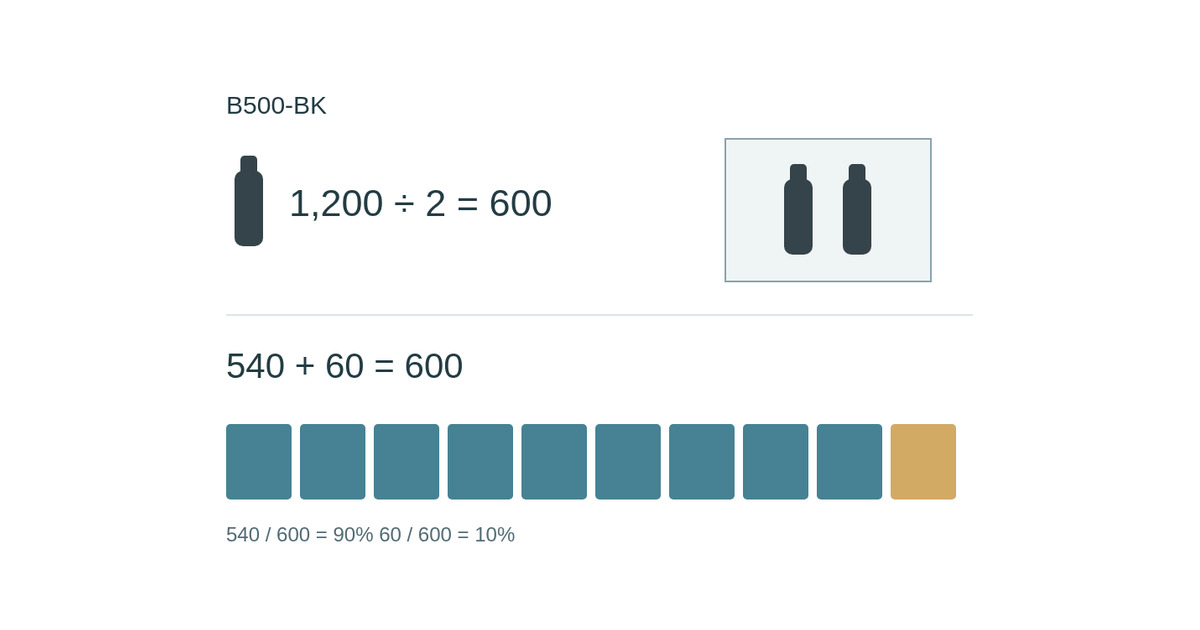
Consider a fictional stock reconciliation. A purchase record describes 1,200 individual black bottles under model B500-BK. The marketplace listing sells a pack containing two of those bottles. The stock records show 540 packs sold and 60 packs remaining. The quantities connect only after the units are made explicit.

The arithmetic is 1,200 ÷ 2 = 600 packs, and 540 + 60 = 600 packs. It does not prove the goods are authentic. It simply avoids comparing individual items on one document with packs on another as though they were the same unit.
Check the description as carefully as the count. An invoice for a silver bottle does not document a black variation just because the base model is similar. If a bundle contains a bottle and a brush, evidence covering only the bottle leaves another component to explain.
Keep returns, damaged stock, other sales channels and later purchases visible in your own reconciliation. They may explain why a simple purchase-minus-sales calculation does not equal the current stock count. Do not alter an invoice quantity to make the arithmetic appear cleaner.
For a responsible-sourcing documentation request, Amazon separately describes evidence tracing goods through the supply chain to the original manufacturer, even when the seller purchased through an intermediary. That request may require records from your supplier’s supplier. It should not be reduced to a company-existence check.
Fix gaps at the source
If a genuine invoice contains an omission or error, ask the issuing supplier to address it through its normal records. Explain what is unclear and retain the original version and correspondence. Do not add the legal name yourself, paste in a logo or create a document that looks as though the supplier issued it.
Amazon’s staff guidance on invoice requirements emphasizes authentic records, a completed transaction and the possibility of contacting the supplier. It identifies quotations, pro forma invoices and manipulated records among the materials that do not meet the described review requirements.
A supplier-issued correction also needs to remain truthful. A later document cannot turn an unfulfilled offer into a completed purchase or turn an unrelated company into the seller. If the underlying evidence is missing, document the gap and seek the records that actually establish the transaction.
Translation is another place to preserve that distinction. Keep the original document. A separate translation or explanatory note can help your team read a Chinese name, but it should not masquerade as an English invoice issued by the supplier. The US help page cited above says an invoice does not have to be submitted in English.
When asking the supplier to cooperate, send the invoice reference and the points to clarify. Request an appropriate business contact rather than a generic promise that “the company is real.” If an explanation concerns an agent, manufacturer or exporter, ask for the relevant entity’s identity and role, not a collection of unrelated licenses.
Prepare a readable submission
Before submitting anything, open the exact files you intend to send. Check every page for cropped names, missing totals, illegible text and incomplete attachments. A filename that says “final” is not evidence that the document inside is the right version.
Keep your own reconciliation notes separate from supplier-issued records. A short index can identify which original invoice relates to which item without changing the invoice itself. Follow the current request’s rules for explanations, redaction and highlighting rather than applying a generic editing recipe.
Use the submission route specified in the performance notification and retain a copy of what you submitted. The cited US policy page directs appeals through Seller Central. If the response identifies a remaining problem, address that stated problem; repeatedly sending the same unexplained bundle is unlikely to add new evidence.
A company check is most useful before this stage, while the supplier is responsive and the purchase details are easy to retrieve. Ask for the mainland issuer’s Chinese legal name and code, check its company record, and keep the match with the original invoice. You then have a clear starting point for any later request about who supplied the goods.