
How to Access Chinese Company Registration Files
Find the right route for public registration details, stamped query results and filed company documents, with the access requirements explained.
Start with the Chinese legal name or USCC. Confirm the matching company before opening its profile.
To obtain a Mainland Chinese company's registration files, first decide whether you need its publicly available registration details or copies of the documents filed with the registration authority. Anyone can request information about registered particulars. Access to the underlying registration archive follows a different process, with applicant qualifications and identity checks. A company search result does not automatically give you access to the company's articles of association or its original change-registration materials.
This distinction matters when a supplier has already passed a basic company lookup but your next question requires a document: which version of the articles was filed, what accompanied a particular change, or where to obtain a registration-information result bearing the authority's archive-query stamp. Ask for the material that answers that question, rather than ordering an undefined “full company file.”
Choose the material you need
The Chinese phrase 工商档案 is commonly used for company registration archives. The current rules use 经营主体登记档案, covering records formed during the registration process. Keep that separate from a company's public profile and from a commercial report assembled from available sources.
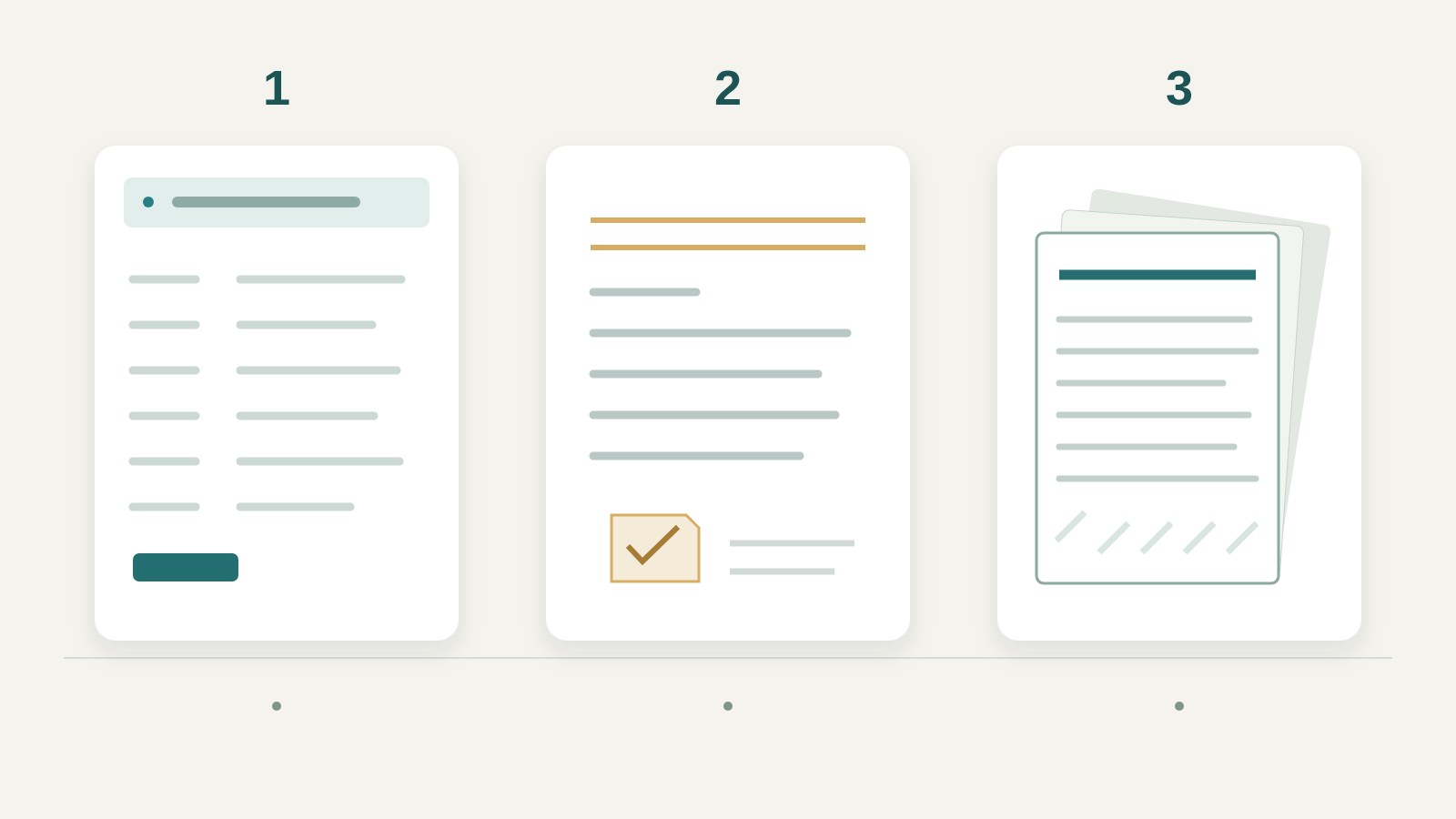
| Material | Useful for | Where to begin |
|---|---|---|
| 1. Public company profile | Finding the entity and reading available registration details | The public company-information search |
| 2. Registration-particulars result | Obtaining the registration information recorded in the archive, with the authority's query stamp when requested | The registration authority's service for registration-particulars inquiries |
| 3. Registration document copies | Examining specified applications, filed documents or changes | The archive-query service, subject to applicant eligibility and the permitted scope |
For the first task, the company registration search guide explains the public lookup. Shanghai's official English market-access explanation identifies the National Enterprise Credit Information Publicity System as the public channel for registration information. That is a useful starting point, but a public profile is not the underlying archive.
For the second task, Article 22 of the 2025 registration-archive measures says any organisation or individual may apply to the registration authority for registration-particulars information. It also provides for the authority to add its archive-query stamp according to the applicant's needs. Specify that result if it is what the recipient requires; do not assume a downloaded commercial report supplies it.
Access depends on the applicant
The wider archive route is governed by Articles 20 and 21 of those measures. A business can query its own archive. Certain people currently registered as holding a position or investment can query the archive of that business. The categories include a company's legal representative and shareholders of limited liability companies and unlisted companies limited by shares. A customer relationship, by itself, is not one of these qualifications.
Lawyers instructed by a party may query archives relevant to the entrusted matter. The rules also identify notarial, arbitration and judicial-appraisal bodies for relevant work, and bankruptcy administrators for businesses in the cases they administer. These are defined access routes, not a general promise that anyone who pays an intermediary can obtain every page.
An overseas buyer therefore has several different next actions. If registered particulars are sufficient, request that information. If a filed document is necessary, ask the supplier to arrange access through its own authorised personnel or consider an appropriately instructed lawyer where the matter warrants it. Confirm the permitted use and sharing of the resulting material. The right to inspect a file does not remove obligations concerning personal information, commercial secrets or restricted records.
Some documents remain more restricted. The measures separately limit access to the registration authority's internal approval documents to specified state bodies handling cases involving that authority. Do not describe “complete archive” as an entitlement to those documents. Name the company-submitted document or registration event you need instead.
Find the responsible service
Start with the company's exact Chinese registered name, Unified Social Credit Code and current registration authority. The authority field is usually labelled 登记机关. Use the registration-authority explanation if an older business licence names a different office. An old name or address on your document is a reason to check custody, not to send the same request to several unrelated offices.
Follow the authority's government-service or market-regulation website to its archive-query guidance. Useful labels include 登记档案查询 and 企业登记档案查询. Read the applicant category before attempting to log in. A page for an enterprise to retrieve its own documents is not necessarily the public registration-particulars service.
The Shanghai business-registration portal, for example, has a bilingual “Registration File Inquiry” entry alongside establishment, change and annual-report functions. That establishes an identifiable route on that portal; it does not establish your eligibility or mean every local authority has the same screen. We checked the public entry page, not a completed private archive download.
If the company moved between registration jurisdictions, ask which authority currently holds the relevant records and whether the requested period is available through its online service. The archive measures provide for migration between authorities. A historical document can consequently name the former authority even though the company is now registered elsewhere. Keep the USCC and the event date attached to your inquiry so the office can identify the right subject and file.
Make a specific request
A useful request identifies the company, the material and the period. “Please send everything” makes it harder to distinguish a public information request from access to filed documents. It can also produce a large bundle that omits the one amendment you actually need.
For a hypothetical supplier review, suppose the buyer needs to understand a change to the articles of association. The buyer can ask the supplier for the version relevant to that change, any associated amendment and the record identifying when the material was filed. This is a request example, not a claim that a particular company has such a filing or that every archive uses one document title.
Please provide the articles of association and any amendment relevant to the specified registration change, identifying the company's full Chinese name and USCC. Include the filing or document date and explain whether the copy came from the registration archive or your own records. If obtaining an archive copy requires an application, please arrange it through an eligible person.
The distinction between the company's own copy and an archive copy is useful. Under Articles 30 and 35 of the Company Law, articles of association form part of the establishment application, and amended articles must be submitted when a registration change involves an amendment. A document's filename alone cannot tell you which version was filed or whether later amendments exist.
If the unresolved issue is a name change, start by locating its date through the former-name lookup. Then ask for the material relating to that event. If it is simply today's registered address, a registration-particulars result may answer the question without requesting historical applications and supporting documents.
Prepare the correct application
Archive inquiries use real-name identification. Article 21 sets out supporting documents for different applicant categories. For a business querying its own archive through a designated person, these include the business's authorisation or valid introduction letter and the specified business-licence evidence. A registered individual relies on evidence of the relevant role or investment. A lawyer's materials include the practising certificate, a law-firm document describing the entrusted legal matter and a query undertaking.
A current Beijing government-service listing reproduces these distinctions for its business archive-query service. Use the guide for the competent authority and the actual applicant, including its accepted identity documents and online authentication process. A document list from one city is not proof that another city's system accepts the same upload format or foreign identity credential.
Ask the supplier to use its own authorised process. It need not give you control of its electronic business licence, login password or identity-verification session. Where the service supports an authorised operator, the supplier should complete that arrangement through the official route. Your task is to obtain the relevant result with a clear origin, not to impersonate the company.
Online availability does not remove eligibility requirements: Article 23 expressly carries the relevant access and identity rules into internet self-service queries. If the portal cannot authenticate the proposed applicant, consult the authority's published help or counter-service instructions. Treat that as an access problem to resolve, not evidence that the company has no archive.
Read the returned copy carefully
Check the company name and USCC before interpreting any page. Then check the document description, event date, page sequence and attachments. An establishment-era document and a later amendment can both be genuine while answering different questions. Keep them in chronological order, and retain the source filename and retrieval date without replacing the dates printed inside the documents.
Article 24 describes digitised archive copies bearing the authority's relevant identification or archive-query electronic stamp on each page, together with a watermark identifying the querying person. Copies already carrying the required identification or electronic stamp can be downloaded and printed without obtaining another stamp. Preserve those features and the original file; a cropped screenshot may discard the information needed to understand the copy's origin.
A visible mark alone is not a substitute for provenance. Note who obtained the document, through which service and when. If you need to establish that the received file is the authority's actual output, use the issuing service's available verification or clarification route. Do not invent a universal QR-code check or describe an emailed PDF as independently authenticated merely because it has a red image.
Finally, distinguish the archived statement from the conclusion you want to draw. Filed articles can show the terms submitted in that version. They do not, on their own, prove that a promised capital contribution reached the company, that no later document exists, or that a salesperson has authority for your contract. Read the particular document for its particular purpose, keeping any missing amendment or unavailable page explicit.
If a returned bundle appears incomplete, describe the gap precisely before requesting another search. For example, the contents list may name an attachment that was not supplied, or a later document may refer to an amendment absent from the bundle. Ask the provider of the copy to clarify the supplied scope and whether the missing item can be obtained through the same authorised route. Do not fill an absent page with a template downloaded from the internet: a blank model document says nothing about what this company submitted.
For a document that will go to a bank, lawyer or another recipient, agree the required form with that recipient before arranging translation. An ordinary translation helps someone read the Chinese text; acceptance for a particular procedure may involve separate requirements. Retain the Chinese original with the translation and preserve page references so the recipient can identify which passage was translated. This avoids paying for a polished translation of the wrong document or an outdated version.
Begin with ChinaValidate company search when you need to identify the Mainland business and review the registration information available for it. Use the confirmed name and code in any subsequent archive request. A ChinaValidate report helps organise returned company information; it is not a registration authority's archive copy and does not grant access to restricted filings.