
Chinese Company Bank Account Documents
Recognize an old opening permit, basic deposit account information and bank letters, with official blank fields and practical company-matching checks.
Start with the Chinese legal name or USCC. Confirm the matching company before opening its profile.
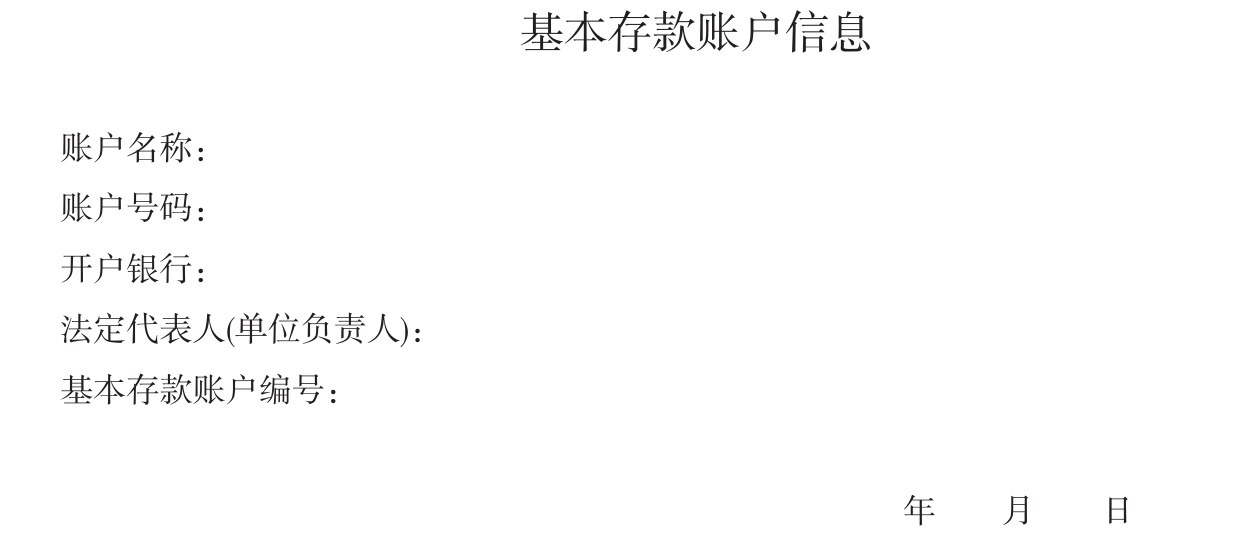
Your supplier says it cannot send a new bank account opening permit. Instead, it provides a short Chinese document headed 基本存款账户信息. That change of document is not, by itself, a warning sign: China's enterprise bank-account reforms removed the old permit requirement.
The useful task is to identify the document you received and the account it describes. An old opening permit, basic deposit account information and a bank-issued letter are different documents. None should be treated as a complete answer to whether a proposed payment is authorized.
This guide covers documents associated with Mainland Chinese enterprise accounts. It explains the Chinese labels, the difference between account numbers and reference numbers, and the company information you can compare. It does not provide a public lookup of private bank-account ownership.
The permit changed
The People's Bank of China introduced the enterprise bank-account reform in 2019. Basic and temporary account procedures for the covered enterprises moved from approval to filing, and the PBOC stopped issuing account opening permits under that reform. The official 2019 notice and account-management rules explain the change.
Implementation was phased. Bank of China's February 2019 announcement describes the expansion to Jiangsu and Zhejiang and the planned extension elsewhere that year. Do not take a regional implementation date from an older article and present it as the same start date everywhere in China.

English explanations from the period can still be useful if read as history. China Briefing's May 2019 article, for example, describes the Beijing and Shanghai rollout. Its context explains why older supplier-onboarding checklists continue to ask for a permit that a newer enterprise cannot obtain.
The reform also did not remove bank identity checks. The PBOC rules require banks to review the enterprise's materials and account-opening intention. A supplier's statement that “permits were abolished” answers a document-format question; it does not make the proposed account or payment instructions self-verifying.
Three documents to recognize
| Document | What it describes | Useful next question |
|---|---|---|
| 开户许可证 — account opening permit | A document associated with the earlier approval system, or a subject outside the enterprise reform's scope. | Which entity, account and issue date does this copy concern? |
| 基本存款账户信息 — basic deposit account information | Identifying information for the enterprise's basic deposit account. | Does it describe the account relevant to the proposed transaction? |
| Bank-issued account letter or confirmation | The particulars and statements actually made by the named bank. | What does the bank confirm, as of which date, and how can the document be checked? |
The third category does not have one universal English title or layout. “Bank certificate” might mean an account-details letter, a balance statement or another banking document. Ask for the purpose and read the actual statement. A document confirming a balance is not automatically a payment instruction.
For old permits, preserve the issue date and the exact holder. An old copy can explain historical account information, but it is not a reason to skip current confirmation. Conversely, a supplier founded after the relevant reform should not be rejected simply because it cannot supply a newly issued version of the old enterprise permit.
Scope matters for other types of organizations. The PBOC's 2021 public reply on inquiry-password resets distinguishes enterprises from other organizations. That reply is not an instruction for buyers to reset a supplier's password. It illustrates why a rule about enterprise accounts should not be extended casually to every account holder.
Read the basic-account fields
The official blank form below is short. Its simplicity is helpful: the fields distinguish the holder, the bank account, the bank, the representative and the basic-account reference. There is no need to invent an account number to demonstrate the layout.

| Chinese field | Reading | Comparison |
|---|---|---|
| 账户名称 | Account name | The entity named as holder, compared with the company and transaction documents. |
| 账户号码 | Bank account number | The account coordinates supplied through your controlled payment process. |
| 开户银行 | Account-opening bank | The bank and branch details relevant to that account. |
| 法定代表人(单位负责人) | Legal representative or person in charge | The role and name stated in this document, allowing for the document date. |
| 基本存款账户编号 | Basic deposit account reference | The account-management reference, kept distinct from the receiving account number. |
The basic-account reference is not the number you should automatically enter as the beneficiary's account. The form deliberately gives it a separate field. The PBOC rules say that the new basic-account reference replaces the former approval reference; they do not say it replaces the bank account number used for a transfer.
The company's USCC is another separate identifier. Use it to match the registered business, not as a substitute for either bank field. A spreadsheet column called “registration/account number” invites transcription mistakes because it merges identifiers with different purposes. Give the company code, account number and document reference separate labels in your working record.
Read the date even when the document looks familiar. A company-name or representative change can make an older copy incomplete for your current review. Under the rules, relevant changes involve the account-opening bank and can result in new basic-account information. Ask the supplier to obtain an appropriate current document rather than correcting an old scan yourself.
The account for this payment
A basic deposit account document does not necessarily describe every account a company uses. The PBOC framework also recognizes other categories of settlement account. Therefore, “our company has only one basic account” is not the same statement as “our company has only one bank account.”
Consider a hypothetical supplier that sends basic-account information for a domestic account while its payment instruction identifies a different receiving account. Do not declare that the second account is false merely because it is absent from the first document. Ask for evidence covering the account actually proposed for this payment and have your banking team interpret the route.
Equally, do not accept a document for one account as confirmation of another. Match the account holder, account number, bank and any relevant currency information to the instructions you are reviewing. If the supplied document does not address a necessary field, record that gap rather than treating silence as agreement.
A bank's own name can also appear prominently on a letter or transfer instruction. Identify whether a line refers to the beneficiary, the beneficiary bank or an intermediary. The bank is not the company selling you goods. If the form is unclear or a name is truncated, ask your bank to interpret it before entering payment details.
Match the company, then the document
Begin the company comparison with the supplier's Chinese legal name and USCC. Company Search can help identify the Mainland company and read available registration information. If the identifiers are in a license image, business-license verification provides a route into that comparison.
Keep the scope of the result precise. Matching a registered company does not authenticate the bank letter, establish the account's current status or prove that the email sender controls the account. It answers the identity question needed before the financial document can be interpreted sensibly.
For example, the holder's Chinese name may match the seller while the Latin-letter payment instruction uses an abbreviated rendering. Ask for the documentary connection between those names. A broadly similar English brand is not enough, but punctuation or word order alone is not evidence of a different company either.
If the holder is a separate entity, move to the bank-beneficiary review. That guide addresses the relationship between the payee and the sale. This article's document recognition cannot establish that paying a separate company will discharge your obligation to the seller.
Request useful evidence
Explain the account and purpose you need covered. Asking only for “the bank certificate” leaves the supplier to guess whether you need basic-account information, a bank letter or payment instructions. A more useful request is:
Please provide a current bank-originated document identifying the holder and the account proposed for payment of [order reference]. Please explain whether this is the company's basic deposit account or another receiving arrangement. Where the payment instruction uses an English name, please show how it corresponds to the Chinese legal entity. We will confirm the instructions through our established contact channel.
Adapt the request with your finance team and receiving bank. A bank may require its customer's authorization before providing information, and the document available will depend on the service. Do not ask a supplier to share online-banking credentials, inquiry passwords or unnecessary personal identity documents with the purchasing team.
For a lost historical permit, the PBOC's 2019 rules provide that enterprises can request printed basic-account information from the account-opening bank rather than a replacement old permit. This gives a specific follow-up when the only problem is an outdated document request.
Keep complete bank coordinates in the restricted payment file. General supplier-review notes can refer to a controlled document or masked account reference. Circulating a full account statement widely does not improve the identity check, and transaction history may contain unrelated confidential information.
Record the result accurately
A useful note names the document, its issuer and date, the company identity compared and the account covered. It then separates what matched from what remains unconfirmed. “Company name matched the registry; account evidence covers the proposed receiving account; independent instruction confirmation pending” is clearer than “bank verified.”
Finish any required account and payment confirmation through established channels. If instructions change, use the separate changed-bank-details procedure. A newer PDF does not automatically supersede an approved account simply because it carries a familiar logo or seal.
The purpose of recognizing these documents is to ask for the right evidence. Do not reject a supplier for lacking an obsolete permit, and do not let a modern account-information sheet do more than its fields and source support.