
Verify a 1688 Supplier
Identify the business behind a 1688 shop, read its registration type, understand Chengxintong and check the supplier using its Chinese name or USCC.
Start with the Chinese legal name or USCC. Confirm the matching company before opening its profile.
To verify a 1688 supplier, find the registered business behind the shop, copy its Chinese name and Unified Social Credit Code, and compare them with a current business record. Start with the shop's business information or business license. A shop name, membership label or product listing does not give you the same information.
The detail that often surprises overseas buyers is the type of business. A supplier may be a company or an individually operated business, and the fields you should read differ. If you buy through a sourcing agent, there is another identity to keep separate: the business selling or providing purchasing services to you.
Alibaba Group describes 1688 as its Chinese domestic wholesale marketplace. The following process focuses on Mainland business registration. It helps you identify a supplier before taking the next purchasing step, without treating a platform badge as a decision about the whole order.
1. Find the shop operator
Open the supplier's shop and look for its disclosed business information or business-license link. The layout can differ between the website, app and account views, so follow the information itself rather than a tutorial's fixed button position. Keep the shop URL beside the record you open.
Useful Chinese terms include 营业执照, meaning business license, and 企业信息, meaning enterprise information. Once you reach the document or disclosure, identify the fields below. A product title containing a factory's name is not a replacement for this step.
| Chinese label | What to record | Common mistake |
|---|---|---|
| 名称 / 企业名称 | The complete registered Chinese name. | Copying the shop display name or an English brand instead. |
| 统一社会信用代码 | The complete Unified Social Credit Code, or USCC. | Using a product, order or platform membership number. |
| 类型 | The registered business type, with its original wording. | Calling every seller a limited liability company. |
| 法定代表人 / 经营者 | The person's name together with the role shown. | Assuming that the salesperson is the registered person. |
If the disclosure does not open, ask the shop contact for a clear business-license copy and the name and code in text. Tell them that you are confirming the shop's registered operator for supplier setup. A readable original attachment is more useful than a small license thumbnail embedded in a catalogue.
For example, you could ask: “Please send the business license for the registered operator of this 1688 shop, together with its full Chinese name and Unified Social Credit Code. If another business will sell to us, please identify that business separately.” The separate license-request guide covers follow-up when a supplier provides an old or incomplete copy.
Preserve both the URL and the supplied document. A valid business license identifies the entity named on it; a file sent in chat does not, by itself, prove that the sender controls that entity or operates the shop. The connection between shop and license remains part of what you are checking.
2. Read the business type
Read the type field before interpreting the personal name or address. 有限公司 in a registered name points to a company form, while 个体工商户 identifies an individual business. Do not infer the form from a storefront translated into English as “Co., Ltd.”
Under Article 12 of SAMR's online trading rules, registered enterprises and individual businesses disclose different license fields. Enterprise disclosures include the legal representative or responsible person and registered capital. Individual-business disclosures include the operator, business premises and form of operation. Both include the registered name and USCC.
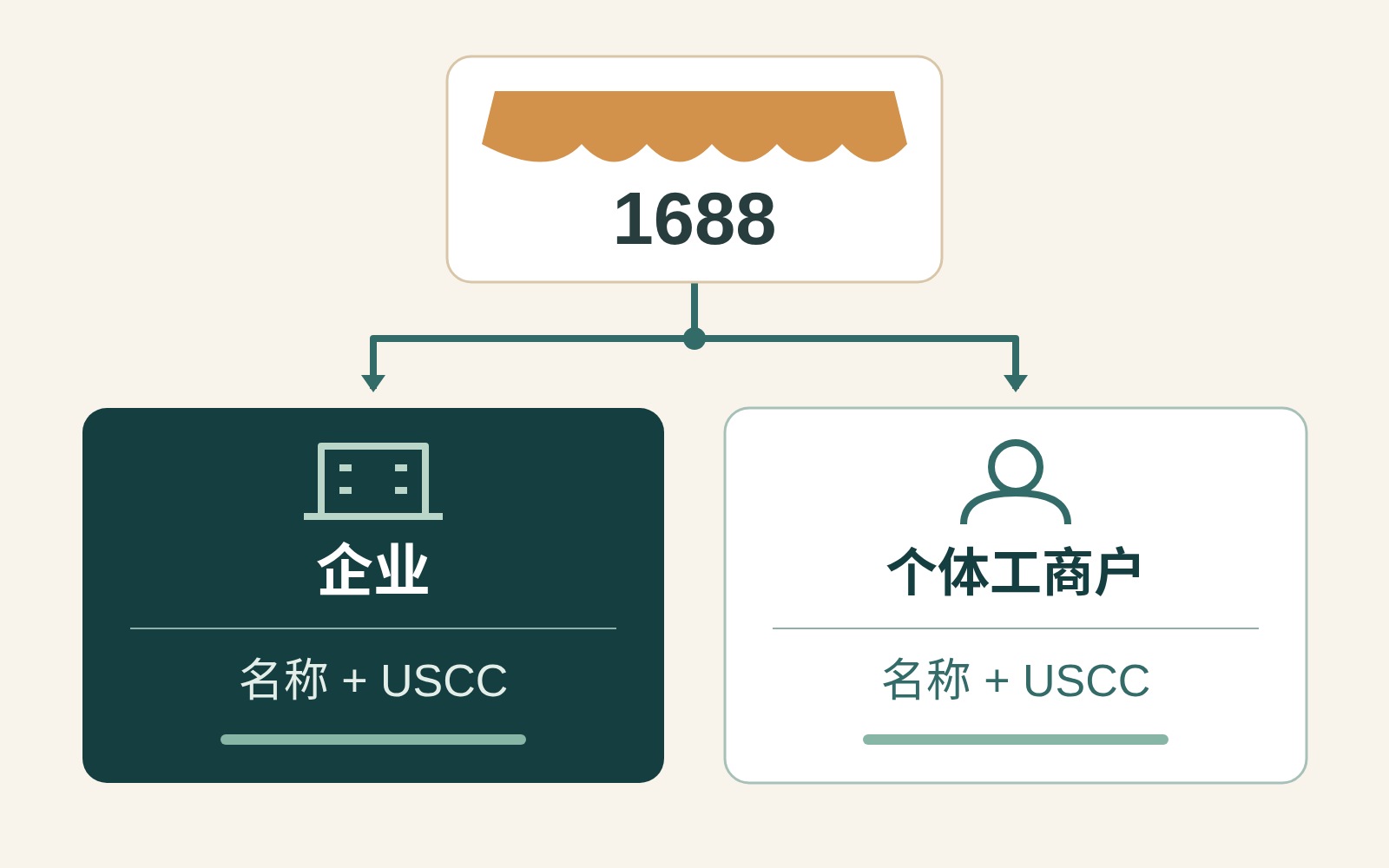
This changes how you read a result. An individual-business license naming an operator should not be treated as an incomplete company license merely because it lacks a shareholder list or a company-style capital field. Equally, do not describe the operator as a company shareholder without evidence of that separate role.
Consider a hypothetical shop with an English display name ending in “Manufacturing Co.” Its disclosed record instead identifies an individual business. The useful finding is the difference between the display wording and the registered form. Record the latter accurately, then decide whether your procurement requirements allow that type of supplier. The wording alone does not establish fraud or factory ownership.
The same official rules recognize specified situations in which registration is not required. A general claim that every online seller without a company license is illegal would therefore be too broad. For your purchase, ask the seller to identify its actual registered or disclosed status; do not invent a company record to fill a supplier form.
If your company requires a corporate seller, resolve that requirement before paying or commissioning production. An agent's company license does not turn the underlying shop into a company. It may instead identify a different party with a different role. The Chinese business-type reference explains other forms you may encounter.
3. Interpret Chengxintong
诚信通, usually written as Chengxintong in English, is a 1688 service with an identity-checking component. Read what that component covers before attaching a wider meaning to the label.
The 2026 version of the Chengxintong agreement describes checks on registration records, the contact's business role and authorization, and representative information. Its eligibility provisions include several kinds of Mainland businesses, including individual businesses. Membership therefore does not establish that the shop operator is a limited company.
The agreement also requires relevant identity changes to be reported and checked again, while explaining that verification reflects the situation at the time of checking. It separately allows sellers to display certificates and other information for which they remain responsible. Those distinctions matter when reading a profile full of badges and uploaded documents.
| What you see | Useful interpretation | What to check separately |
|---|---|---|
| Chengxintong identity information | A starting point for identifying the registered supplier. | The same entity's current registration and its connection to your order. |
| Years shown beside a membership | The platform-related period described by that label. | The establishment date in the business record. |
| A certificate uploaded to the profile | A document whose subject and scope can be examined. | Its issuer, holder, coverage and current validity. |
| Factory or production claims | Claims about how goods are made. | The actual producer, site and evidence relevant to your product. |
For a practical comparison, place the membership information and establishment date in separate columns. If their periods differ, first read the labels and identify what each date measures. Do not subtract one from the other and announce a contradiction before establishing that both refer to the same business and the same event.
Likewise, a license may identify a registered business without resolving whether it manufactures the goods. If factory ownership matters, continue with the factory and trading-company guide. Keep that investigation separate from the simpler question of which registered business operates the shop.
4. Match the registration record
With a Chinese name or complete USCC, use ChinaValidate Company Search to look for the Mainland business. Enter the identifier itself rather than the 1688 shop URL. If you prefer the official public route, the registration lookup guide explains how to use the National Enterprise Credit Information Publicity System.
- Match the identity. Compare the complete Chinese name and code with the shop's disclosed information. A result sharing a brand word is only a candidate.
- Read the type and status. Keep the original labels. The legal form tells you how to interpret the record; the recorded status answers a separate question.
- Compare the other details. Check the available establishment date, registered address and representative or operator information against the material you received.
- Resolve a specific difference. Identify the exact field, then ask for a current document or an explanation of the change. Do not replace the original file while investigating it.
If the name and code are trapped in an image, start with business license verification. Upload a readable license file and check the extracted identifiers before relying on the comparison. ChinaValidate compares available license details with retrieved business information; it does not authenticate the photograph or establish control of a 1688 account.
Availability matters, especially when comparing different business forms. A field that was not returned is not a confirmed match, and an individual business should not be forced into assumptions made for a company. If the lookup cannot provide the information you need, use the disclosed identity to pursue the relevant official record or request further documentation.
A name mismatch deserves a careful second look. First compare the original Chinese text, not two English translations. Then check whether the documents describe the same code and whether a recorded name change explains the difference. If the codes identify different entities, keep them separate until their relationship has been established.
A no-result response needs similar discipline. Recheck transcription, use the complete name or code, and distinguish an unavailable service from a completed search with no match. Neither outcome proves that the shop is fictitious. Conversely, a matching active record does not prove that the goods exist, meet specifications or will be delivered.
Record when the lookup was made and which source supplied the information. Company data can be updated or cached; a returned record should not be described as a fresh government confirmation of every fact at the instant you search. If a recent change affects your decision, verify the dates of the documents and records involved.
5. Separate the purchasing parties
The final identity check depends on how you are buying. If you place an order directly with the shop, compare the business identified during verification with the seller named in the order. If an agent purchases on your behalf or resells to you, first establish which of those arrangements applies.
Buying from the shop
Keep the shop operator and proposed seller visible together. Where the names differ, ask which entity accepts the order and is responsible for the agreed supply. A salesperson's explanation can identify the relationship to investigate, but it should not silently replace the seller shown on the actual order.
For example, a hypothetical shop could disclose Business A while a quotation names Business B. Obtain the identity details for B and clarify each party's role. Do not attach A's favorable lookup result to B simply because both appear in the same conversation.
Buying through an agent
Ask the agent to identify the underlying shop operator separately from its own business. Record who sells to you, who places the domestic order and who handles the agreed service or refund. These answers help you decide which Mainland entities need their own checks; one registration result cannot cover an entire purchasing chain.
If an Alibaba profile is also supplied, the Chinese names and codes provide better comparison points than matching product photos. A practical cross-platform sourcing guide discusses using 1688 as an additional comparison source. Treat each profile as material to reconcile with the registered identity, not independent proof that the same photos belong to one manufacturer.
Before continuing, retain a compact record: the shop URL, disclosed Chinese name and code, business type, dated lookup result and the seller or agent named in your purchasing arrangement. Attach unresolved differences to the relevant party. That gives you a usable answer to the registration question and a clear starting point for any further supplier checks.
Have the shop's Chinese name or USCC ready? Look up the business. If you have only a license image, start with the license and follow the extracted identity into the company information.