
Verify a Made-in-China Supplier
Read a Made-in-China.com audit report, identify the supplier and associated companies, and match each Mainland entity with business registration records.
Start with the Chinese legal name or USCC. Confirm the matching company before opening its profile.
To verify a Made-in-China supplier, open the supplier's audit report, identify the Chinese company named in it, and compare that company with current business registration information. Keep any associated companies separate. A report can describe more than one business, and the company taking your order may not be the company described in every section.
Made-in-China.com is the sourcing platform discussed here. Its Audited Supplier report can give you a useful starting point, but the most useful detail is often a company name or a small scope note rather than the badge itself. This guide shows how to turn those details into a company check for a Mainland China supplier.
1. Open the audit report
Start from the supplier's showroom on Made-in-China.com. Look for its audit report entry, open the available report, and keep the showroom URL with your copy. If you received a PDF in a message, compare it with the version available through the platform before using it for supplier onboarding.
According to Made-in-China.com's Audited Supplier explanation, the program uses SGS, Bureau Veritas, TÜV Rheinland and CTI for supplier audits, with reports available online free of charge. The described process includes document examination and an on-site visit. Check which organization issued the particular report you are reading.
Save the complete report rather than only the cover or a cropped badge. You need enough context to see whose information appears in later sections. A page about production can look convincing while saying little about the company that will appear on your order.
- Check the supplier identity. Compare the showroom and the company named in the report. If the names differ, record the difference instead of silently treating the two as interchangeable.
- Keep the report reference. Record its identifier, issuer and audit date together. These help you discuss the exact document with the supplier or issuing organization.
- Confirm that it is a supplier report. The platform also publishes sample reports. A sample explains the layout; it is not evidence that your supplier has been audited.
The date deserves its own line in your notes. It tells you when the reported assessment took place, not when your order will be produced. If the supplier says it has moved, changed its company name or added a factory since that date, ask for the relevant updated documents and identify which information needs checking again.
If the report entry will not open, ask for the complete file and its platform reference. Keep the missing verification step visible in your records. A broken link does not establish that a supplier is fraudulent, but a salesperson's screenshot also does not replace the document you were trying to examine.
2. Extract the company identity
Create a short identity record before reading the capability sections. Copy the original Chinese name and the business identifier as text where possible. Preserve the spelling from the document; translating an English trading name back into Chinese can lead you to a different company.
The platform's SGS report sample separates the report reference from company information and includes Chinese and English names, registration details and different address fields. Its entries are illustrative placeholders. Use the sample to recognize the fields, never as a source of real supplier identities or valid company codes.
| Report detail | Use it for | Avoid this mistake |
|---|---|---|
| Report No. | Identifying the audit document. | Entering it as a company registration number. |
| Company Name (Chinese) | Finding the registered Mainland entity. | Replacing it with a brand or translated showroom name. |
| Registration Number | Matching the business identifier to the license and registry record. | Assuming any number in the report is the company's USCC. |
| Registered address | Comparing the company's registered location. | Assuming it identifies every production site. |
| Actual address / Audited site | Understanding the location described or visited. | Treating a site address as the legal identity of its operator. |
A current Mainland business license gives you a practical way to resolve an unclear identifier. Look for the complete Unified Social Credit Code, or USCC, alongside the Chinese registered name. Shanghai's official market-access guidance explains the enterprise's unique code and the public registration information available through the national disclosure system.
Keep the audit reference and USCC in different columns. When a supplier sends a number without a label, ask which document and field it comes from. Do not repair an unfamiliar identifier by adding characters or borrow a nearby company's code just because its English name looks similar.
For a document with an older registration identifier, preserve that value and request the current business license. If you only have an English name, use the separate English-name lookup guide to establish the Chinese identity first. The goal is a defensible match, not simply finding a search result.
Addresses need the same care. Compare a registered address with another registered address, and a production-site claim with the audited site. A difference between those two categories is not automatically a contradiction. Ask which company operates the site and which document supports that relationship.
For example, suppose a report lists an office in one district and a production site in another. This hypothetical difference does not, by itself, show that the company moved or that the report is false. First identify what each address represents. Then investigate any remaining disagreement between records describing the same location and date.
3. Separate the companies
Before assigning the factory information to your supplier, look for other named businesses and read the notes attached to each section. Do not assume that every page belongs to the company on the cover simply because the pages are bound into one report.
The platform's TÜV Rheinland report sample contains an associated-company entry with its own license identifier. It also includes a note limiting a particular part to the associated enterprise. This shows why the report's section-level wording matters. Templates and individual reports differ, so read the actual notes rather than expecting one fixed page layout.
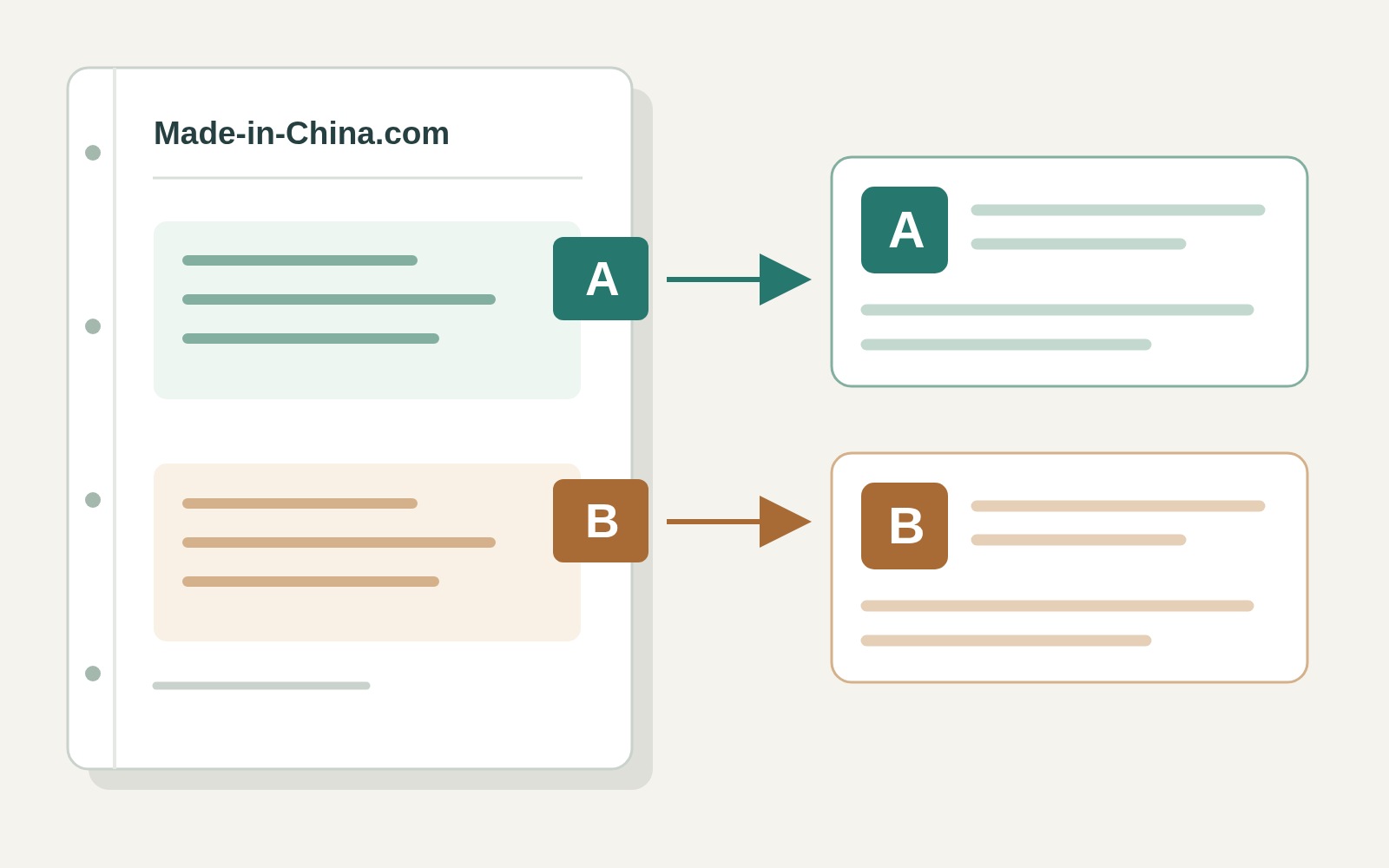
Use a separate row for every company relevant to your order. Record its Chinese name, identifier, role in the report and the section that describes it. An associated company may explain the supplier's operating arrangement; it should not disappear into a single supplier name in your procurement system.
The report names an associated factory
Consider a hypothetical report naming company A as the supplier and company B as an associated manufacturer. A production section describes B's premises. You should not enter those premises as A's registered address or say that a registry match for A confirms B's identity.
Check A using A's name and code. Obtain and check B's identifiers if B's role is material to your purchase. Then ask the supplier to explain how the two companies are involved in the proposed order. Keep the report's stated relationship separate from any additional explanation supplied in a sales message.
This is not a reason to reject every supplier with an associated factory. It is a reason to ask a more precise question. For example: “Please identify the registered company that will manufacture our goods and the company that will accept our order, and show where each appears in the report.”
The quotation names another company
In a second hypothetical situation, the showroom and report identify A, while the quotation names C. Request C's Chinese legal name and business identifier. Establish C's role before applying any conclusion about A to the proposed seller. A similar English name, shared contact or matching product photo does not resolve the identity difference.
If C is the Mainland entity entering the transaction, it needs its own registration check. If the explanation involves an agent or another arrangement, retain that explanation with the order documents. Do not rewrite the supplier record merely to make the names appear consistent.
Registration matching and production assessment answer different questions. A business record can help identify an entity; it does not establish that a production line will make your goods to the required standard. The factory audit and company verification comparison explains where those checks serve different purposes.
Likewise, a business-type label in an audit should be read in its own context. Avoid converting it into an unsupported claim about ownership of a factory or a guarantee of direct manufacturing. If that distinction drives your purchase, continue with the factory and trading-company guide after you have identified the entities.
4. Compare current business records
Once you have a usable Chinese name or USCC, search for that entity with ChinaValidate company search. Enter the company identifier, not the showroom URL or audit report reference. For the official public route, follow the Chinese company registration search guide.
If the relevant identity is only visible in a business license image, start with business license verification. Upload the license file, review the extracted name and code, and examine the comparison with available registration fields. Use the license itself for this workflow rather than treating an entire supplier audit report as a license.
Read the returned record before deciding what it means. Start with the exact entity, then compare available status, registered address, establishment date and representative information with the report and license. Missing information is an unresolved field, not a successful match. Keep the query date alongside the audit date.
| Comparison result | Next action |
|---|---|
| Name and code identify the same entity. | Record the match, then check the specific fields and supplier roles relevant to your order. |
| The code matches, but a name or address differs. | Compare document dates and request evidence of the particular change. Do not assume it occurred. |
| The identifiers point to different companies. | Keep separate records and establish which company is being audited, manufacturing or selling. |
| No company record is returned. | Check the original input and distinguish no match from a service error before drawing a conclusion. |
| A field is absent or unclear. | Request the missing evidence or consult the official record. Do not mark the field as verified. |
Suppose the report and license carry the same code but different Chinese names. First check that you copied both correctly. If they still differ, ask for documents explaining the name change and compare the dates with available registration information. Keep the earlier document; replacing it with the new name would hide the question you needed to resolve.
When the search returns no match, ask the supplier to resend the original Chinese name and complete code as text. A shortened English name, unreadable character or wrong identifier can send the query in the wrong direction. If the service reports an error, retry after the error is resolved; do not describe an unfinished query as evidence that the company does not exist.
Registration information also has a source and a retrieval time. A database response should not be treated as a fresh government confirmation of every field at that exact moment. For a recent change that affects your decision, check the relevant dates and supporting records rather than relying only on a matching status label.
Before approving the supplier in your own process, keep a compact file: the showroom URL, the complete audit report, each relevant company's Chinese name and code, the dated registration checks, and the order document identifying the seller. List unresolved differences under the company they concern.
You can then make a specific, limited conclusion: which registered company matches the report, which sections concern an associated business, and whether the proposed seller has been identified. Product suitability, capacity for your order and delivery commitments still need their own evidence.
Have the supplier's Chinese name or USCC ready? Look up the company and compare it with the audit report. If your starting point is a license attachment, check the business license first and follow the extracted identity into the company record.