
China ICP Lookup for Supplier Checks
Use a Chinese website’s ICP filing to find its recorded operator, compare that identity with the proposed supplier and interpret missing or mismatched records.
Start with the Chinese legal name or USCC. Confirm the matching company before opening its profile.
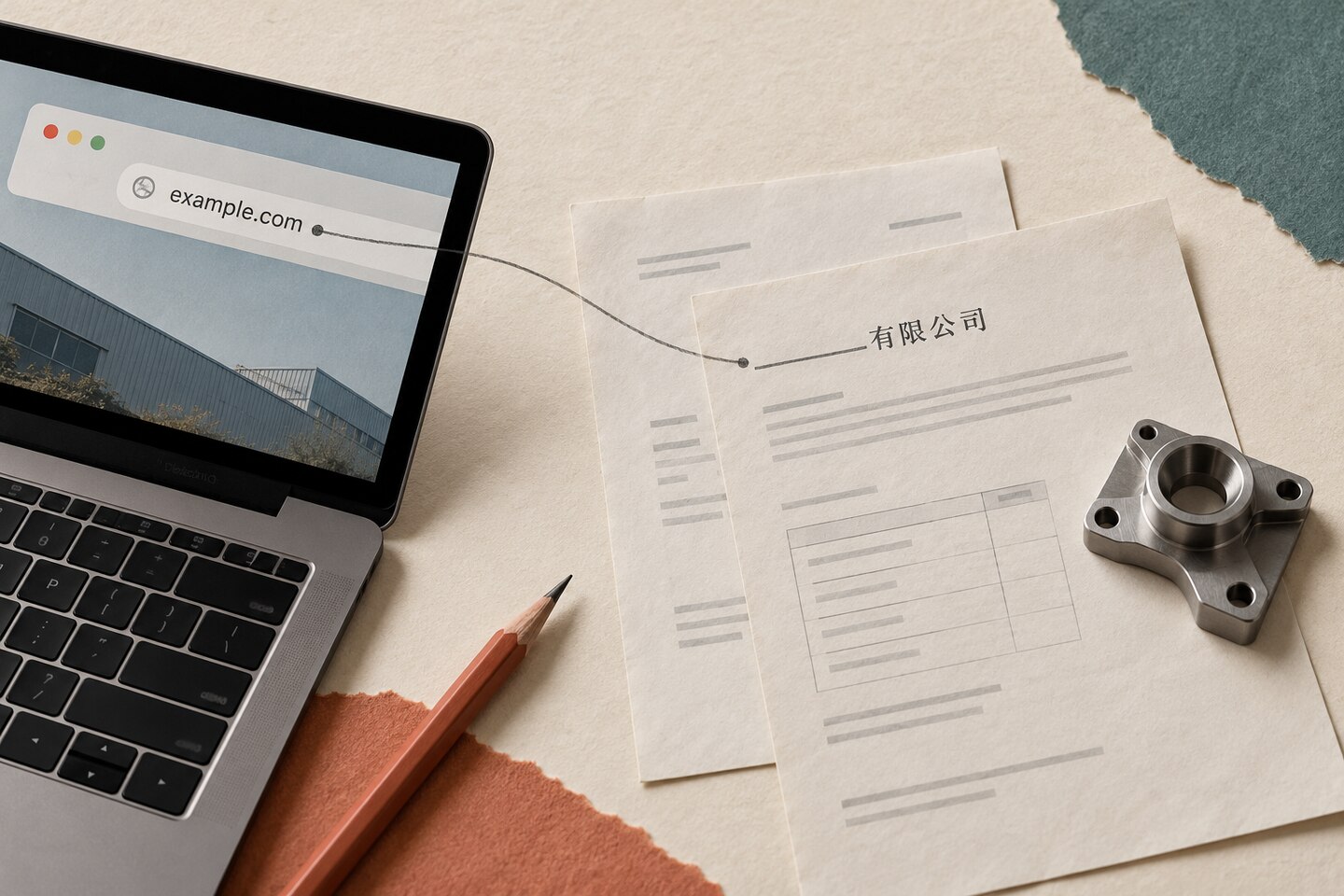
A supplier's website may show an English brand everywhere and a Chinese ICP filing number only in the footer. That small line can be useful: an ICP lookup may reveal the Chinese organization recorded as operating the website, giving you a legal name to investigate.
It does not certify the supplier's products, factories or payment instructions. The useful chain is narrower: website domain → filed operator → registered business → proposed seller. Each connection needs evidence. Finding the first name is the beginning of the company check, not its conclusion.
This guide follows that chain for mainland Chinese suppliers. It explains the official public query, the fields worth keeping and the decisions to make when the name matches, differs or produces no result.
Start with the domain
Keep the exact website address supplied by your contact, including any redirect to another domain. Then separate the registered domain from the rest of the address. In the illustrative address https://www.example.com/item, the query input is example.com. This reserved example domain does not represent a real supplier or a claimed ICP record.
The official portal's input instructions tell users to enter a company name, domain or filing number, without subdomains or address elements such as the protocol and “www.” A product-page link copied into a domain field is therefore a poor starting point. If the supplier uses a country-code domain such as an example ending in .com.cn, preserve that full registered domain rather than removing the ending.
Also note any ICP number displayed in the footer. Treat it as a second query input. Text on a supplier's own page is a claim that you can check; it is not an independent result merely because it links to a government homepage.
If your supplier is using a storefront within a large marketplace, the marketplace domain's ICP record normally concerns the platform operator. It will not automatically identify the individual seller behind a product listing. Use the merchant's own business disclosure for that task.
Use the official public query
Open the Ministry of Industry and Information Technology's ICP filing portal and select ICP备案查询, the filing-query area. For a supplier website, use the 网站 option. The portal also has separate choices for apps and other services; an app name is not a substitute for the supplier website's domain.

- Enter the domain. Follow the field's current instructions and submit the query. Complete any verification requested by the official site yourself.
- Open the relevant result. Compare the returned domain or service details with the address you are checking. A similar company name alone is insufficient.
- Record the filed operator. Copy its Chinese name exactly and keep the filing number and approval date as separate fields.
- Cross-check the footer number. If one was displayed, check that it relates to the same domain and operator. Record a mismatch instead of silently choosing the more reassuring result.
The Zhejiang Communications Administration's filing FAQ directs public checks to this MIIT system. AWS China's ICP guidance independently points readers to the same public query for domains and entities. Hosting providers can explain the process, but their help pages are not the supplier's actual filing record.
If the portal fails to load or a verification step does not complete, record the check as incomplete. An error page does not mean the domain lacks a record. Try the official service again later or ask the supplier for its filed operator and number so you can repeat the check independently.
Read the useful fields
The query page currently labels its result columns with the operator's name and nature, service filing number and approval date. Preserve those Chinese labels in your notes if a translation might otherwise blur their meaning.
| Chinese field | Working English meaning | Use in a supplier check |
|---|---|---|
| 主办单位名称 | Filed operator's name | A lead for identifying the legal organization behind this website |
| 主办单位性质 | Operator type | A reason to check whether the record concerns a company, an individual or another type of organization |
| 服务备案号 | Service filing number | A reference to compare with the website's displayed number and the corresponding service |
| 审核日期 | Approval date | The date associated with the filing record, not the company's incorporation date |
| 网站域名 | Website domain | The domain to reconcile when examining website details |
“Operator” is deliberately more careful than “owner.” The filing identifies the subject recorded for the internet service. It is not a shareholding register, a factory-ownership certificate or proof that the person emailing you has authority to take orders for that subject.
Similarly, an old approval date should not become “twenty years of manufacturing experience” in your evaluation. Company establishment, website filing and commercial trading history are different dates. Check each only if it matters to the purchase.
Connect the operator to the seller
Once you have a Chinese company name, compare it with the license or registered identity supplied for the order. Use the original Chinese characters. English brand names, abbreviations and a translated company name can help a conversation, but they are weaker matching keys.

Imagine a hypothetical website with the brand “Northwind Components.” The public filing names Company A, while the quotation names Company B. Do not translate both names into the brand and erase the difference. Keep A and B as separate subjects until the supplier explains who operates the website and who will sell the goods.
There may be a group relationship, a trading arrangement or an outdated record. There may also be no satisfactory explanation. The filing alone cannot tell you which. Ask for documents appropriate to the claimed relationship, then verify each registered entity that actually participates in your order.
- Search the filed Chinese name. Use the national business register or ChinaValidate's company search to examine available registration information.
- Compare the USCC. If the supplier supplies a business license or order document with an 18-character Unified Social Credit Code, use that code to distinguish legal entities with similar names.
- Confirm the selling party. Have the quotation and order acceptance identify the business taking responsibility for the goods.
- Resolve unexplained changes. If payment instructions introduce another party, obtain a clear explanation before treating the website check as complete.
A matching website operator and company record is useful identity evidence. It does not verify production capacity, product compliance, delivery performance or the security of the supplier's email account. Those questions need their own evidence rather than a stronger label attached to the same ICP result.
Interpret three common outcomes
The names agree
The queried domain, filed operator and business identity on the quotation point to the same registered company. Save the match and proceed to the checks relevant to your purchase. If another colleague later receives revised payment details, the saved record provides a reference for spotting a change.
Keep the conclusion precise: the website filing and proposed seller identity were consistent when checked. Avoid expanding it into “government-approved supplier” or a guarantee of safe payment.
The operator differs
A different name deserves an explanation, not an automatic fraud verdict. Ask the supplier to describe the relationship in a sentence that names both legal entities. “Same group” is a claim to examine; it does not establish which business owes you delivery or a refund.
For a claimed company-name change, compare the registration identifier and relevant business-history information. For an affiliate or trading partner, establish the contractual role instead of assuming all members of a group are interchangeable. Leave an unresolved difference visible in the purchasing record.
No record appears
First confirm that the search completed, the website option was selected and the domain was entered correctly. Then consider the hosting context. Alibaba Cloud's ICP documentation, updated in May 2026, describes the filing requirement for services using servers in mainland China. A mainland supplier can operate an overseas-hosted website, so the absence of a mainland ICP record does not by itself show that the company is fake.
Do not infer server location from a Chinese brand, an English interface or a domain suffix. Delivery networks and hosting arrangements can also complicate the picture. For buyer verification, obtain the Chinese company name and business license directly rather than trying to settle every hosting question first.
If the supplier prominently claims a particular ICP filing but the completed query does not support it, ask for clarification and check again before relying on that claim. Keep this different from a website that makes no filing claim. An unexplained assertion is evidence worth resolving; absence alone is less specific.
Keep the numbers separate
Chinese website footers may show more than one regulatory reference. Copy the label with each number so that it retains its meaning when passed to a colleague.
- ICP filing: a record relating to the internet service. It helps investigate the website operator.
- ICP license: a separate licensing category for commercial internet information services. Do not decide which permission a business needs simply because its website advertises products.
- Public-security filing: a separate registration reference, commonly displayed with 公网安备. It is not the same query as MIIT's ICP filing search.
- USCC: the registered subject's 18-character identifier. Use it for the company-identity check, not as if it were the website's ICP number.
The distinction between licensing and filing is described in the communications administration's explanation of the regulatory framework. For procurement, the immediate task is to identify which record you have, rather than infer a seller's entire regulatory position from one footer line.
Save a usable conclusion
Repeat the domain check when the supplier moves to a different website or changes the business named on its quotation. A saved result for the old domain does not automatically carry over to the new one, even if the design and logo are identical. Ask the established contact to explain the move through a communication channel you already use, then check the newly supplied details.
For routine repeat orders with no relevant change, retain the earlier evidence with its date rather than pretending it is a fresh query. Your notes should distinguish a completed current check from a historical record or a supplier-provided screenshot. That distinction makes later review much easier.
A short evidence note is more useful than a screenshot named “supplier verified.” Include the queried domain, displayed footer number, Chinese operator name, query date, proposed selling company and any unresolved difference. Save enough context to show which domain the result concerns.
Website filing checked for the specified domain. The filed operator is [Chinese legal name]. The proposed seller is [Chinese legal name and USCC, if available]. These identities [match / differ / remain unconfirmed]. The outstanding question is [specific relationship or document needed].
That note makes the next action clear without exaggerating the evidence. For a wider investigation starting with an address or email, use the website and email identity guide. If the lookup yields a company name, continue with the business-license check and the pre-payment company checks. The ICP record contributes one connection; the order documents establish the transaction you actually intend to make.