
Read an Alibaba Supplier Assessment Report
Read an Alibaba supplier assessment by its company, date and scope. Use historical report excerpts to identify useful evidence and the questions still open.
Start with the Chinese legal name or USCC. Confirm the matching company before opening its profile.
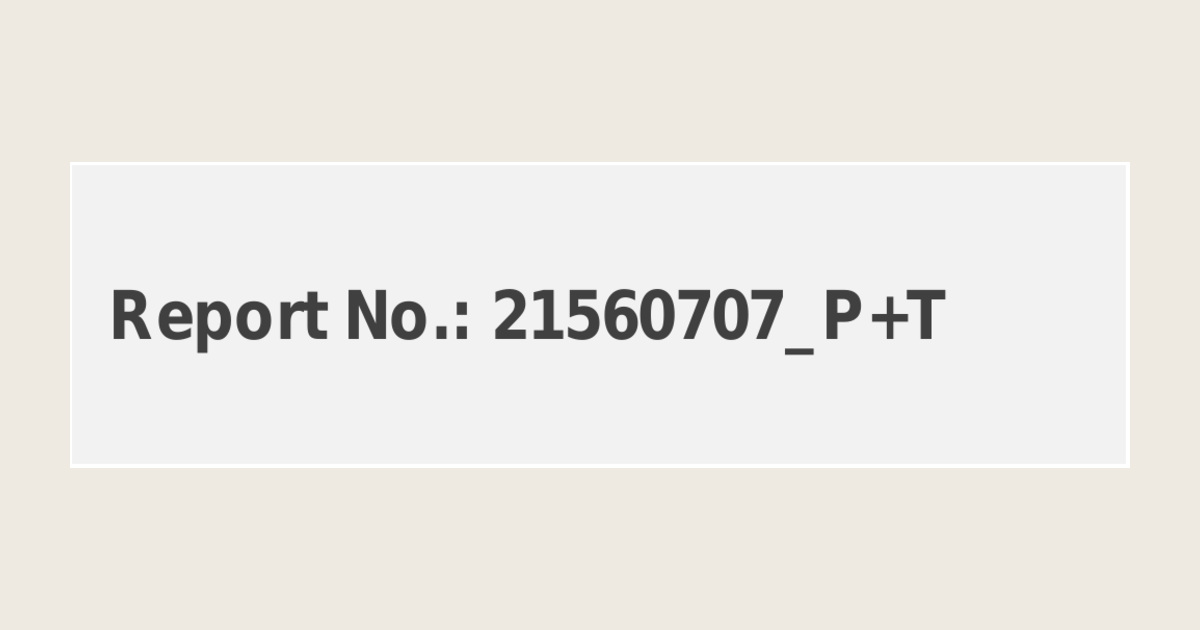
Cover: a report-number excerpt from a supplier assessment issued in 2021. The historical document is used for reading practice, not as evidence of a supplier’s current status.
A supplier sends you a long assessment report after you ask about its Alibaba profile. The document has an inspection-company logo, machinery photographs and several pages of tables. It looks substantial. The useful next step is to connect its findings to the company, factory and product you are actually considering.
An Alibaba supplier assessment report is a dated assessment with a defined scope. Read it as evidence to examine, not as a blanket approval of every product sold by the account. This guide follows the fields that matter most, using small extracts from a real historical report and a separate hypothetical purchasing example.
Get the complete document
Alibaba describes its Verified Supplier programme as including third-party on-site verification and an assessment report available to buyers. Its buyer explanation points to factory inspection reports within the company-profile area. Interface labels can change; look for the downloadable report behind the supplier’s verification information.
Save the full file and the profile URL from which you obtained it. A badge screenshot leaves out the assessor’s scope, exceptions and dates. If the supplier sends only a cover or certificate, ask for the underlying report, including its contents page and notes. Keep the original alongside any translated copy so that names and field labels remain traceable.
Start a short reading note with three columns: the supplier’s claim, the report page supporting it, and what still needs checking. For example, a sales message saying “we make this ourselves” needs evidence about the relevant entity and process. A photograph of a workshop is useful context, but does not answer that whole question.
Three identifiers to separate
| Field | Identifies | Compare it with |
|---|---|---|
| Report number | A particular assessment document | The issuing assessor’s record or verification response |
| Chinese legal name and USCC | The registered Mainland company | The business licence and company-registration record |
| Alibaba member or profile identity | The storefront associated with the report | The actual profile and the seller named in your proposed order |
Do not paste the report number into a Chinese company search and expect it to identify the business. Equally, a successful company search does not authenticate the PDF. Those are separate checks. Copy the Chinese legal name exactly, and retain the full 18-character Unified Social Credit Code where the document provides it.
China’s enterprise-information disclosure rules provide for registration and filing information to be published through GSXT. Use that independent company identity as your reference point. Our Alibaba company-registration guide covers the lookup itself; this article concentrates on interpreting the assessment you received.
For the assessor check, use an issuer-controlled website reached independently. SGS lists document and supplier-verification routes, including an audited-supplier database searchable by company name or report number. Choose the route appropriate to the document. A management-system certificate directory is not automatically the correct database for a supplier assessment.
If a search returns nothing, preserve that result and ask the issuer through its official contact channel. A missing result alone does not establish forgery: the document might belong to another verification route or an older system. Conversely, matching a report number is not enough if the company, assessment type or date differs from the file in front of you.
Check continuity within the file too. Compare the report reference in the header or footer across pages, the stated page count and the contents list. A missing section may be an incomplete download rather than a suspicious finding. Request the complete version before interpreting an omission. If two copies differ, retain both and identify the changed page instead of merging them into an undocumented hybrid.
The date is part of the finding
The extracts here come from a publicly posted SGS report for Guangdong Ecocampor Vehicle Co., Ltd. It records an assessment on 25 January 2021 and validity ending on 25 January 2022. It is a historical example, not a current assessment or a recommendation of this supplier.

A recently downloaded file can still describe an old visit. Write down the visit date, report date and any stated validity period separately. Then compare them with changes relevant to your order: a move to another factory, new ownership, a new product line or a claim about recently installed equipment.
Expiry does not tell you that the company has become unreliable. It tells you that this particular document cannot establish current assessed status. Ask for the latest applicable report and an explanation of material changes. If you retain an older report for comparison, label it by year rather than allowing it to circulate internally as the current supplier assessment.
The store and the assessed company
The historical cover contains a field linking the Alibaba supplier to the assessed company. Its selected option is Self-owned. The important reading habit is to inspect the selected relationship and the names beside it, rather than assuming that every factory pictured belongs directly to the storefront.

Read the form’s terminology in its own context. A cooperation relationship is different from ownership. A shared shareholder does not turn two companies into one legal entity. An office address and a production address can also differ legitimately. The practical issue is whether you understand which company is selling, which site was assessed and which site will make your goods.
Consider a hypothetical order: the report names Company A, while your quotation names Company B. Do not simply replace one name with the other in your purchasing file. Ask the supplier to identify both companies, explain their relationship and confirm each party’s role. Then compare the answer with registration information and the contractual documents.
If the only identity evidence you have is a licence photograph, business-licence verification can help extract and compare the available fields. It does not confirm factory ownership or the authenticity of an assessment report. Use it to resolve the company-identification part of the question, then return to the assessor’s evidence for the site.
Read the scope before the photographs
Report types differ. Intertek’s 2010 explanation of its Alibaba audit services distinguished production reviews from trading reviews. That historical description is useful context, not a specification of every current programme. The assessment type, contents and methods in the actual report control what you can reasonably take from it.
For an independent illustration, an Intertek report hosted on Alibaba’s document CDN records a trade assessment dated 26 November 2020. Its stated validity ended in November 2021. A trade-focused report should not be relabelled a factory-production audit merely because both documents appear under supplier verification.
Use the contents page to locate the sections that answer your purchasing question. For a manufactured product, follow the process: materials, relevant equipment, subcontracted operations, testing and final checks. For a trading business, examine how it selects and manages its manufacturing partners. These are different operating models, not automatic good-versus-bad categories.
| Entry you find | Useful interpretation | Next evidence to request |
|---|---|---|
| Equipment list | Equipment recorded within the assessment’s scope and date | The process and site proposed for your specific product |
| Production figure | A quantity with a period, unit and stated basis | Available capacity for your volume and delivery window |
| Certificate entry | A reference to a particular certificate or scheme | The complete certificate, scope, issuer and relevant models |
| Blank or unavailable field | A gap requiring interpretation | Whether it was outside scope, unavailable or checked without a result |
Keep the distinction between observed facts, documents reviewed and supplier statements. If the report does not explain the basis for a figure, do not silently describe it as independently measured. Ask which evidence supports it. A useful reading note may say “capacity recorded; basis unclear” rather than turning uncertainty into a confident approval.
Numbers need their units and periods. Annual output is not spare capacity next month. A headcount does not show which employees work on your product. A photograph does not establish that a machine was operating during the visit. These are interpretation limits, not accusations; they help you ask a narrower and more answerable follow-up.
Photographs are most useful when their captions connect them to a named site or process. Trace a product through the report rather than counting images. If a critical operation appears only under subcontracting, ask where it takes place and who checks it. If the image shows a showroom, do not describe it in your internal note as a production line. Preserve the distinction the document actually makes.
Bring the report back to your order
Suppose, hypothetically, that you are buying 5,000 insulated bottles. An assessment may help you understand the supplier and its processes, but your order still has its own material, finish, packaging and delivery requirements. Write those requirements down before deciding which report sections are relevant. Otherwise, an impressive but unrelated facility description can dominate the review.
QIMA distinguishes a manufacturing audit from a product inspection: the former examines a supplier’s facilities and systems, while the latter checks goods against requirements. That distinction explains why a supplier assessment does not replace an inspection of your particular production lot. Decide what additional evidence the order needs.
Keep three decisions separate: the company identity is matched; the assessed operation is relevant; the order’s requirements have acceptable evidence. You may be comfortable with one and still need work on another. This produces a clearer purchasing discussion than a single “verified” label covering several unanswered questions.
For the hypothetical bottle order, a useful note might read: “Company matched against the proposed seller; assessment covers the stated site; decoration will be subcontracted; finish requirements and final inspection remain to be agreed.” That note does not claim the supplier passed a new audit. It preserves the evidence you have and gives the next person a concrete task, with an owner and a deadline.
Your follow-up request can therefore be specific:
Please send the latest complete assessment for the company and site proposed for our order. Confirm the Chinese legal name, USCC, assessed-site address and any changes since the visit. Identify the report pages relevant to our product and explain any subcontracted steps. Please also provide the separate product documents or inspection arrangements needed for our specifications.
Finish with a short evidence note: what you matched, what the dated report supports, and which questions remain open. Keep page references so a colleague can reproduce your reasoning. To check the Mainland company identity, search by its Chinese legal name or USCC. For the broader transaction, use our supplier-verification guide; the assessment is one useful piece of that review.