
Alibaba Invoice Documents for Buyers
Separate Alibaba.com order records, pro forma and commercial invoices, payment evidence and Chinese fapiao, then request the documents your purchase actually needs.
Start with the Chinese legal name or USCC. Confirm the matching company before opening its profile.
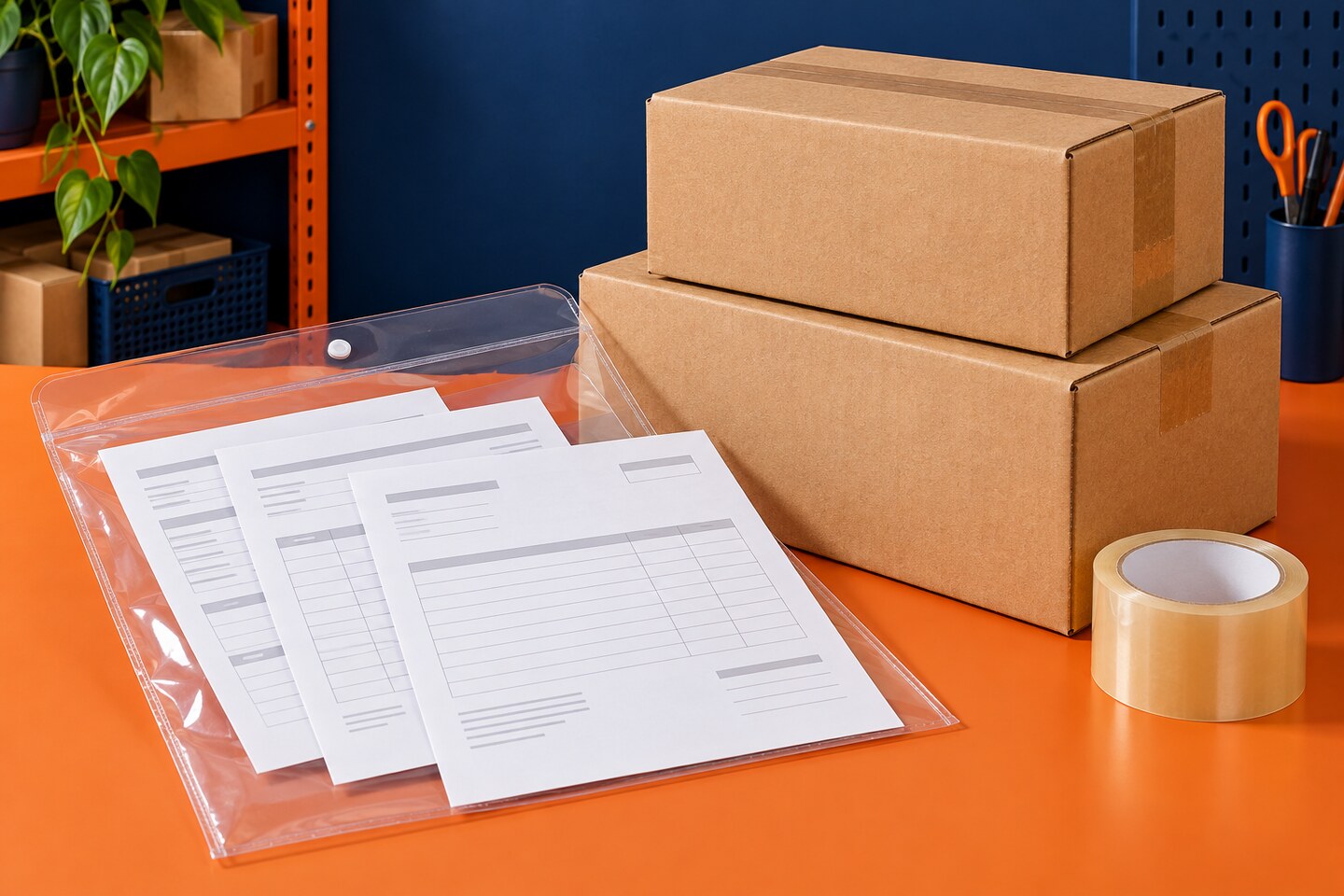
Your Alibaba.com supplier sends a pro forma invoice before payment. The platform later shows a paid order, and the freight forwarder asks for a commercial invoice. Your accountant then asks whether a Chinese fapiao is also available. Downloading another copy of the same order page will not necessarily answer all three requests.
For purchases from Mainland Chinese suppliers, “Alibaba invoice” is often an imprecise name for several different documents. The practical task is to identify what each recipient needs, who should issue it and which transaction it describes. Alibaba.com, its seller and a logistics provider should not be treated as one invoicing business merely because they appear in the same order journey.
Separate the document jobs
| Document | Main job in a purchase file | Do not assume |
|---|---|---|
| Pro forma invoice | Records a proposed commercial offer and terms | That it proves payment or final shipment |
| Accepted order or purchase order | Records the agreed purchase and specifications | That every later invoice automatically matches it |
| Payment record | Records a payment event and its status | That it is the supplier's commercial or tax invoice |
| Commercial invoice | Documents the commercial sale for the relevant shipment and clearance process | That a Chinese VAT portal will authenticate it |
| Chinese tax invoice, or fapiao | Records the invoiced transaction under Chinese invoice rules | That it replaces every export, customs or payment document |
Alibaba.com's purchase-order guidance distinguishes a supplier's pro forma quotation from the purchase-order record. The International Trade Administration's commercial-invoice guidance explains that document's customs role and the need to check destination requirements. These sources support different document jobs, not a single universal invoice template.
Before asking the supplier for “the invoice,” tell it whether the file is for approving the order, paying a balance, clearing a shipment or supporting accounting. The answer may involve more than one document. A finance colleague's preferred English wording should not silently change the legal seller or the underlying transaction.
Start from the accepted order
Open the order under the account used for the purchase and retain the available order and payment records. Use the current account interface and support channel; button names and download options can differ by account and service. Do not rely on an unrelated Alibaba Cloud billing tutorial for an Alibaba.com goods order.
Save the agreed product variant, quantity, unit basis, currency, delivery terms and seller details. A short chat summary may omit a packaging requirement or an accepted change. Keep the final agreement that actually applies to the order, rather than assuming the first pro forma attachment remains current forever.
The order reference should appear in your internal purchase file even when it is not the same as the supplier's invoice reference. Keep both identifiers. An order can have several related invoices or shipments, and a repeated supplier relationship can produce similar totals that are easy to confuse.
If the seller changes the quantity, delivery arrangement or commercial terms, record the accepted change before comparing later paperwork. A final commercial invoice can legitimately reflect the agreed final transaction, but an unexplained difference should not be dismissed simply because it came from the same salesperson.
Review the pro forma carefully
A pro forma invoice can be a useful summary of the proposed deal. Compare its parties, goods, specifications, quantity, price and terms with your understanding of the order. The useful question is whether it records the offer you intend to accept, not whether its layout looks formal enough.
Check the supplier's full legal identity, particularly if the document displays only a brand or a short English trading name. Obtain the Mainland business's Chinese legal name and registration identifier separately when needed. A company search helps identify that entity; it does not decide whether every commercial term in the pro forma is appropriate.
A pro forma amount is not proof that payment has been received. Nor does a “paid” note on a commercial document replace the relevant payment-provider record when settlement is disputed. Treat each record according to its purpose and preserve the connection between them.
Our China pro forma invoice guide covers detailed review of that document. Here, retain it as one stage in the purchase history and avoid submitting it as the final shipment invoice merely because its title contains the word “invoice.”
Request the shipment document
Before dispatch, ask the person responsible for clearance which commercial-invoice information the destination requires. The seller or exporter needs accurate buyer, seller, goods and shipment information. Requirements can depend on the destination and transaction, so do not transplant a form from a previous country without checking.
Compare descriptions and quantities with the goods actually being shipped. A vague phrase such as “samples” or a generic product label may not answer the recipient's needs. Ask the supplier to describe the actual goods accurately; do not request an artificially low value or an inaccurate description to make clearance easier.
Check the relationship to the packing list and shipment reference. The documents do not perform identical jobs, but they should describe a coherent shipment. A commercial invoice for the full order and a packing list for a partial delivery need an explicit explanation, rather than an assumption that customs will infer the arrangement.
For partial shipments, identify which goods and amounts each document covers. Keep any advance payment and remaining balance in a separate payment reconciliation. Do not subtract a deposit from the stated value of the shipped goods simply because only the balance is still payable; ask the responsible adviser how the relevant document should be completed.
Clarify the Chinese tax invoice
A Chinese fapiao is a separate question from the export commercial invoice. Whether a particular document should be issued, to whom and in what form depends on the actual transaction. Do not assume that a purchase through Alibaba.com always produces a domestic invoice addressed to the overseas buyer in the same way as a local retail sale.
Identify the seller, buyer and any intermediary. If a trading business buys domestically and sells to you, its purchase from a factory and its sale to your business are distinct transactions. The factory's invoice to the trading business does not automatically become your company's invoice. A platform order does not erase those relationships.
The Chinese invoice implementation rules distinguish invoice information from the underlying business activity and require truthful documentation. A buyer should not ask an unrelated company to issue a convenient invoice merely to complete an accounting folder.
If the actual purchaser is an overseas company without a Chinese USCC, explain that to the issuer rather than entering a borrowed identifier. See fapiao for foreign companies for the buyer-information issue. A blocked form needs clarification through the seller's process, not an invented Chinese company identity.
A file for one hypothetical order
Imagine a buyer orders a batch of unbranded storage boxes from a Mainland trading company. The seller first sends a pro forma, the buyer accepts a detailed order, a deposit is paid, and the shipment is later split into two consignments. This is an illustrative scenario, not a description of a real Alibaba.com order.
The buyer keeps the original offer but marks which later order revision was accepted. Each consignment is linked to its own shipping paperwork. The payment record explains the deposit and later balance. If a separate logistics business invoices freight, its service document is filed under that business rather than relabelled as the goods seller's invoice.
If finance asks for a fapiao, the buyer first clarifies the purchasing chain and the required document with the seller. It does not rename the factory's domestic buyer or replace the commercial invoice with a random tax invoice for the same total. The outcome should describe the actual transactions, even when that requires several documents.
A useful request is: “Please identify the document for your sale to our company, the commercial invoice for each shipment, and any separate service invoices. Please connect them to order [reference] and explain any differences in seller names or totals.” That asks for an intelligible file without dictating an incorrect tax treatment.
Check identities and unresolved differences
Compare the legal seller across the accepted order, supplier-issued documents and business registration evidence. If names differ, ask for the role of each company. A shared logo or marketplace storefront is not enough to explain why a different entity is invoicing or receiving payment.
Use the Alibaba supplier registration guide for the company-identification work. Keep any explanation tied to the particular order. Do not merge separate entities in your records simply to remove a mismatch.
- State the purpose of each requested document.
- Keep the accepted order and its revisions.
- Connect shipment paperwork to the actual goods and consignments.
- Separate goods, logistics and intermediary transactions.
- Resolve inconsistent parties or amounts with the issuer.
Use ChinaValidate company search for the Mainland supplier and invoice verification when a supported Chinese tax invoice is provided. A pro forma or ordinary commercial invoice should not be declared fake merely because it is not retrievable as a Chinese VAT invoice.
The completed file should allow someone outside the original negotiation to understand what was agreed, who sold the goods, what was shipped, what was paid and which invoice records each part. That is more useful than a folder full of documents all named “Alibaba invoice.”