
Evidence for an Alibaba Trade Assurance Dispute
Connect an Alibaba order, its mainland seller and the actual shortage or quality problem in a clear evidence file for a refund dispute.
Start with the Chinese legal name or USCC. Confirm the matching company before opening its profile.
A useful Alibaba dispute file connects four things: the protected order, the company that accepted it, the requirement that was agreed and evidence of what happened. A large folder of screenshots can still leave those connections unclear. Organize the material around the difference you want the platform to resolve.
Start by opening the actual order and reading its current refund options, notices and deadlines. Preserve the order before discussing changes with the seller. This guide explains evidence preparation for purchases from mainland Chinese suppliers; it does not predict a refund decision or replace the terms attached to your order.
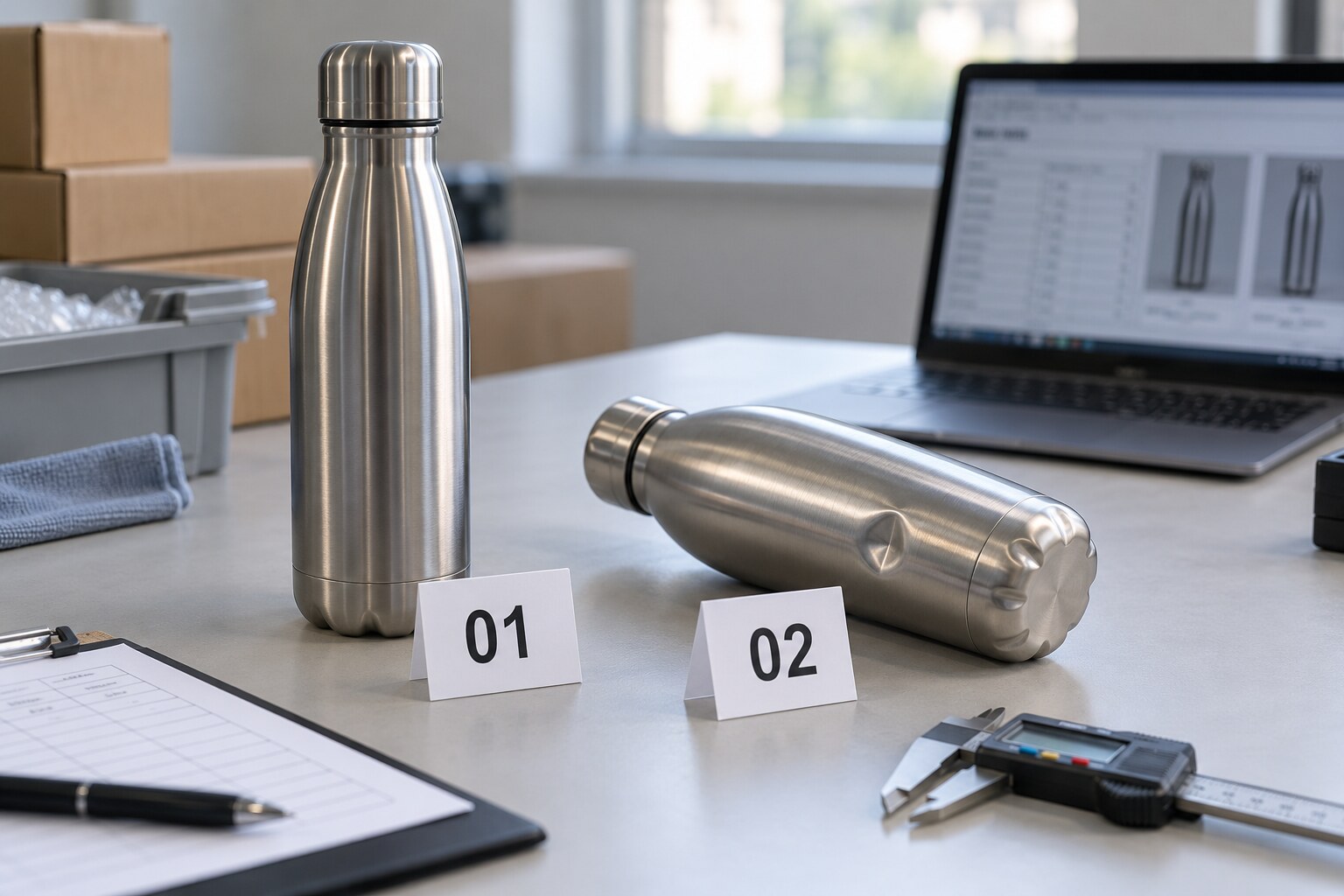
The cover is an AI-generated inspection illustration, not evidence from a real supplier dispute.
The order controls the starting point
Alibaba’s Trade Assurance explanation connects protection with an online order and payment through Alibaba.com. It says the online order and communication records form the basis for refund resolution. A supplier displaying the Trade Assurance symbol does not make every transaction with that business a protected order.
Save the complete order, its identifier, seller details, product lines, attachments, payment records and relevant messages. Include amendments rather than keeping only the first quotation. A change in quantity, material or delivery date can alter the comparison. Keep the version accepted by both sides and the evidence of that acceptance.
Check where your payment was allocated. A bank transfer can be part of a platform payment route when it follows the instructions for that order. Conversely, a transfer sent directly to an account supplied in a private message needs separate examination. The word “bank transfer” alone does not establish whether payment went through the protected route.
Use the deadline and action request shown for your particular order or case. Public explanations can describe different services, buyer categories or stages. If a notice is unclear, ask platform support through the official account and preserve its answer. Do not assume that negotiating with the supplier suspends a countdown.
Name the business in the file
The store name is useful for finding the conversation. It may not be the registered name of the seller. Record the company identified in the order separately from the storefront label, salesperson, manufacturer and payment processor. Your evidence should explain which business accepted the obligation you say was not fulfilled.
For a mainland supplier, obtain its Chinese registered name and Unified Social Credit Code, or USCC. China’s online-trading rules describe the identity information registered sellers disclose. Save the supplier’s business disclosure or license; the platform operator’s own corporate details in a website footer identify a different business.
Use ChinaValidate company search to compare the mainland identity with available registration information. If the name is trapped in an attachment, business-license verification can help extract and compare the fields. Neither service decides the dispute, proves control of an Alibaba account or authenticates a payment.
Where an invoice names another company, retain both identities and the supplier’s explanation. An export affiliate or disclosed reseller may have a legitimate role. That relationship still needs documents. Do not replace the order seller with the factory’s name simply because a factory report looks more substantial. Our invoice-name mismatch guide covers that separate reconciliation.
Turn the complaint into a comparison
Write one factual sentence identifying the problem, then show its basis. “The shipment is wrong” gives a reviewer little to test. “The order specifies the blue version, but the delivered cartons contain the green version” identifies an agreed attribute, an observed difference and the evidence needed to connect them.
Use a compact evidence index. Give each original file a reference and a short description. State which order line, parcel, date or requirement it supports. Preserve originals separately from annotated copies. An explanatory arrow can help a reader locate a defect, but the unedited photograph should remain available.

For messages, preserve the surrounding exchange, account identity and date. A cropped sentence can omit a qualification or later agreement. If you provide a translation, identify it as a translation and retain the original. A supplier’s admission may be useful, but explain which item or shipment it concerns rather than relying on an isolated “yes.”
Keep unrelated records out of the main claim. A supplier assessment may identify a factory and describe a past visit, but it cannot establish how many bottles were in your delivery. A business license may identify the seller without proving the agreed finish. Link background documents where relevant and give the transaction evidence the space needed to explain the actual problem.
The practical discussion by Lyu & Associates emphasizes linking the delivered product to the agreed specifications and supporting a requested remedy with evidence. It is a law firm’s explanation, not an Alibaba decision rule. The useful habit is to make each allegation reproducible from the attached material.
A shortage needs a count
Consider a hypothetical order for 240 bottles at USD 6 each. The buyer counts 216 bottles after receiving the shipment. The apparent shortage is 24 bottles, corresponding to USD 144 at the agreed unit price. Those figures identify a question; they do not yet establish why the difference arose or the final refund amount.
First check whether the order was intentionally split. Compare the accepted order, packing list, shipment references and messages about partial deliveries. A packing list showing the full order is not proof that every carton arrived. Equally, a first delivery containing fewer units may be consistent with an agreed second shipment.
Record how the count was made. Connect carton identifiers, shipping labels and the received contents. Keep delivery records and photographs of damaged or resealed packaging. If somebody else received the goods, obtain their dated receiving note rather than writing as though you witnessed the opening yourself.
Then separate the missing-goods calculation from other requested amounts. Freight, inspection costs, replacement charges and consequential losses may have different contractual treatment. Explain each requested amount and its supporting document; do not automatically apply the product unit price to everything in the complaint.
If the seller proposes sending the outstanding units, record whether you accept that remedy and what delivery commitment applies. Keep the original shortage visible until the replacement is received and reconciled. A promise to send another parcel, a new tracking number and actual receipt are separate events. Updating the timeline is more useful than marking the whole problem resolved at the first promise.

A quality claim needs a requirement
A photograph can show a dent. It may not show alloy composition, electrical safety or performance over time. Choose evidence that answers the particular allegation. Start with the accepted requirement, then identify the received product and the observation or test that demonstrates the difference.
Suppose the bottle order includes an approved finish sample. Photograph the received units under comparable conditions and identify the sample used for comparison. If the dispute concerns a dimensional tolerance, preserve the agreed drawing revision, measurement method and individual results. A photograph of a measuring tool without the relevant reading or product reference leaves an important gap.
State the inspection scope accurately. Finding several damaged units does not automatically establish that every unit is damaged. A sampled inspection, a full count and a laboratory test answer different questions. Where technical evidence is necessary, agree or obtain an appropriate independent inspection and preserve the report’s product identifiers, method and limitations.
A sample-versus-production complaint needs its own chain. Identify when the reference sample was approved, what characteristics it represented and whether later changes were accepted. If a sample established appearance only, do not silently treat it as agreement on an untested performance claim. Conversely, a written specification should not disappear from the evidence merely because the sample photographs look acceptable.
Keep affected goods and packaging identifiable while the issue is being examined. Before repair, disposal or return, record their condition and check the instructions applicable to your case. A return request should specify the recipient, address, authorization, shipping cost and tracking requirements. Sending goods to an informal address can create another dispute about what was returned and who received it.
Keep the chronology readable
A short timeline helps separate the agreed shipping date, actual dispatch, delivery, discovery of a problem and the first complaint. Use the dates shown in the original records. Explain any time-zone difference when it affects the sequence. Do not silently replace the contractual ship date with a later estimated arrival date.
Distinguish a shipping label being created from carrier acceptance and delivery. Match tracking references to the actual order and destination. If a logistics record cannot be reconciled, describe the missing connection and request the corresponding evidence. An unfamiliar tracking page alone does not prove that no shipment exists.
Keep the latest request visible at the top of your submission. For example: the shortage remains unresolved; the seller says another parcel was sent; the missing item is the carrier reference connecting that parcel to this order. This is easier to assess than repeatedly uploading the same entire conversation without identifying what changed.
Explain an incomplete record honestly. If the receiving team did not film the original unpacking, say which contemporary records do exist. Do not recreate an opening video and present it as the original event. A later recount can still be useful when its date, method and relationship to the earlier receiving note are clear.
Read a proposed settlement carefully
A seller may offer a partial refund, replacement, repair or discount on a later order. Compare the proposal with the actual problem. Replacement goods require an agreed specification and delivery arrangement. A future-order credit depends on making another purchase. Neither is equivalent to an immediate refund simply because the stated amount looks similar.
Record what the proposed amount covers and what obligations remain. If you accept a partial resolution, understand the wording before confirming it in the platform. Read any request to close the case, confirm receipt or change the complaint against the current order instructions. Preserve the proposal and your response.
Respond to platform evidence requests with the specific missing information. Keep a copy of the submitted files and the submission confirmation where available. If the platform outcome does not resolve the underlying commercial dispute, further options depend on the actual contract, parties and applicable law; obtain appropriate advice rather than assuming a platform decision settles every legal question.
The finished file should let another reader identify the seller, follow the accepted order, reproduce the difference and understand the requested remedy. A current company record anchors the identity. Original order and transaction evidence explain the dispute. Keep those purposes separate, and the file becomes clearer without claiming more than the documents show.