
Identifying Fake Chinese Invoices
Separate altered fapiao files, borrowed invoices and transaction mismatches, then check the invoice record and the company named as issuer.
Start with the Chinese legal name or USCC. Confirm the matching company before opening its profile.
A Chinese invoice can look convincing and still need a closer check. A changed amount, a borrowed invoice number and an invoice for a different buyer are different problems. Treating all of them as “a fake PDF” makes it harder to decide what evidence to request.
Start with three questions: does the received document match the invoice record, does that record describe your transaction, and does the issuer match the business you dealt with? A visual clue helps you choose the next check. It cannot answer all three questions by itself.
This guide concerns Mainland Chinese tax invoices, commonly called fapiao. The situations below are illustrative examples, not allegations about real suppliers.
Identify the document first
Before investigating a suspected fake, establish what the supplier actually sent. A pro forma invoice requests or describes a proposed payment. A commercial invoice supports a commercial shipment. A Chinese tax invoice belongs to a tax-administered invoicing system. These documents may all be called “invoice” in an English email.
A commercial invoice without a Chinese tax-invoice number is not automatically counterfeit. Conversely, a document headed “VAT Invoice” does not become a Chinese fapiao because the sender chose that English title. Ask for the original document name and its purpose when those points are unclear.
The fapiao and commercial invoice comparison helps separate the documents before you apply the wrong test. Keep any quotation, payment request and tax invoice as separate records even if their totals happen to agree.
For an electronic fapiao, retain the attachment as received. A printout, screenshot or file converted from an image may hide useful context. Request the issuer's original electronic file through the established contact channel instead of accepting a newly edited version of the same screenshot.
Read visual clues carefully
Odd spacing, a different typeface within one amount, a cropped buyer field or a blurred company name deserves attention. These features can result from editing, but scanning, compression and document conversion can produce similar effects. Record the precise anomaly rather than declaring the whole invoice fake from its appearance.
The reverse is equally important: clean typography does not establish authenticity. Someone can copy a genuine layout or reuse a genuine invoice belonging to another transaction. A familiar red mark, professional PDF or scannable code cannot establish that the document belongs in your purchase file.
Do not demand a visible seller stamp on every electronic invoice. Requirements depend on the invoice type. Missing a traditional stamp can be normal, while a copied stamp image proves very little. Compare the identifying fields and applicable records before requesting a correction.
| What you notice | What it establishes | Useful next step |
|---|---|---|
| The amount uses a different font | A visible inconsistency, not its cause | Compare the original file with the returned invoice information |
| The document has no red seller stamp | Only that a visible stamp is absent | Identify the electronic invoice type |
| The QR code opens a page | The code has a destination | Check the destination and compare the actual invoice details |
| The company exists | A registered entity was found | Check that it is the issuer and transaction counterparty |
A changed amount
Consider an illustrative purchase file. The received attachment shows CNY 12000, while the original invoice information obtained through the appropriate verification route shows CNY 1200. The invoice number alone is the same. That agreement does not resolve the amount difference.
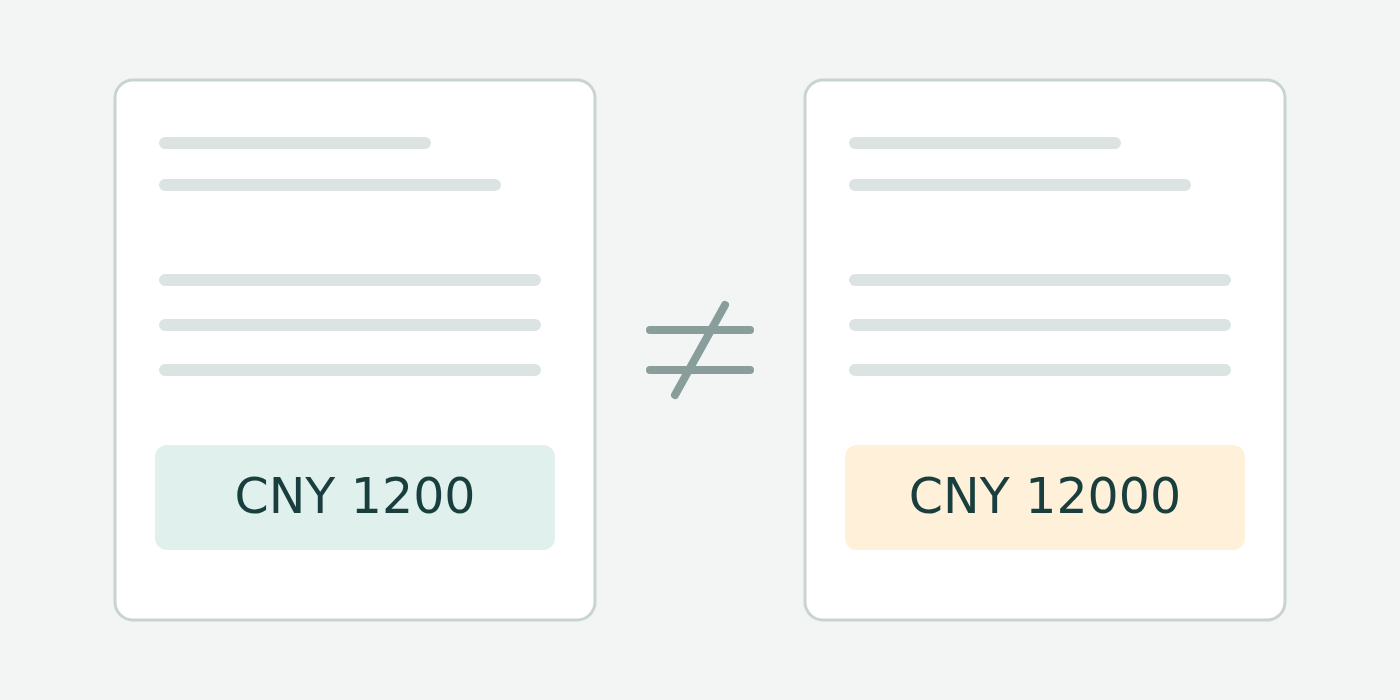
First eliminate a reading mistake. Check whether one value is before tax and the other includes tax. Confirm the decimal position, invoice date, relevant currency and any attached item schedule. A translation or spreadsheet transcription may contain an error even when the underlying invoice is unchanged.
If the discrepancy remains, ask the issuer to explain it and provide the unaltered source file. Keep both versions. Do not repair the PDF yourself or ask the salesperson to replace one number with another. A required invoice correction should follow the issuer's proper procedure, with the replacement or adjustment linked to the original.
Until that evidence is available, record the specific issue: “The received total differs from the checked record.” That is more useful than an unsupported fraud accusation and gives finance a clear reason to pause use of the document.
A borrowed invoice
In a second illustrative situation, a number returns a matching invoice record, but the buyer named on that record is another business. The supplier explains that it sent an example “to prove we can issue invoices.” An example may demonstrate a document format; it is not the invoice for your own purchase.
Compare the buyer, seller, issue date, goods or services, quantity and amount with your order. Matching only the seller and total is insufficient. A real invoice can be irrelevant to the transaction in front of you, and a genuine historical invoice cannot stand in for a current invoice simply because the supplier has not issued one yet.
Ask whether the file is a sample, a previous customer's invoice or the document intended for your transaction. If it is only a sample, label it accordingly and remove it from the set of documents approved for payment or reimbursement. Request your own properly issued document when one is due.
Protect the other buyer's information. You do not need to circulate an unrelated customer's full invoice to investigate your supplier. Share only the relevant mismatch with the colleague or adviser who needs it, and keep the original evidence in a restricted purchase folder.
A real record, a different transaction
A third situation is less visible. The invoice information matches the returned record, but the document describes services that were never ordered, names an unexplained issuer or cannot be linked to delivered goods. A successful information check does not independently establish that the underlying transaction happened as described.
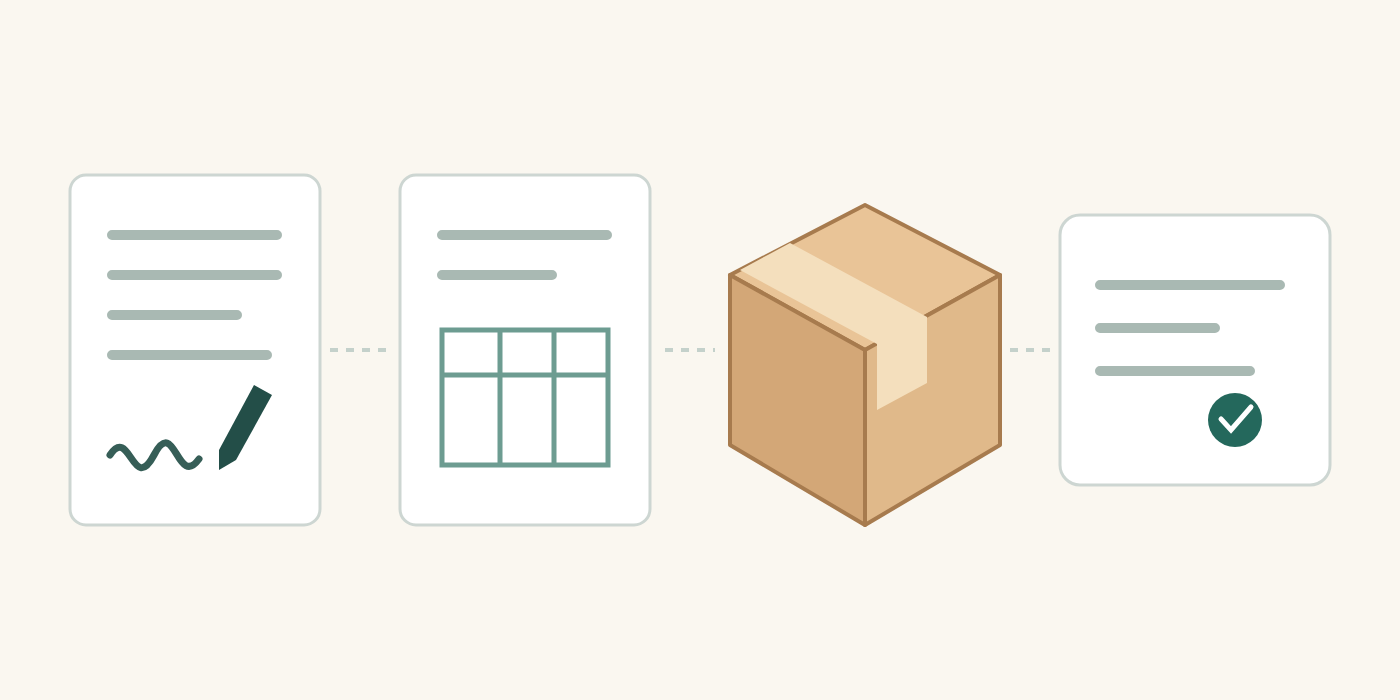
The State Taxation Administration's invoicing guidance separates the parties, actual business activity, invoice information and timing. It calls for truthful invoicing supported by the transaction. This is why a buyer should keep the contract, invoice, delivery evidence and payment record together.
Different businesses can perform different roles in an order, such as a manufacturer, trading company and disclosed purchasing agent. Do not assume either that every difference proves wrongdoing or that a verbal “same group” explanation settles it. Identify the entities and obtain documents explaining their roles.
Match the issuer's Chinese legal name and taxpayer identifier to its company record. Then compare that entity with the seller in your agreement. If they differ, ask who supplied the goods, who must issue the relevant document, who receives payment and who remains responsible for problems with the order.
The supplier and invoice-name mismatch guide covers that relationship in more detail. An unresolved identity question is a reason for follow-up, not a reason to merge two companies into one entry in your purchasing system.
Use the right verification fields
Use an appropriate verification service for the invoice type, and compare its returned information with the file in front of you. The official verification instructions specify different fields for different invoices. Older formats may require a code and number; a fully digital invoice uses a 20-digit invoice number and the other fields required for that type.
Enter the value requested by the service, not automatically the largest total on the page. Depending on the invoice type, the requested amount may be before tax or tax-inclusive. If the service requests a verification code, do not substitute the seller's tax identifier or digits from an unrelated reference.
An unsuccessful query is not a complete fraud finding. Recheck the selected invoice type, transcription and required fields. Distinguish “information does not match” from “no record found” and from a technical failure. Preserve the actual message so the next person does not mistake a connection problem for a tax-authority conclusion.
For a supported invoice, ChinaValidate invoice verification helps examine the invoice information. Follow with a company check when the issuer's identity matters. Keep the tool's result within its scope: it does not inspect a factory, authenticate a salesperson's authority or certify every aspect of the purchase.
Request a usable correction
Send a short, factual request through a contact route already associated with the supplier. Identify the file, the conflicting field and the source against which you compared it. Ask for an original file or proper correction rather than suggesting wording that would make the documents appear consistent.
Please confirm whether this attachment is the invoice for our order. The amount or buyer information differs from the record we checked. Please provide the original electronic invoice and explain any correction or replacement through your invoicing process.
If the reply introduces a different issuer, payment account or order, keep that as a new issue. Do not silently update your vendor record to make the mismatch disappear. Obtain an explanation that connects the parties and documents before the relevant approval resumes.
Save the original attachment, verification result and date, order or contract reference, issuer identity and correspondence. Note whether the issue was a transcription error, an unrelated sample, a properly corrected invoice or an unresolved inconsistency. This makes the outcome reproducible without forcing the next reviewer to start again.
Where suspected fabrication or false invoicing remains unresolved, take the file to the appropriate tax authority or qualified adviser. China's invoice management rules address falsification and provide for reporting violations. A buyer's practical role is to preserve evidence, describe the discrepancy accurately and avoid relying on a document whose relevant facts have not been established.