
Chinese Supplier Tax Details for Vendor Onboarding
Map a Chinese supplier's legal name, USCC, TIN and VAT classification into a vendor form, with evidence for each field and a real public-data example.
Start with the Chinese legal name or USCC. Confirm the matching company before opening its profile.

A vendor form asks a Chinese supplier for a company registration number, a tax identification number and a VAT number. The supplier enters the same 18-character code twice and leaves the VAT-status box unanswered. That can be a mapping problem rather than evidence that the business has supplied incomplete identification.
The aim is to create one reliable vendor record: the right legal entity, the right identifiers and a clear account of what has actually been checked. Do not force a Mainland Chinese company into fields designed around another country's registration system by inventing a second number.
This guide follows a supplier-onboarding form from the first request to the final review. It separates company identity from tax status and uses a public company example to show how the fields fit together.
Start with a usable form
Ask the supplier to provide its Chinese legal name, the name used in international correspondence, its Unified Social Credit Code and the evidence supporting any requested VAT classification. Keep a place for the source and review date beside each important value. That makes the form useful when someone other than its creator later opens it.
You can copy the following field map into your onboarding worksheet. The evidence column belongs in the same record as the answer; it should not depend on a separate email that only the original buyer can find.
| Vendor-form field | What to enter | Evidence or follow-up |
|---|---|---|
| Legal name | The complete registered Chinese name | Business licence and company record |
| English or trading name | The supplier's documented international name, kept separately | Supplier confirmation or company publication |
| Company registration identifier | The entity's Unified Social Credit Code | Copy all 18 characters from the licence |
| Tax identification number / TIN | For an entity with a USCC, that same USCC | Explain the Chinese identifier mapping rather than create another number |
| VAT taxpayer classification | The supported classification and relevant date | Applicable tax information or current supplier evidence |
| Registered address | The address attached to the legal entity | Licence or current registration record |
| Invoice issuer | The legal entity expected to issue the relevant invoice | Compare with the seller and explain any difference |
| Review state | Confirmed, awaiting evidence or discrepancy to resolve | Record the missing fact and the responsible reviewer |
Keep the registered address separate from a factory, warehouse or delivery address. These can legitimately differ. Likewise, a salesperson's email signature is not the source for the Chinese legal name if a business licence and registration record identify the entity more precisely.
If your system accepts only Latin characters in its main name field, retain the Chinese name in a dedicated legal-name field or linked evidence record. A translated name helps colleagues read the entry, but should not erase the version used to identify the company in Chinese records.
One code can fill two fields
China's taxpayer-identifier rules provide that legal persons and other organisations which have obtained a Unified Social Credit Code use that 18-character code as their taxpayer identification number. The OECD's China TIN information also describes the usual connection between an entity's TIN and the code on its business licence.
Accordingly, a form may contain the same value under “company registration number” and “TIN” for that entity. Repetition is not a reason to reject the submission. Add a short mapping note so a colleague does not later replace one value with an invoice number, a stock code or an old identifier found online.
Do not add a country prefix, remove letters or shorten the code simply to satisfy a form designed for another jurisdiction. If the software has a separate country field, use it. If validation rules reject the Chinese identifier, ask the form owner to correct the field requirements or document the approved exception.
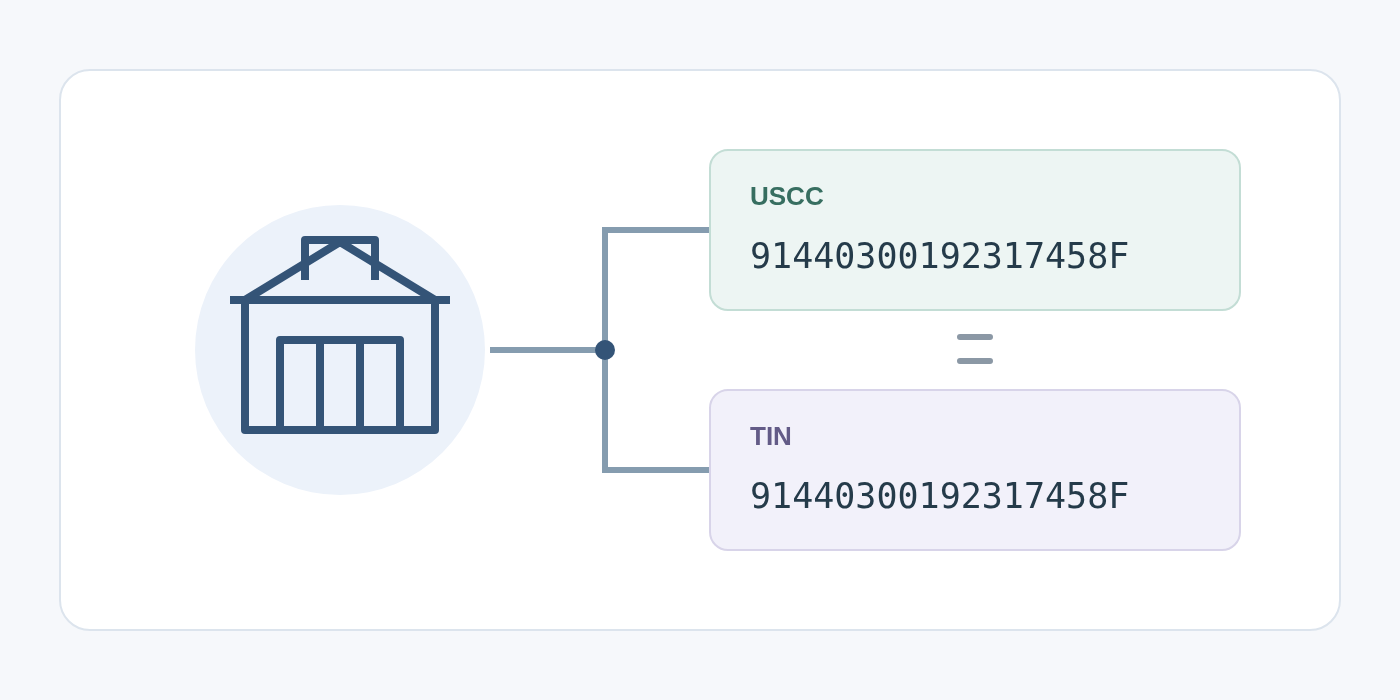
A USCC format check can help catch an invalid character or check-digit problem before the record is submitted. It cannot establish that the company is active, that the submitter represents it or that its VAT classification is correct. Follow the format check with a company-record comparison.
The USCC management rules effective from 1 February 2026 describe the code as a unique, lifelong identifier and require it to appear on the business licence. Treat it as the stable identity anchor when reviewing a reported change of name or address; verify the change rather than casually opening an unrelated duplicate vendor.
A public-data example
BYD COMPANY LIMITED provides a real, checkable example of field mapping. Its 2025 annual report, published in March 2026, identifies the Chinese company name and USCC. Its investor-relations page also lists the Chinese and English names. The table demonstrates data entry; it is not a supplier approval or a claim about a transaction with BYD.
| Field | Example entry | Basis |
|---|---|---|
| Chinese legal name | 比亚迪股份有限公司 | Published company information |
| English name | BYD COMPANY LIMITED | Published English name, not a new translation |
| Registration identifier / USCC | 91440300192317458F | 2025 annual report, company information |
| TIN for this mapping | 91440300192317458F | The entity's USCC used under the Chinese TIN rule |
| VAT classification | Not established in this example | Obtain the applicable current tax evidence separately |
| Approval state | Identity mapping demonstrated; onboarding not approved | No transaction, authority or payment review performed here |
The unresolved fields are deliberate. A famous company name and an annual report are not substitutes for every onboarding check. In a real vendor record, use the actual contracting company rather than automatically copying the parent company's code because its brand is familiar.
For example, a group subsidiary can have a similar name while being a separate legal entity. Ask the supplier which entity will sign, invoice and receive payment. Use that entity's evidence in the form. Do not carry the example code above into an unrelated supplier entry.
Keep VAT status separate
A TIN identifies the taxpayer; a VAT classification describes a tax attribute. A code's length or its successful format validation does not establish general VAT taxpayer status. Nor does a business licence alone settle every tax-status question your finance team may need answered.
Define what your form means by “VAT registered” before asking the supplier to tick yes or no. In China, the distinction your team needs may be general VAT taxpayer versus small-scale taxpayer. That is not automatically the same question as whether a company has any tax identifier at all. Retain the precise classification rather than translating it into an ambiguous foreign-system label.
Use the relevant tax-information route and keep the date and scope of the result. For example, the Tianjin tax authority's public inquiry page lists general-taxpayer qualification and taxpayer-status searches separately and states an update schedule. That is a local service example, not a promise that every region exposes identical information or updates it in real time.
If the available evidence does not answer the question, mark that field as awaiting evidence and ask for a current supporting record. Do not convert “not found in this query” into “not a taxpayer.” A searched name, local coverage or update delay may affect what you see.
The Chinese VAT taxpayer-status guide covers that specific check. Keep its conclusion separate from company-registration status, the tax rate on an individual invoice and whether your own organisation can claim a deduction. Those are different decisions.
Resolve conflicting answers
- Same code, different English name. Compare the Chinese legal name and ask which English name the supplier uses. Record the alias without creating a second entity solely for a translation difference.
- Different codes, similar company names. Treat them as separate identities until the relationship is explained. Determine which one belongs to the contract rather than choosing the best-known name.
- Licence and form disagree. Obtain the current licence or registration evidence and clarify the effective change. Keep the previous value in the review trail instead of silently overwriting it.
- Tax classification has no evidence. Leave that question pending with a specific request. A complete-looking form is less useful than an accurate record of what remains unverified.
For the identity comparison, ChinaValidate's business-licence verification tool helps examine licence information, while company search supports finding the relevant company record. Compare the returned information with the exact fields submitted, not just the presence of a search result.
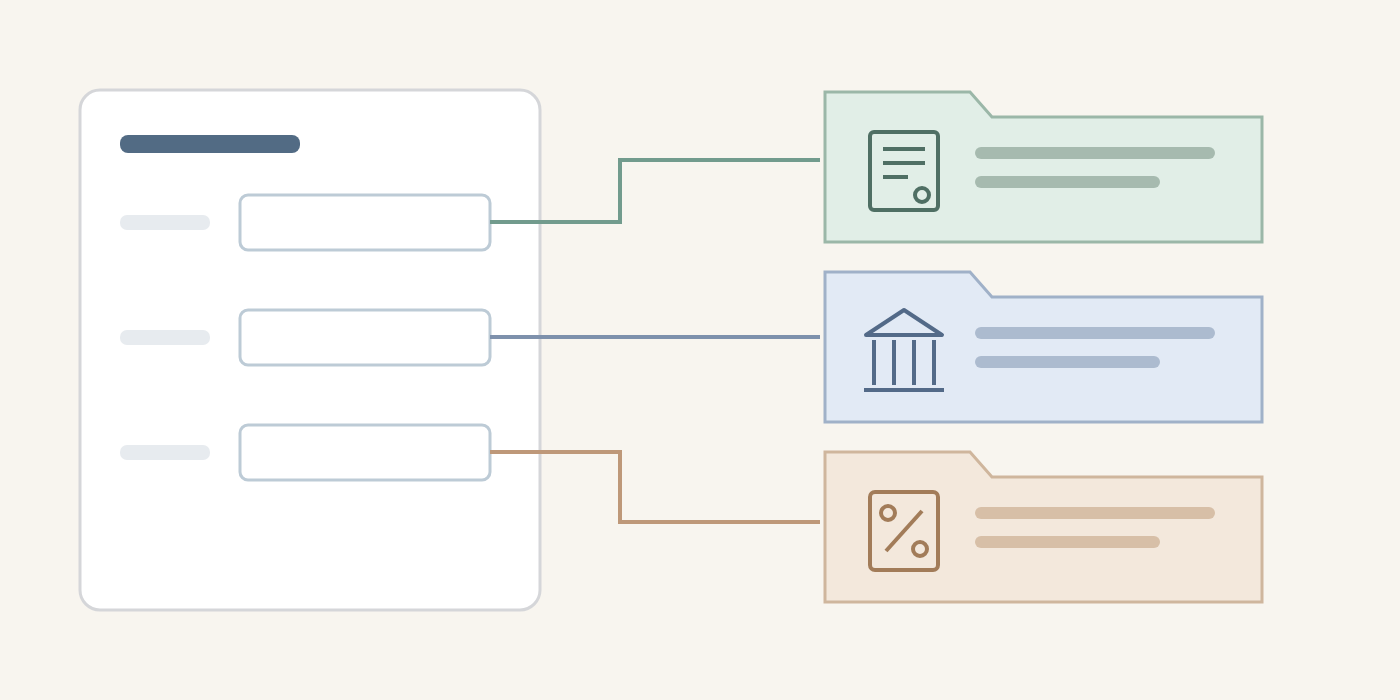
Keep payment-account approval in its own process. A matching USCC does not prove that new bank instructions came from an authorised person. Likewise, a tax identifier does not explain why the invoice issuer differs from the contractual seller. Resolve those relationships without modifying the identity fields merely to make all paperwork appear consistent.
Hand over a reviewable record
Send one consolidated request instead of repeatedly asking for “tax documents.” Specify the Chinese legal name, USCC, address and any VAT classification that your form requires. Ask the supplier to identify the document supporting each answer and to explain any difference between seller and invoice issuer.
Please confirm the legal entity for our vendor record and provide its current Chinese business licence. Enter its full Chinese legal name and USCC, identify the same code as its TIN where applicable, and attach the evidence for the VAT classification requested in our form. Please explain any different invoice issuer.
Before approving the record, check that names and codes match their evidence, the actual contracting entity has been selected, and the VAT field has either support or a clearly owned follow-up. Keep the source documents, review date and short reasons for resolved discrepancies. A later reviewer should be able to follow the decision without reconstructing the conversation.
Finally, distinguish data capture from vendor approval. A filled form is a structured set of claims and supporting records. Approval should follow your purchasing and finance requirements, including any checks outside company and tax identification. Preserve the clear mapping so that future updates change the right field without changing the underlying entity by accident.