
Chinese Product Labels and Company Names
Read manufacturer, commissioning-party and seller names on Chinese product labels, then connect each role to the right registered business.
Start with the Chinese legal name or USCC. Confirm the matching company before opening its profile.
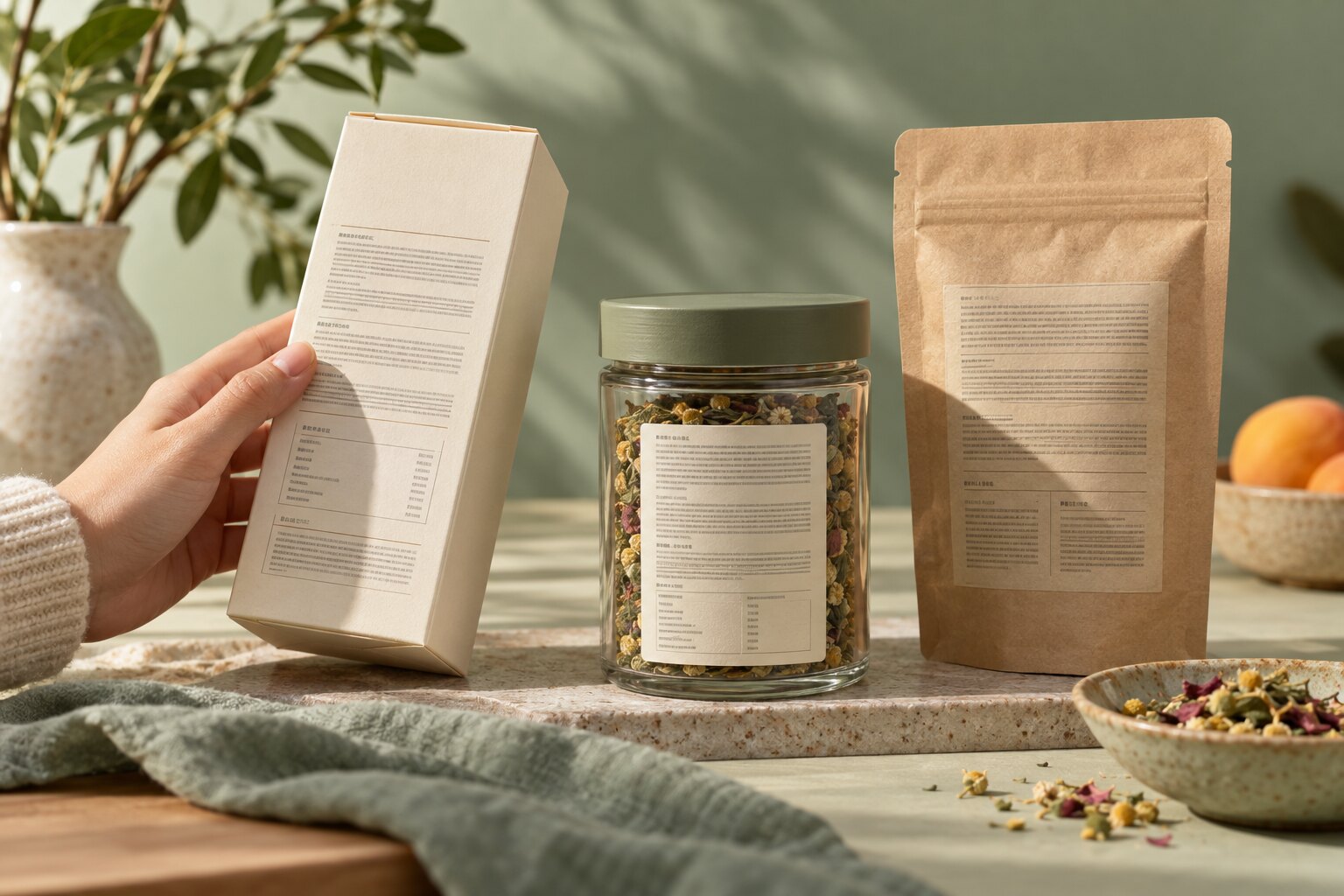
The front of a sample box carries a brand. A side panel names a Chinese manufacturer. The invoice comes from a trading company. A buyer trying to find “the company behind the product” can easily choose the wrong name if all three are treated as interchangeable.
Product labels can provide useful Mainland company-search inputs, but their wording matters. Read whether a name identifies a producer, a commissioning business, a distributor or another responsible party. Then connect that party to its registration record and to your purchase. This article is an identity-reading method, not a complete labeling-compliance assessment.
Keep the label with the product
Photograph the full label and enough of the product or package to show which item it belongs to. Preserve the model, size, batch or other identifying details visible on the same unit. A cropped company name can be readable while losing the evidence that connects it to the sample being reviewed.
Keep different packaging levels separate. The retail box may name one responsible business, while the outer carton carries a dispatch label from a warehouse. A courier sticker is not automatically the manufacturer's label. Record which surface or document supplied each name.
Use the actual sample or the final approved artwork where possible. A marketplace image can show an older package or a different variant. If only a supplier photograph is available, record that source accurately. Do not describe it as a label inspected on goods you have received.
Ask for a clearer image when characters are unreadable. Do not complete a partial company name from a web result and then report that the completed name appeared on the product. Keep the transcription and any inferred candidate separate until the original wording is established.
Read the role before the name
Labels may use different expressions according to product category, supply arrangement and destination market. The following table is a reading aid, not a list of mandatory wording for all products. Preserve the actual Chinese phrase before assigning a company role.
| Wording you may encounter | Role to investigate | What not to assume |
|---|---|---|
| 生产者 / 生产企业 | The party described as producer | That it is also the seller on your purchase order |
| 制造商 / 生产厂 | The named manufacturer or factory | That the sales contact owns or operates that factory |
| 委托方 / 委托商 | The party commissioning the product | That commissioning means physical manufacture |
| 受托方 / 受托生产企业 | The party described as entrusted to produce | That its relationship is established without supporting evidence |
| 经销商 / 销售商 | A distributor or seller | That distribution proves ownership of the brand |
China's Product Quality Law includes truthful product labeling and producer-name and address requirements within its scope. That provides an official basis for treating those fields seriously. It does not mean every export package or specialized product follows one universal label template.
Product-specific and destination-market rules can add requirements or define responsible roles differently. The U.S. International Trade Administration's China labeling overview illustrates why product category matters. It concerns entry into the China market; do not apply that direction of trade indiscriminately to exports from China.
For your company check, the first question is simpler: what does this particular label claim about this named party? A translation should preserve the claim. Do not translate every role as “manufacturer” to make the database easier to fill.
The brand is another layer
A brand on the front of the package can be much larger than the business names on the back. That visual prominence does not make it the registered name of the manufacturer or seller. Start the company lookup from a full legal name where available, not from the most recognizable logo.
WIPO's trademark guidance distinguishes a sign identifying goods or services from the identity of a business. In practical sourcing, the brand owner, manufacturer and seller may be one company or several. The package alone may not explain their contractual relationships.
Imagine a fictional kitchen utensil branded “Willow Table.” Its back label identifies Company A as commissioning party and Company B as producer. Your quotation comes from Company C. The label supplies two useful identity leads. It does not establish that C is authorized to sell the branded goods or that C owns B.
Keep the three companies separate while you request the relevant explanation and documents. If the unresolved issue is brand permission, use our brand-authorization guide. If it is the identity of the producer, use the name on the label for a company check and investigate the production link.
Compare the name with the registry
Copy the full Chinese name exactly as printed, including its organization wording and any branch designation. If the label includes an identifier, record its label too. A product number, production-license number and USCC serve different systems; do not paste every number into the company-code field.
Search the named Mainland business using its registered name or USCC where available. Compare the complete name, current status and relevant location. Save the original label beside the retrieved record so the match can be checked without relying on an English summary.
A source can be old. A product manufactured earlier may show a former company name, while today's registry uses a new name. Check the product or document date and the company's name history. Do not silently update the package transcription to the current name; explain the historical connection separately.
If the name does not produce a reliable match, return to the source. Ask for the Chinese name as text, a current business license and clarification of the role on the label. Similar names or shared addresses are not enough to identify the company. Avoid selecting a plausible factory only because it makes the same kind of product.
Where the label identifies a non-Mainland business, this Mainland registration workflow does not supply that business's record. Keep its role in the transaction map and use the relevant jurisdiction's evidence for its identity. Do not replace it with a Mainland manufacturer merely to make one search service return a result.
Use the address as supporting evidence
A label can show a production address, contact address or another location defined by the applicable rules. Read the field label. Do not automatically place it in the registered-address field of your supplier system.
If the registry address differs, ask whether the product label refers to the manufacturing site rather than the administrative domicile. The difference may have a reasonable explanation, but that explanation needs evidence about the actual operator and location. A map photograph does not establish the relationship by itself.
Likewise, a matching address does not prove that the named company made the sample. Shared premises, historic information and copied labeling can complicate the picture. Keep the observation narrow: the address matches the record, or it does not. Production and product authenticity remain separate questions.
If the purchase requires a factory visit or production assessment, give the reviewer the product, named producer and claimed site. An inspection brief that contains only the brand name can send someone to the sales office instead of the facility relevant to your order.
Barcode and factory identity
A retail barcode can provide another company lead, but it does not replace the label's role wording. GS1 explains that the brand owner normally assigns the trade-item identifier. The responsible party can manufacture the product or have it manufactured elsewhere.
For the fictional Willow Table product, a barcode lookup could lead to the commissioning brand owner rather than Company B, the producer named on the side panel. That is not automatically a contradiction. It is a reason to preserve the roles rather than conclude that one result must identify the factory.
Use our barcode company-lookup guide for the identifier search itself. Keep the barcode, product variant and packaging level in the product record, and the Chinese legal name and USCC in the company record. Connecting the two is more useful than treating them as interchangeable numbers.
A readable barcode and an existing company also do not authenticate the physical goods. Ordinary identifiers can be copied onto packaging. Product authenticity, brand permission and production conformity need the relevant evidence for the item and transaction.
Resolve differences before approving artwork
For a private-label order, clarify who supplies the business names and which product rules govern the artwork. Do not use a seller's preferred name merely because it is easier to pronounce. The correct responsible-party information depends on the product, market and actual supply arrangement.
Ask the supplier to identify the producer, any commissioning party and the seller in writing. Compare their names with the planned label and purchase documents. Where a specialist must assess labeling compliance, provide the full artwork and product information rather than a cropped company panel.
If a proposed revision changes a named business, ask what changed operationally. A new manufacturer, a different contracting seller and an updated registered name are different events. Determine whether specifications, approvals, testing, traceability and contract arrangements need updating for the actual change.
Keep the approved artwork version and the evidence used to approve the identities. When finished goods arrive, compare the delivered label with that version. A correct draft does not establish that the supplier used it on the shipment, and a different label should not be accepted merely because the brand logo is unchanged.
A usable product-to-company record
A compact record can connect the product to each identified business without claiming more than the evidence shows. Retain the label photograph, product or model reference, role wording, full Chinese name, company-match result and remaining relationship question.
- Identify the exact sample or packaging level.
- Transcribe every relevant business name with its role label.
- Keep brand, producer, commissioning party and seller separate.
- Check the named Mainland entities against current registration information.
- Resolve the relationship to the order and preserve the approved label version.
For the fictional example, the finding might say: “The label names A as commissioning party and B as producer. Both names have been matched to their respective company records. C is the quoted seller; its authority to supply the branded product remains to be documented.” This is an identity result, not a certification of the product.
Use ChinaValidate company search when you have a full Mainland business name or code. Business-license verification can help compare supported license documents supplied for those entities. Product-label compliance, brand permission and actual manufacturing evidence remain distinct parts of the purchasing review.
The smallest text on a package can be more useful for company identification than its largest logo. Read the role, preserve the complete name and follow the relationship to the transaction. That turns a label into a traceable source instead of an unsupported conclusion about who made or sold the goods.