
Find the Company Behind a Chinese Invoice
Use the seller name and taxpayer identifier on a Chinese invoice to find the registered business, distinguish buyer details and connect the issuer to your order.
Start with the Chinese legal name or USCC. Confirm the matching company before opening its profile.
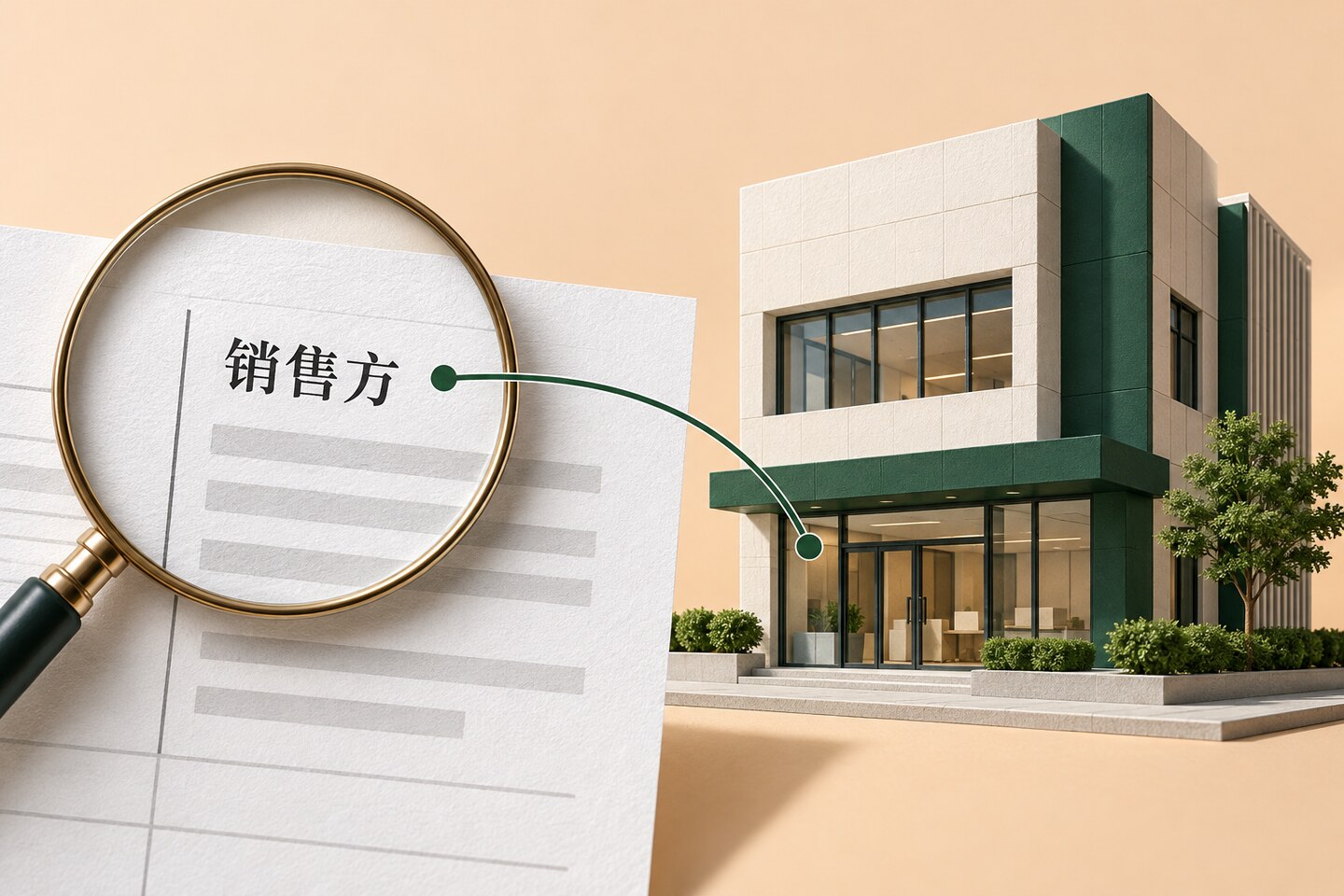
A supplier sends a Chinese tax invoice, but the seller name is unfamiliar. It is not the shop brand in your messages or the English name on the quotation. You want to find the business behind the invoice before adding it to your supplier records.
The useful starting point is the seller block, not the largest number on the page. A fapiao can contain a buyer identifier, a seller identifier and an invoice number. Only the appropriate business identity should be used for a company search. This guide follows that identity from the invoice to a Mainland Chinese registration record.
Find the seller, not the preparer
Look for 销售方信息, meaning seller information, or the equivalent seller section on the format you received. Within that section, copy the full Chinese name and its taxpayer identification number or Unified Social Credit Code. Preserve the heading in your notes so the two values cannot later be mistaken for buyer details.
The personal name beside 开票人 usually identifies the person who prepared or issued the document through the invoicing process. It is not automatically the legal name of the selling business. Likewise, a logo at the top of an email or an English trading name in the signature does not replace the seller information on the invoice.
| Information on the document | Purpose | Use for company identification |
|---|---|---|
| Seller Chinese name and identifier | Identifies the stated invoicing seller | Primary pair to investigate |
| Buyer name and identifier | Identifies the stated purchaser | Do not use as the supplier identity |
| Invoice number | Identifies this invoice | Use for invoice verification, not as a company code |
| Issuer or preparer personal name | Records a person involved in issuance | Do not assume this is the company owner or legal representative |
The national digital-invoice announcement lists buyer information, seller information and invoice identifiers as separate elements. The distinction is practical: copying the correct number from the wrong block still produces the wrong search.
If the seller block is cropped or unreadable, ask for the original electronic file or a complete legible copy. Do not infer the missing characters from a familiar brand. Keep the supplied document unchanged and perform transcription or translation in a separate note.
Make a two-field search record
Save the Chinese seller name exactly as displayed, including the legal-form ending and any branch designation. Copy the identifier as text so spreadsheet software does not convert it into scientific notation or remove leading zeros. Compare an OCR extraction with the visible source before using it.
For businesses using the Unified Social Credit Code, the identifier has 18 characters. A format check can help detect a transcription problem, but it does not prove the business exists or that it issued your invoice. Our USCC and tax-number comparison explains why these fields can overlap without making every number on a tax document interchangeable.
Do not force a different-looking historical or entity-specific identifier into an eighteen-character form. First identify the type of taxpayer and document. Ask the issuer to confirm the business's current registration identity when the source does not provide a usable company-search key.
A short record might contain the invoice reference, seller Chinese name, seller identifier, source filename and date checked. There is no need to invent a realistic company code for a training exercise. In an actual review, every identity value should come from the real document or a separately identified source.
Match the registered business
The National Enterprise Credit Information Publicity System is the official Mainland business-information route. A government notice describing enterprise information sharing identifies the company name, USCC or registration number as search inputs and lists registration fields such as status, address and legal representative. Current access and authentication requirements should be followed on the service itself.
Where an exact code is available, use it to narrow the identity, then compare the returned Chinese name. If searching by name, inspect the full result rather than choosing the first familiar-looking entry. A shared brand word or similar English translation can belong to different registered businesses.
Check both directions: does the code lead to the stated company, and does the company name in the record match the invoice? A matching name with a different code needs explanation. A matching code with a historical name may require change-history evidence. Neither situation should be silently “fixed” by replacing the invoice's text with the preferred current name.
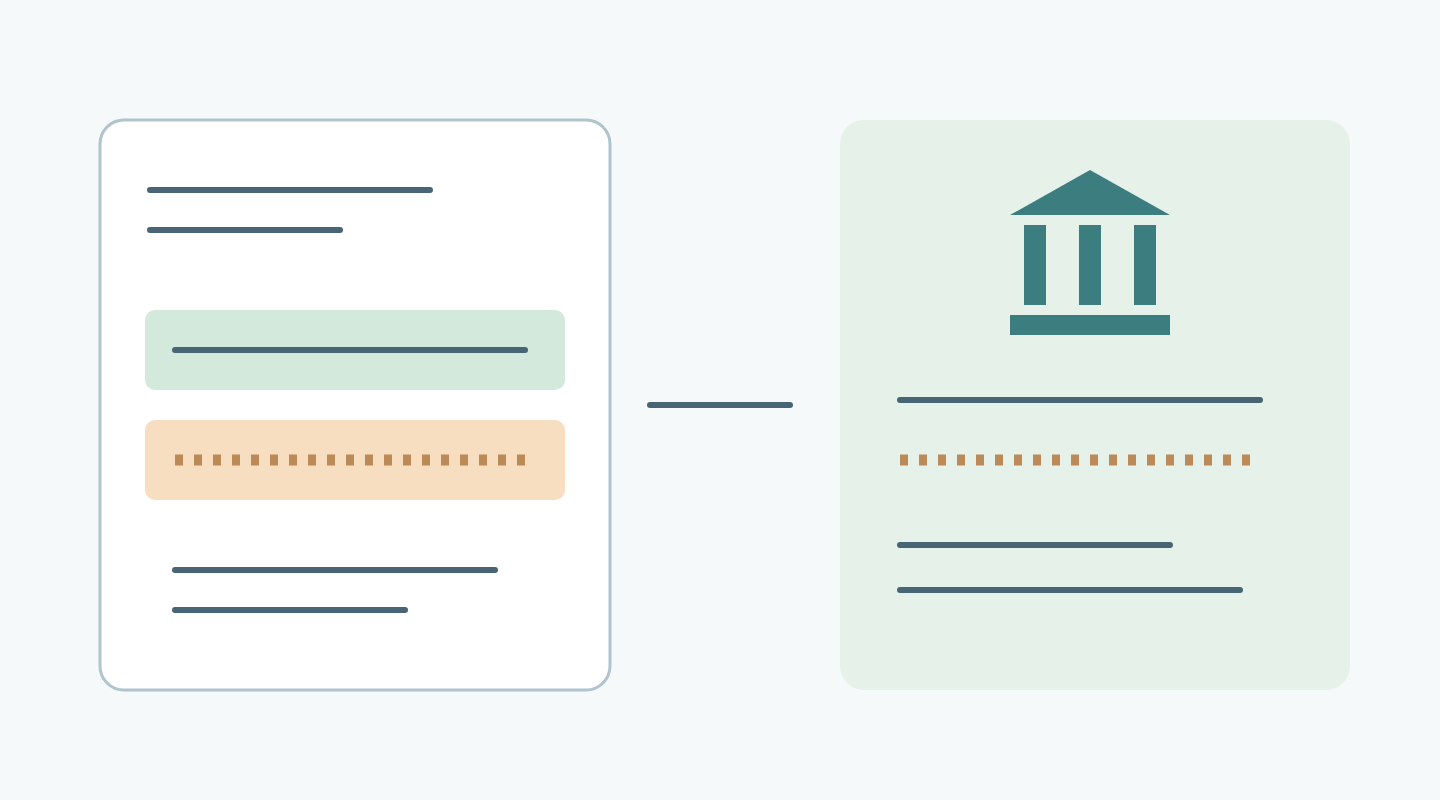
Record the source and date of the company lookup. Registration information can change, while a historical invoice remains a document from its issue date. Your review should make that time difference visible rather than treating today's record as a complete description of every earlier transaction.
Read the result in context
A company record helps identify the entity and its registered characteristics. It does not establish that the person emailing you is authorized to represent it. A genuine company name and code can be copied into unrelated correspondence, so keep the connection to your actual seller under review.
Read the status accurately. A current active registration is not a guarantee of solvency, delivery or product quality. If the company is now deregistered or its status raises a question, determine the relevant dates and circumstances before drawing a conclusion about an earlier invoice. The separate guide to invoices after issuer deregistration addresses that timing issue.
Address differences also need context. The invoice format may omit address details, or a registered address may differ from the delivery location or storefront. A different address is a reason to understand the roles and dates, not an automatic instruction to reject the invoice or to assume a factory exists there.
For a branch, retain the branch's complete name and its own identifying information where shown. Do not replace it with the parent company's details simply because the parent is easier to recognize. The relevant invoicing and contractual relationship must be established from the transaction and documents.
Connect the issuer to the order
Consider a hypothetical purchase from a shop trading as “Harbor Supplies.” The invoice names Company A, while the quotation was sent under Company B. These labels are placeholders, not real companies. Finding a valid record for Company A answers which business the invoice names; it does not yet explain why Company A invoiced Company B's proposed sale.
Ask the supplier to identify who sold the goods, who issued the quotation, who operates the shop and why the invoice names that particular entity. A brand, group relationship or agency arrangement may be relevant, but it needs an explanation tied to this order. “They are all our companies” is not a document trail.
Keep the explanation with the contract, order and invoice. If two businesses carried out separate sales or services, their documents may properly describe different transactions. Do not merge the entities in your vendor database merely to make names align. Our supplier and invoice name-mismatch guide covers that wider reconciliation.
The Covington fapiao advisory discusses why apparently genuine invoices can still fail to represent the actual expense. That supports a separate transaction review after identifying the company; it is not a reason to presume wrongdoing whenever a store brand differs from its registered name.
Keep invoice verification separate
A successful company lookup does not authenticate the invoice. It can show that the named business has a record, but not that this particular invoice number, buyer and amount were issued as shown. Use the applicable invoice-verification route for the document itself.
Conversely, an invoice lookup is not a complete company investigation. A matching invoice can still leave questions about the supplier's current registration, the relationship between businesses or the proposed payment recipient. Use each result for the question it actually answers.
When the invoice information is returned, compare the recorded seller name and identifier with the copy received. If those differ, preserve the result and ask the issuer to explain the exact discrepancy. Do not use a company's valid registration as a reason to dismiss altered invoice fields.
Payment authorization remains separate too. A seller's name on an invoice does not authorize a newly supplied bank account or third-party beneficiary. If the payment instructions change, use the agreed verification channel and supporting evidence instead of treating the invoice as a bank-account confirmation.
Leave a traceable result
- Record the seller name and identifier from the correct invoice block.
- Check the transcription against the original file.
- Match both identity fields with the appropriate company record.
- Explain differences in names, branches, dates or transaction roles.
- Verify the invoice separately and retain the relevant results.
A useful conclusion is specific: “The invoice seller's Chinese name and code match the company record checked on this date; the link to the order is supported by these documents.” If the link is unresolved, state what is missing. Avoid a broad “supplier verified” label that hides the scope of the work.
Use ChinaValidate company search to investigate the Mainland business and invoice verification for supported invoice checks. If the seller provides its license, business-license verification offers another document-based check. These results become useful when their identities and purposes are connected, not when one is used as a substitute for all the others.