
Chinese Company Search by Old Registration Number
Use the old registration number on a mainland Chinese business license or contract to identify the company and link it to a verified current record.
Start with the Chinese legal name or USCC. Confirm the matching company before opening its profile.

If an old mainland Chinese business license shows a registration number, copy the full number and try it in the National Enterprise Credit Information Publicity System. Beijing’s official license-check guide lists the registration number as an input to the national search, alongside the company name and the Unified Social Credit Code (USCC). Compare any result with the name and date on the old document. If the number yields no usable match, search the full Chinese name shown at the time and look for a dated record that connects it to a current company.
Keep the original number in your file as a historical reference. For a renewal, a warranty claim or an outstanding purchase order, you may need to establish both which company signed or supplied goods at the time and which company is involved now. A current result that resembles an old name can help with the second question. Evidence from the old contract and dated registration records connects the two.
The number on the original document
Look for 注册号 or 工商注册号 on the license or in the registration details next to the named party. Copy the company’s full Chinese name, the number, the issuing or registration authority where shown, and the document date. If a contract has several parties, write down which line the number belongs to. A number on a copied business license attached to a contract might belong to a factory or branch mentioned in an annex. Check the named contracting party separately.
Use the original label to decide what kind of number you are looking at. The State Council’s unified-code plan describes the former industry and commerce registration number as 15 digits and the old organization code as 9 positions. The same plan describes an 18-character unified code with its own structure. A 15-digit value in an older document can also be a tax identifier, depending on the field. A customs registration or filing number on a trade document belongs to a separate system. If a translation labels every value “registration no.,” ask for the corresponding Chinese page. State Council plan for the unified code
Keep the value in a text field if you are copying it into a spreadsheet. Verify that leading zeros remain and that the cell shows the full number. If the document is a scan, compare each digit with the image at readable size. A string split across lines may need to be rejoined for search. Where one digit is unclear, request the page or a transcription from the supplier before treating a no-result screen as evidence. Write down what you actually searched alongside what the document appears to show.
If the value is labelled 组织机构代码, keep it as an organization code with its source and date. Ask for the corresponding company name and current USCC on the license. The organization code lookup guide explains how to use that separate identifier. A valid-looking 18-character string made by adding digits to the old registration number cannot establish the code assigned to a company.
The official search box
Open the National Enterprise Credit Information Publicity System. In the Beijing operating guide, the same search box takes an enterprise name (企业名称), a unified social credit code (统一社会信用代码) or a registration number (注册号). Enter the old registration number as one query and select 查询 to see the results. If the site asks you to complete a verification step, follow the instructions on that screen. Beijing business license verification guide
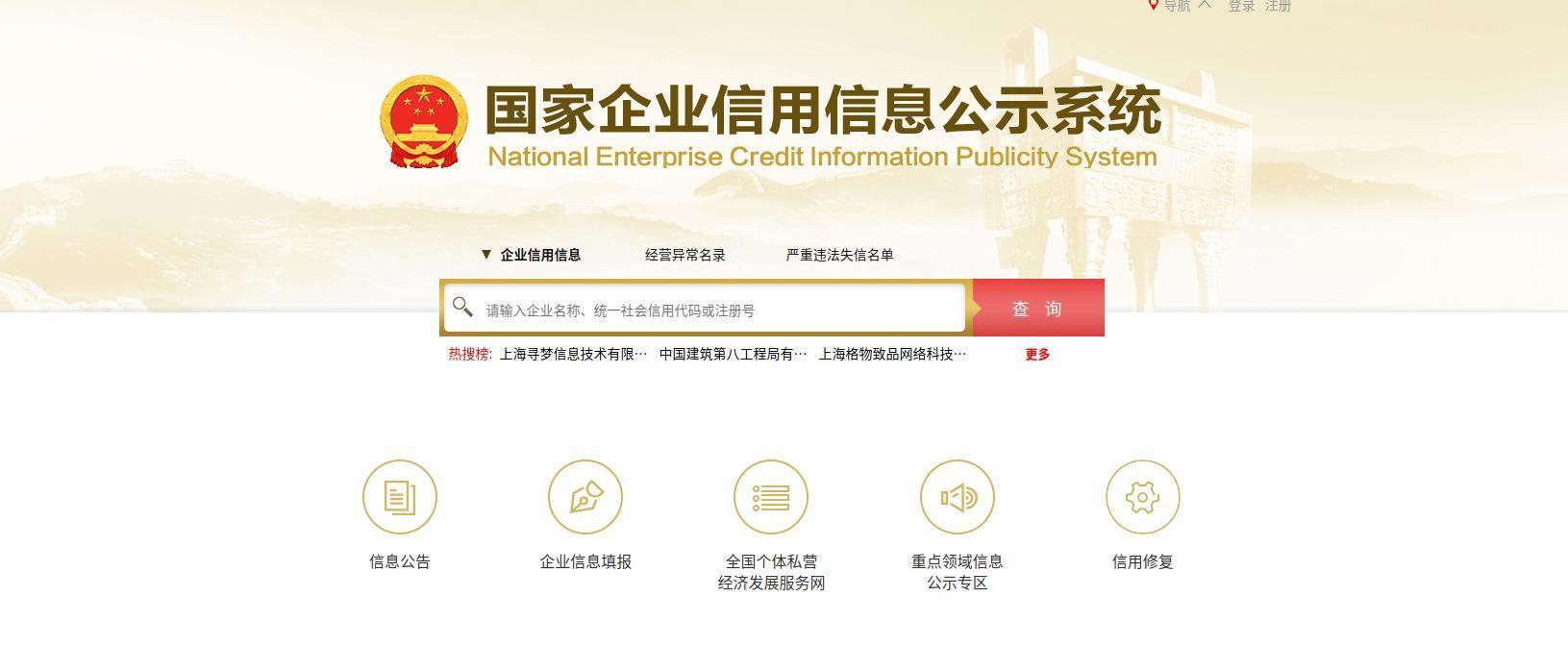
Open the company record if the search finds one. Compare the result’s full name, the issuing or registration authority where supplied, and any available date information with the old document. Record the current name, USCC, status and lookup date from the result. Save a reference to the record and note whether it displays the old number explicitly. A result reached by searching the old number is useful to keep with the file even if the result page only displays the current code.
The guide tells you which input the search accepts. For any particular old number, record the outcome you can see. A result may have the same name as the old document or show a company you still need to distinguish from a former supplier. An empty results page tells you that this query did not resolve the old number. It gives you a reason to try the historical name or obtain better records. Treat an error page separately from a completed search with no results.
The current status is a field on the result, so keep the exact label and the date viewed. A current active status does not date the old signature, and a later deregistration does not by itself tell you whether the company was operating when it signed. If status at a specific earlier date matters, ask for the dated record that supports it. A copy of an old license can show the details printed at issue without showing what happened after that date.
The fallback through the old name
- Run a separate query using the full Chinese name on the dated license or agreement. If the results include several similar names, compare the location, registration authority, and any other details you can tie to the period of the contract. Keep a branch name intact if the old document includes one. A parent’s record alone leaves the branch identification open.
- Look for change information in the company record where available. A dated change of registered name, address or other field may explain the difference. Write down the effective or registration date shown by the source, rather than using the day you retrieved the page as the change date. If you have only a current record, ask the company for a change record or another dated official document connecting its current and former names.
- Request a current business license or registry record for the company your contact says is involved now. Ask the company to identify the old name and number it says correspond to that license and provide the record that links them. Verify the full current name and USCC in a fresh lookup. You can search ChinaValidate using the confirmed Chinese name or current company code. Keep the original old-number search with your notes.
Some records span the changeover from separate codes. In its 2021 notice, China’s State Administration for Market Regulation (SAMR) said the coexistence transition ended on December 31, 2020 and the old organization code certificate ceased to be used after it. It directed local authorities to address gaps in unified code assignments for historical market entities, including entities that had been deregistered or had a license revoked. The notice treats replacement of individually owned business licenses separately under the prior policy. A number preserved in an old file can therefore be relevant to identity even when a different code is needed for current checks. SAMR notice on unified code assignments
Under the current unified-code measures, the authority assigns a unique lifelong code to each organization. Use the code the relevant record actually shows, and keep the old registration number in its own field. Where you have two current codes, check each record separately. One could belong to a branch or another organization involved in the old transaction. Similar commercial names or a common address leave that question open. SAMR unified social credit code measures
An old contract and a current repair
Consider a hypothetical buyer with a 2014 machinery contract and a repair quotation today. The old contract names a mainland seller and attaches a license showing a 15-digit 注册号. The repair quote uses a shorter trading name and gives a current USCC. The buyer saves the contract and the license together, checks the seller’s old number in the national system, and opens the record behind the code on the repair quote. The two lookups correspond to different pieces of evidence, so the buyer keeps their queries and the dates separately.
Suppose the old-number result shows the same USCC as the repair quote and its dated name history contains the full Chinese name on the old license. The buyer can link the historical seller to that company’s current registration. The repair team can then check the name shown on the actual quote and confirm who will sign the service order and issue the invoice. A finding about registration identity still leaves the price, authority to undertake the repair and payment instructions to be confirmed from the transaction.
Now suppose the old-number search produces no result. The name search finds an old company with a status indicating deregistration and a similarly named company with the code on the repair quote. The buyer keeps both records and asks the quote issuer to explain its relationship to the old seller and identify who will perform the service. If the buyer intends to rely on obligations in the 2014 contract, the contract owner needs the two records and any documents showing who now handles those obligations. The current company’s similar name establishes neither continuity nor responsibility for the old agreement.
If the original supplier’s contact details are out of date, ask the current quote issuer for the link it is relying on and check the registration details through the official source. A new letterhead with the same logo or address provides a clue to follow up. If the current record shows a registered name change but gives no date or previous number, keep the name change as a possible explanation until you have a record tied to the original license or contract.
The historical and current references
Keep the dated facts together so a colleague can see the path from the archived document to the current party. Your file can be brief:
- Original document. Record the type, date, page and exact company name. Copy the labelled old number and registration authority as shown, and save enough of the document to identify which party the fields describe.
- Current record. Save the full current name, USCC and status shown, the source and the date viewed. If a label or detail is missing from the result, record it as unavailable in that source.
- Link between them. Save the old-number result, dated change information or other record that ties the two to the same registered organization. If the available documents only support a possible match, record the specific gap and the next document needed.
Use the current legal name and verified code for a new transaction once you have established the party’s identity. Leave the archived number and contract text intact and attach the explanation to the file. For an unresolved match, a request such as “Please send the current license for the company named on this page and the dated record linking it to this registration number” is easier for the supplier to answer than a general request for its latest company details.