
Chinese Company Registration Documents Explained
Identify the business licence, registration notice and articles of association in a Chinese supplier’s registration file and use each for the right check.
Start with the Chinese legal name or USCC. Confirm the matching company before opening its profile.

Open a Chinese supplier’s registration folder and you may find a business licence, a one-page notice from the market regulator and a signed set of articles of association. All three can be genuine. Each answers a different question. For an overseas buyer, the quickest way through the folder is to identify what the recipient needs to establish, then select the document that contains that fact.
For the company’s current registered identity, start with its business licence and an up-to-date company search. For a specific registration event, read the registration notice. For the rules or commitments agreed by shareholders, go to the articles of association or other relevant filing. This guide is about documents already issued or held by a mainland Chinese company, which is what procurement and finance teams typically receive.
The business licence
The licence is usually headed 营业执照. It gives you the name and identifying particulars of the registered entity. Start with the full Chinese name and the Unified Social Credit Code (USCC). Use them to tie the licence to the supplier’s quotation, contract or vendor file. If the quotation has only an English name, ask the supplier for the corresponding registered Chinese entity. The English name is useful for your records once you have made that link.
Article 33 of China’s Company Law lists particulars that appear on a company’s business licence, including its name, domicile, registered capital, business scope and legal representative. The registration authority may issue an electronic business licence, which has the same legal effect as a paper licence. A scanned image can be practical for an initial comparison, and the electronic credential has its own way of being presented or verified. Confirm what format the recipient will accept. Company Law of the People’s Republic of China
Use the full USCC to look up the company after you have the document. Compare the record with the licence in front of you. Check the status, name and the fields that matter to the supplier decision. An older licence can be evidence of what the company once held. You may need the current version if the name, registered address or legal representative has since changed. Search for a Chinese company
The registration notice
Look for 登记通知书 on a one-page notice. The State Administration for Market Regulation’s 2026 document specification includes a standard form used for establishment, change or deregistration. Find the company named as the recipient, read the line describing the event and check the date and issuer. On a completed notice, the event is the part that determines what the document can establish. The heading on its own does not do that.
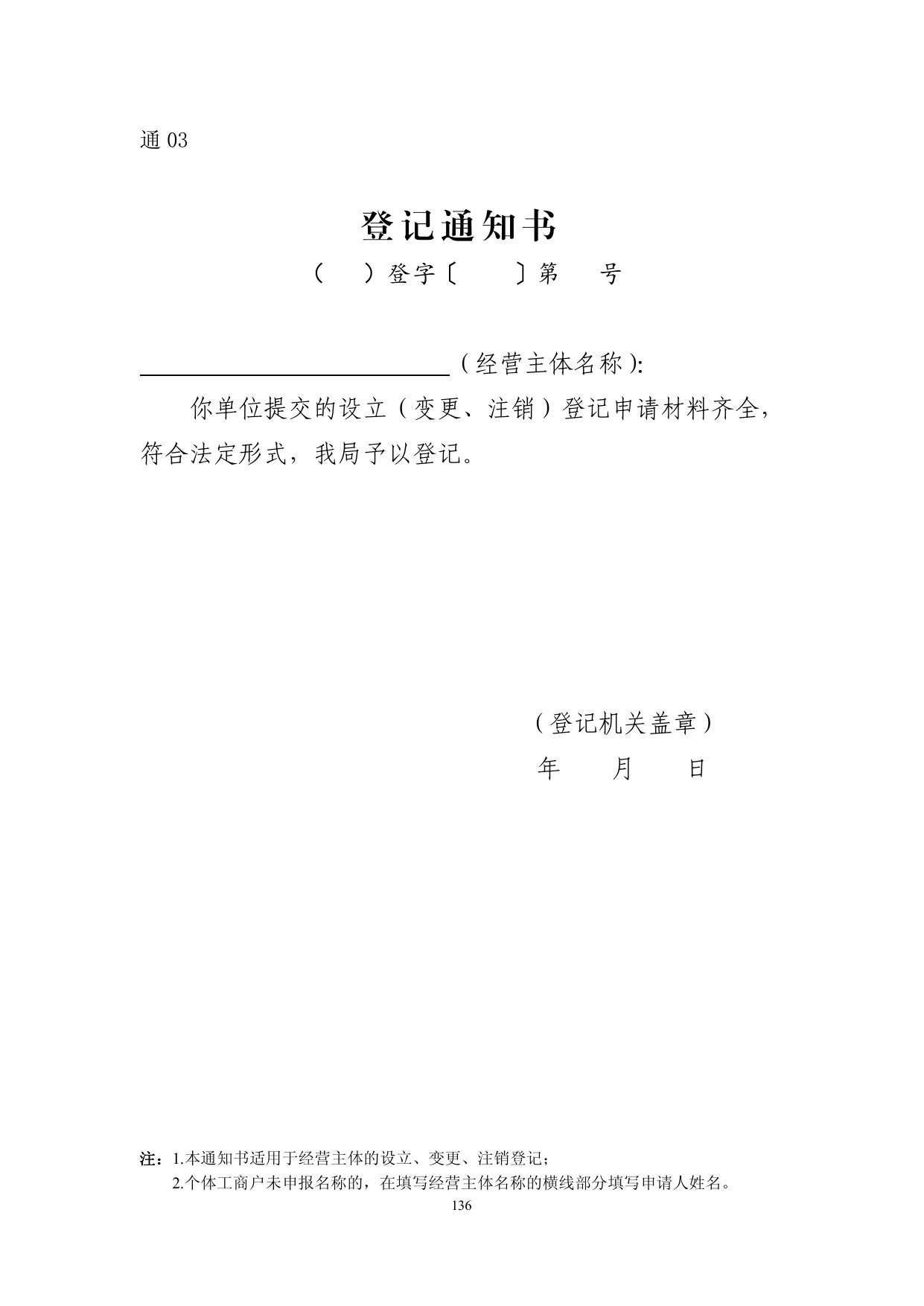
A notice for establishment records a successful registration event. A change notice records a later event, and a deregistration notice concerns the end of the company’s registration. This is a good reason to keep the notice with other papers from the same event. A supplier forwarding a change notice may be trying to explain why the Chinese name on the approved vendor file is different from the name on the new licence. Ask for the before-and-after particulars if the notice does not tell you which field changed.
The same specification includes other forms for receiving application materials and postponing registration. If the title or body says the authority received paperwork or postponed its decision, record that stage as it stands. An application receipt can be the right document for tracking work in progress. To verify a completed change, ask for the registration result and the corresponding updated record.
Articles and other filings
The articles of association are usually headed 公司章程. A supplier might include them because a recipient needs evidence about shareholders, commitments to contribute capital or how the legal representative is appointed. Start by asking which clause or fact the recipient needs. Then ask the supplier for the relevant signed version and any amendment that affects it. A full historical attachment can leave the question unresolved if the important clause has changed.
The articles and related filing materials can help explain the identity or structure in the licence. For example, a procurement team may want to understand whether a named shareholder appears in the company’s latest documentation. Compare that question with the information in the public registration record and the current company documents. Keep the date of the relevant version with the ownership note. The licence itself gives you the registered entity’s identity, which is usually the first piece of the comparison. Compare a Chinese company’s articles with the public record
Some requests concern the exact documents held by the authority. Ask whether the recipient needs the supplier’s copy, an authority-provided record, a translation or a certification of the copy. The exact archive access route depends on the locality and the requester’s eligibility. If the buyer cannot get an archive copy directly, the company may need to arrange it through an authorized representative. Describe the required document and the relevant event date when making the request.
The request behind the English label
Overseas portals and finance teams often label their upload field in English. A request for a certificate of incorporation can be a request to establish the company’s registered identity. Some platforms explicitly use that label for a mainland company’s business licence. Others may request different or additional evidence. Check the country-specific instructions or ask which mainland document they accept before ordering a translation or paying for certification. WorldFirst’s mainland onboarding document guide
For a request labelled company registration documents, a short follow-up often saves work. State the company’s jurisdiction and ask the recipient to name the fact and accepted document. The reply may refer to one of these needs:
- Current legal identity. Send the current business licence in the format the recipient accepts. Keep a dated company-search result for your own file.
- Evidence of a change. Send the notice or result for that event, alongside the updated licence or public record where relevant. Point out the old and new particulars.
- Ownership or authority. Ask which owner, role or decision they need to confirm. Provide the relevant current ownership or authorization document with the company identity evidence.
- Authenticity or a recent issue requirement. Ask whether they mean a recent official record, a particular kind of certified copy or a translation with its own date. Request the specific version the recipient requires.
Reading a supplier folder
Suppose a new supplier sends three attachments. One shows its information as originally registered. The second is a registration notice dated several years later. The third is a current licence that gives a different address. The purchasing team needs an address to put on its approval record and wants to know why the first two files look different.
Start with the licence because it gives you the exact Chinese company name and USCC to search. If the live record matches its address, use that as the current registered address with the date you checked it. Then read the notice for its event type. If it says change registration, look up the dated change details or ask the supplier which item changed. An address discrepancy can be explained when the notice and change details point to the same event. If the notice instead concerns another change, keep following the address record until you identify it.
Now label the old document as historical evidence. Keep the current licence and the relevant change record together. Avoid replacing the old address in the historical file or choosing the most recently emailed attachment as the latest record. Use each effective date for its own event. The registration notice number, USCC and issue date are different fields, so keep them separate when you record the evidence.
If the supplier’s file also includes a registration application that looks complete, check whether the authority actually processed it. A signed application can show what a company proposed to register. An issued registration notice or saved official result can show what the authority registered. The distinction helps stop a draft change from being copied into a vendor master record as a fact.
Document copies and translations
Keep the Chinese document with any translation. A translated file may use the expression registered office for one address and business premises for another. Keep the source label and the name as shown before deciding that the addresses conflict. If an English spelling differs between two documents, ask which Chinese name and identifier each translation refers to. A clear translation should keep those fields available for comparison.
When the recipient wants a recent document, establish what should be recent. A scan made this month can depict a licence issued years ago. A company search made this month can show that its licence particulars still agree with the current record. A certification date describes the certificate or copy process, while a dated registration result describes the underlying event. Store those dates under separate labels so your recipient can apply their own requirements.
If the recipient needs an original electronic licence, ask the supplier how to present the issued credential through the official channel. Downloading a company profile or attaching an image of the paper licence may be enough for a first review, depending on the recipient. For a submission with explicit format requirements, confirm those requirements first and keep the accepted document with the case.
A usable document handover
For each document you keep, record the Chinese title, the company name and code where shown, the issue or adoption date and the point it supports. Name the document in ordinary language when forwarding it. A file note such as “current Chinese business licence, matched by USCC on the lookup date” gives the recipient a precise starting point. For a notice, add the kind of registration event, and for articles, add the version and clause.
If something is missing, request the smallest useful piece. “Please send the registration notice or official result for the address change, together with the current business licence” is easier to answer than “send all your registration documents.” It also tells whoever checks the file next which fact still needs to be resolved.