
Chinese Company Names on Contracts
Compare the Chinese seller name across the party block, attachments and execution page, and distinguish a translation difference from a change of counterparty.
Start with the Chinese legal name or USCC. Confirm the matching company before opening its profile.
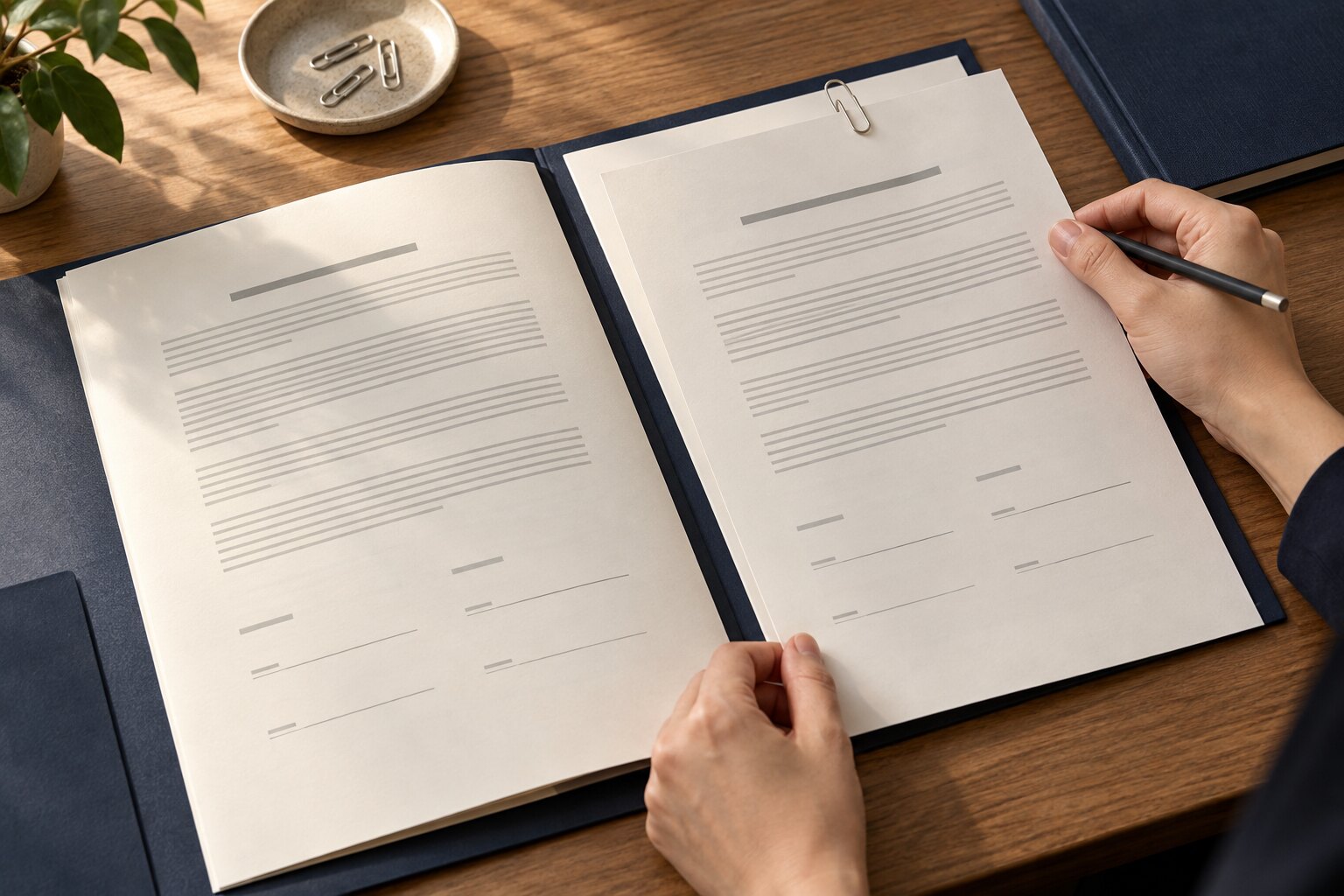
A draft supply contract names an English brand on the cover, a Chinese company in the party section and another company beside the payment instructions. The last page contains a stamp that is difficult to read. Before discussing whether the document looks official, identify what each name is doing.
Checking Chinese company names on contracts is a document-consistency task. It connects the named Mainland counterparty to a registration record and follows that identity through the agreement, attachments and execution page. It does not replace review of the commercial terms or determine the legal effect of a disputed signature.
The party block is the starting point
Begin where the agreement identifies the parties, not at the largest logo. Record the complete Chinese legal name of the proposed seller and any USCC stated. Compare them with a current registration record and a clear business license. Keep the English rendering as a separate reading aid if it is also used.
The Civil Code includes party names and addresses among the usual contents of a contract. China's enterprise-name rules separately address registered Chinese names and their foreign-language translation. Together, these support a straightforward review habit: know which legal party the text actually identifies.
Do not treat a Chinese name printed anywhere in the PDF as sufficient. It might belong to a factory, an exporter, a witness or the company that prepared an attachment. The party block should identify who is accepting the seller's obligations under this agreement.
If the document names only “Example Global” or another commercial label, ask for the full legal identity before approval. This is not a demand that the supplier abandon its brand. The brand can remain on the cover while the contract identifies the business behind the transaction accurately.
Build a name-by-location table
Read the entire contract package once specifically for entity names. Include headers, footers, payment schedules, technical annexes and signature pages. A document search can help, but it will miss names embedded in images. Record each occurrence with its purpose rather than trying to make every string identical immediately.
| Location | Name to record | Question it answers |
|---|---|---|
| Party block | The full seller identity | Who accepts the contractual obligations? |
| Defined terms | The business assigned to Seller or Supplier | Which party do later clauses refer to? |
| Production annex | The named manufacturer or site operator | Who is expected to perform the production work? |
| Payment schedule | The beneficiary named in the instructions | Who is proposed to receive funds? |
| Execution page | The entity identified beside the signature or seal | For whom is the document being executed? |
Several names can be legitimate if the roles are clear. The problem is an unexplained switch. A manufacturer named in a technical annex does not automatically replace the seller in the main agreement. A separate payee does not automatically become the party responsible for delivery or a refund.
Keep the actual Chinese strings in the table. If the English versions are similar, the Chinese names and available identifiers can expose a difference that a translated summary hides. If the Chinese strings are identical but the English wording differs, record that as a translation issue to resolve rather than immediately creating two entities.
A fictional contract example
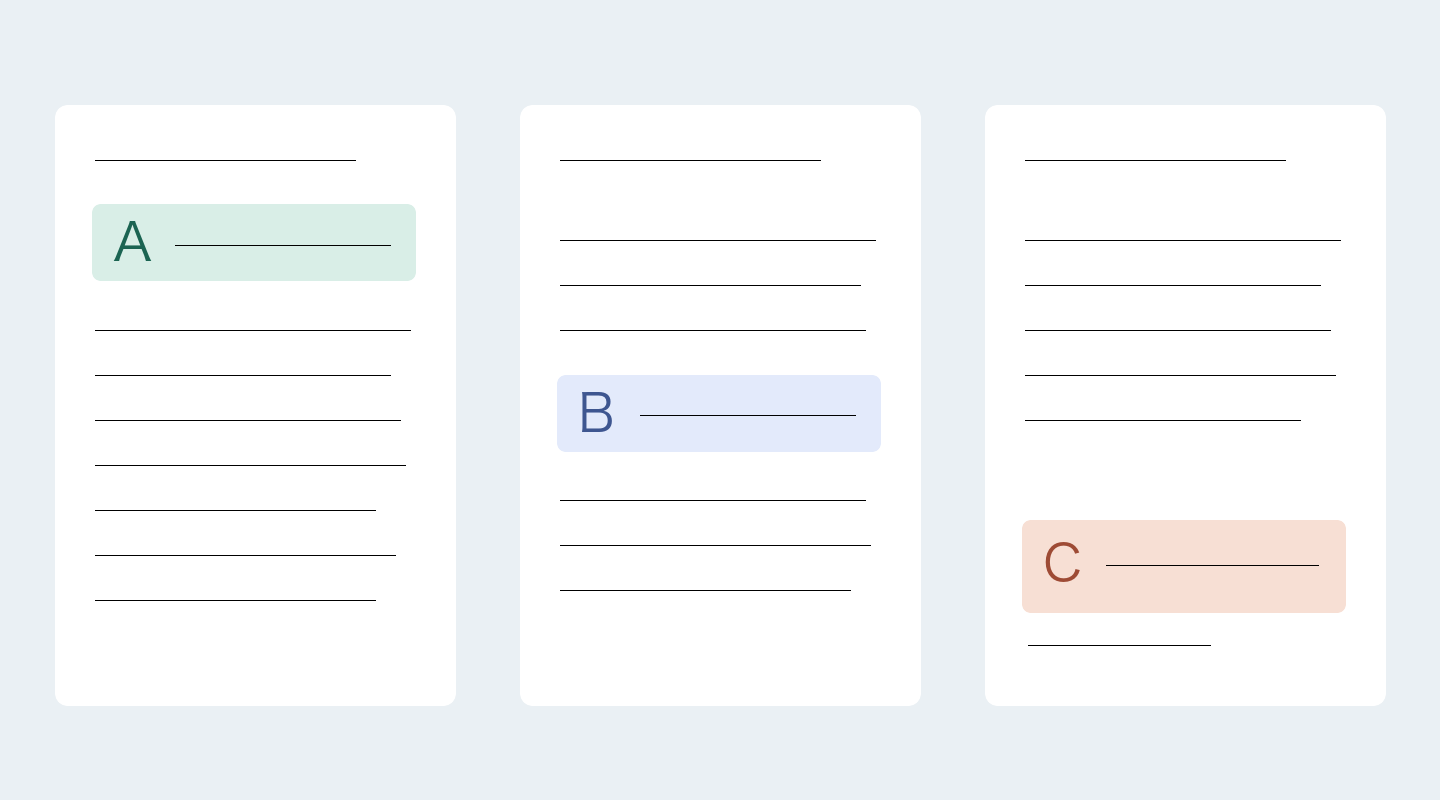
Consider an illustrative purchase file with three placeholders. The cover says “River Home.” The party block identifies Company A, a Mainland trading company. A production annex names Company B as the manufacturer. The payment page identifies Company A, but the execution page was copied from an older contract and still names Company C.
The brand on the cover is not necessarily a problem. The manufacturer can also be a separate business if the agreement explains its role and the seller's responsibilities. Company C on the execution page is a concrete inconsistency that needs correction and confirmation before the parties sign the final version.
Do not merely replace C with A in a PDF you control and assume the issue is closed. Send the corrected identity information to the counterparty through the agreed process, obtain the intended final version and ensure the execution relates to it. The change must be understood by both sides, not only made visually tidy.
Now imagine the supplier says C should actually be the seller because A is only a sales office. That changes the question. Identify C, obtain its current record, establish the roles and review the proposed party change. It is not a spelling correction. Your commercial approval and contract review should use the entity that will genuinely undertake the obligations.
Chinese and English names
Keep a clear connection between the registered Chinese name and its English rendering. The English version may be literal, shortened or based on a longstanding commercial usage. A fluent translation is useful, but it should not become the only identity reference when the underlying Mainland company is known.
If the agreement is bilingual, compare the party section and defined terms in both languages. One version may name a company while the other uses a group label. Check the same issue in annexes. Do not assume that parallel page layouts mean the identities are equivalent.
A working identity note can state that the English wording is a rendering of the identified Chinese entity. The legal drafting, interpretation and prevailing-language arrangements should be settled for the actual transaction. This article does not provide a universal clause that makes every name discrepancy harmless.
Preserve a historical name only when the history is relevant and supported. If a supplier's current name differs from an old document, use the former-name check to investigate continuity. Do not copy an outdated Chinese name into a new contract simply because the English brand stayed the same.
Read the execution identity
At the signature or seal area, identify the business for which the document is being executed. If the image is too small to read, request a clear copy rather than guessing from the red shape or letter spacing. Compare the legible name with the intended counterparty and investigate any difference.
HI-COM's practical contract-signing guide highlights matching the company name across the contract and execution evidence. That is a useful operational check. The legal effect of a particular signature, seal, authorization or later performance still depends on the facts and applicable law; a visual match does not decide it.
The Civil Code's written-contract provisions should not be reduced to “no stamp means no contract.” Nor does a plausible stamp prove that a particular salesperson had authority. Use our company-chop guide for the separate authority and document-evidence questions.
If a branch or affiliate is executing the document, identify that entity and its relationship to the named party. Do not rely on the word “group” or a shared logo. For a material transaction, have qualified counsel review whether the proposed execution and authority evidence fit the arrangement.
Keep attachments tied to the parties
An attachment can contain an old customer name, an unrelated factory or the entity used for a previous order. Review its heading and role descriptions as well as its technical content. A correct drawing does not repair an incorrect seller name in the attached acceptance form.
Give the final package a clear index: main agreement, specification, production-site schedule and payment instructions, as applicable. Identify versions and dates. When an annex names another business, make its role explicit in the package instead of leaving the reader to infer it from a letterhead.
If the supplier changes the proposed manufacturer, ask whether the contractual seller remains the same. If it changes the seller, ask what happens to warranties, deposits and other commitments. These are different amendments. A generic statement that “only the company name has changed” does not explain whether the legal identity is continuing or being replaced.
Retain the earlier drafts needed to understand a material identity change, but keep them separate from the executed package. Finance and operations should not pick payment or delivery instructions from an obsolete attachment because it carries the familiar brand.
Close the identity review
The review can end with a concise decision record. State the identified seller, the evidence linking it to the current registration, the other named businesses and their roles, and any unresolved discrepancy. Do not turn a matched name into a general approval of the supplier.
- Match the party block to the intended Mainland legal entity.
- Follow that identity through defined terms and relevant annexes.
- Explain every different manufacturer, payee or executing business.
- Resolve unclear or conflicting Chinese and English names.
- Preserve the mutually accepted final package and its execution evidence.
For the fictional example, the note might read: “Company A is the seller identified in the current record. Company B is named as manufacturer in the production annex. The obsolete Company C execution page was replaced in the agreed final package.” That describes what the identity review established without claiming that product specifications or legal remedies were approved.
Start with ChinaValidate company search or business-license verification when collecting the Mainland entity details. Then use the wider pre-contract verification guide for the remaining authority, specification, payment and legal-review work.
A useful contract file lets a colleague answer a basic question without interpreting a logo: which business promised to do what? Matching company names across the document is one part of that answer. Keep the roles clear, preserve the source identity and treat a real party change as a substantive decision.