
Chinese Business Licenses for Vendor Onboarding
Create or update a vendor master record from a Chinese business license. Copy the registered Chinese name and credit code, check existing records, and preserve the order history.
Start with the Chinese legal name or USCC. Confirm the matching company before opening its profile.

When a Chinese supplier sends a business license for vendor onboarding, copy the full Chinese registered name and the 18-character Unified Social Credit Code (USCC) into separate fields. Check both against the current registration, then search your vendor records for that code before creating a new entry. If a verified code is already on file, review the existing record for reuse or correction. If the new license belongs to a company with a different verified code, identify that company separately even if the same group or sales team arranged the purchase.
The objective is a vendor record you can use for a purchase order, invoice match or later update. Keep the original license and the date of the registration check. Record the vendor’s role in this purchase next to its legal identity. A factory license, for example, may belong in your production-site records while the trading company named on the order is the vendor you need to onboard.
Copyable fields for the vendor record
Use the labels on the license you received. On the official company specimen below, the credit code is near the top left and the company name is the first labeled line in the left column. Keep the original Chinese values and place English names or translations in their own fields. Article 8 of the market entity registration regulation identifies matters such as name, entity type, business scope and domicile or principal place of business. Labels vary with the entity type and form. Copy what appears on the relevant document. China’s market entity registration regulation
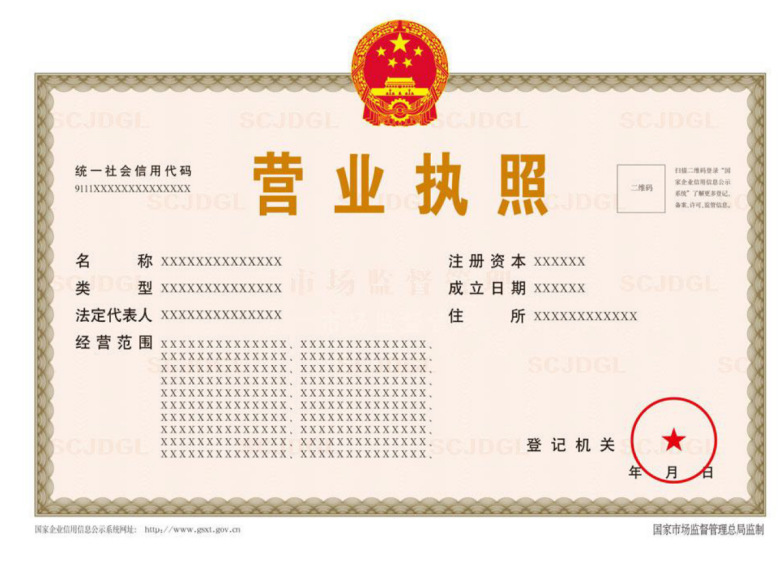
| Vendor record field | Source | Value to enter |
|---|---|---|
| Registered Chinese name | 名称 on the license and the current registration match | Full Chinese name, including branch or company wording |
| Registration identifier | 统一社会信用代码 on the license and registration match | Exact 18-character USCC in a text field |
| Entity type | 类型 or the equivalent field in the record | Registered entity type, with a translation if needed |
| Registered address | 住所 or 主要经营场所, as applicable | Full value with its source label |
| English name or alias | Quotation, contract correspondence or dated name history | English trading name, former name or brand, identified by type and source |
| Transaction role | Agreed order, quotation or contract and any written role confirmation | Seller, manufacturing site operator, invoice issuer or another role as supported by the paperwork |
| Source and check date | Received license, registration result and any dated change document | Document reference, retrieval date, verification date and result |
If your purchasing system already uses a vendor ID, keep that internal ID and store the verified USCC as the mainland entity’s registration identifier and duplicate-check key. Treat the USCC as text. Avoid importing it into a numeric column or joining it to the name in an alias field. Keep branch wording and location words when they are part of the registered name. For a bilingual purchase order, use the verified Chinese value and a clearly identified English rendering.
Keep the vendor record usable for people who search by a familiar name. For each alias, note whether it came from a quotation, a previous registered name, a storefront or a company-supplied translation. If your system permits several aliases, keep them tied to the relevant legal record. If a brand is used by several group companies, it can appear in their search notes. Use the code and order role to select the actual vendor when that search returns several entries.
Current registration and the order party
Work from a readable license and keep the copy you used. Under Article 22 of the market entity registration regulation, the main and duplicate copies have the same legal effect, as do electronic and paper business licenses. Record whether the source you received is a paper copy, a photograph, a scan or an electronic license. A date in the corner of a saved image may reflect when it was photographed or received. For the vendor record, log the date you checked the registration independently.
Use the name or code in a China company search and compare the result with the license. Read the code character by character if you copied it from a scan or extracted it with OCR. If part of the name is obscured or one character of the code is uncertain, ask for a clearer copy and hold that field for review. Keep provisional values away from the active vendor ID. The original image and the corrected transcription should remain available to the next reviewer. This is especially useful when someone sent a cropped image or a spreadsheet extract that shows a number without its original label. The business license lookup guide shows how to prepare a file and read a license comparison.
Next check the name on the purchase order or contract. If the license is for the manufacturer while the order names a sales company, obtain the sales company’s documents for the vendor entry and link the factory as the manufacturer when relevant. If the supplier gave a license for its head office and the draft names a branch, get the branch’s own registration information and confirm which party will be named on the order. Use the source label for each address. A registered address can differ from a warehouse or the site where an order will be made. Those operational addresses can stay on their own lines.
The legal representative’s name and the business scope are optional additions to the vendor record where your workflow uses them. Copy those fields from the verified record when needed. For a particular signature, inspect the contract and relevant authorization. For a requirement about who actually makes the goods or holds a permit, use evidence for that activity. Avoid copying unrelated personal data from attachments into the vendor master.
Same code and a changed vendor field
China’s unified code measures treat the code as an organization’s lifetime identifier. Articles 9 and 10 provide for one code per organization and for the registration authority to assign and display the code on the business license of a market entity. Match the full code across the license, current registration and your existing master record before updating a registered field. China’s unified social credit code measures
Suppose a supplier submits a new license and the code matches the existing vendor. If the registry shows a new Chinese name, obtain a dated change record or comparable evidence linking the earlier name to the current one. Update the current master record, keep the former name and evidence in its history, and record when the change was checked. If the Chinese name and code still match and only the English alias has changed, update the alias after confirming the new wording with the supplier. Preserve the official Chinese name.
If internal search shows multiple vendor entries with the same verified code, review what each entry is used for. Different divisions may have separate terms, sites or approval records for the same company. Identify the entry your team uses for this purchase and refer any duplicate cleanup to the person responsible for the master data. Preserve links to the original purchase orders and receipts, even if finance later consolidates eligible internal entries. A corrected master record should still let someone find the documents used when the older orders were approved.
An older master record may have only a translated name and a legacy registration number. Search the old purchase order and invoice attachments for a Chinese name or market registration document. If you can link the old record to the current USCC using dated registration evidence, add the verified identifier to the existing record and keep the legacy number labeled in its history. When the connection is unclear, mark the old entry as a possible match and ask the vendor owner to verify it before reusing or combining entries.
Different code and a similar trading name
When the license and current registration confirm a different code, keep the entity separate. Ask which company will sell and which will perform or invoice the order. Record any supported affiliation or branch relationship as a link between company records. If the old vendor was approved for a particular factory or credit arrangement, have the responsible team check whether the new transaction needs a separate approval. A matching English name, email domain or person can help explain why the two records are related.
In an illustrative case, a team has a vendor master record under “Jade Tools.” A buyer receives a new license for a company with a similar Chinese name and a different USCC. It turns out the existing company manufactures the parts, while the new company will sell and invoice the next batch. The team logs the checked codes, opens a new record for the seller and keeps the existing company linked as the manufacturer for the relevant products. It keeps the original vendor on the previous purchase orders and checks the invoice and payment instructions for the new order against the new seller.
A pending order needs its own decision. If the buyer has already issued a purchase order to the original company, ask why the next invoice or delivery would name the new one and which parts of the order would change. A written role explanation can establish that the new company is delivering on behalf of the old vendor, or it may describe a proposed change to the actual seller. Give the purchasing owner both registered identities and the affected order number. Record a supplier change on that order only after the responsible team confirms how the documents should be handled.
Separate payment approval and record history
The license gives you an identity to use in the vendor system. Bank details come from the authorized finance record for the specific company and payment route. If a confirmed rename arrives with new bank details, process the name update and the bank change through their respective checks. If a different company requests payment, confirm the order and written authority to collect that payment before finance approves the instruction. The supplier bank beneficiary guide covers that separate check.
Leave a dated note with the vendor record. It should name the registered company as checked, the code, the role for this order, and the license and registration evidence you used. Record whether you created an entry, matched an existing one, corrected a field or still need a particular document. Keep historical order and invoice records as issued. If the master record has a current address and an archived invoice carries another one, leave that invoice intact and use the source dates to explain the difference. When the next buyer receives a license from the same sales contact, the note should make clear whether to reuse this vendor, verify a change or check a different company.