
Chinese Company Search When the Registry Won’t Load
Continue a Chinese company check when the official registry will not open. Compare regional services, USCC lookup and other routes using actual query screens.
Start with the Chinese legal name or USCC. Confirm the matching company before opening its profile.
If China’s company register will not open, you can still continue a supplier check through a relevant regional registration service, the national company-code lookup, or an independent company-information service. Choose the route according to the information you need and the identifiers you already have. An interrupted website visit is not a finding about the supplier.
The official national register is the National Enterprise Credit Information Publicity System, known in Chinese as 国家企业信用信息公示系统. English guides often call it GSXT after its web address. Shanghai’s government identifies this system as the public channel for national enterprise registration information in its English market-access FAQ.
In a public Alibaba buyer discussion, someone comparing suppliers followed advice to consult the register, then reported being unable to log in. That is an account of one user’s difficulty, not evidence that the site is unavailable to every overseas buyer.
Identify the interruption
Before changing the company name or paying for another search, identify the last screen you reached. “The search did not work” can describe several different situations. The useful next action depends on which one actually happened.
| What you see | What you have established | Useful next action |
|---|---|---|
| The page will not load, or shows an access error | You have not retrieved a company result. | Check the official destination and try an appropriate alternative route. |
| A login or verification screen | The service is asking you to complete an access step. | Read that service’s instructions; use another route if you cannot meet its requirements. |
| A completed search with no matching company | That input produced no match on that service. | Check the full Chinese name, code and search coverage. |
| A company profile with an empty section | You found a company, but not the particular information requested. | Identify the missing field before buying or repeating a search. |
Keep the website address and the wording of the message. A colleague can help much more effectively with “the page asks me to log in before showing the profile” than with “this supplier cannot be found.” A screenshot of the relevant message is useful; there is no need to send unrelated browser tabs or private account details.
If the site itself asks you to retry later, follow that instruction. Avoid turning a search for company information into an open-ended exercise in changing browser settings. A successful homepage load would still leave the actual company lookup to complete.
Choose the next route
Start with the smallest unanswered question. Checking a company identifier, reading its registration status and obtaining a translated report are different tasks. One service may answer the first without delivering the other two.
| Route | Best starting information | What to establish |
|---|---|---|
| Regional registration service | Company name or code, plus its registration region | Whether that official service covers the business and displays the registration information you need |
| National code lookup | Full organization name or USCC | The identifier and organization information returned by that platform |
| A dated record from someone assisting you | The exact company and the fields you need checked | The source, retrieval date and company identity in the supplied material |
| An independent commercial service | Company name, USCC or a readable business license | The company match, available information, language and access conditions |
You do not need to try all four routes. If the immediate task is to identify the contracting company, finding a record that matches its complete name and code is more useful than collecting several unrelated reports. If your team specifically requires a government-issued document, establish that requirement before ordering a commercial report or translation.
When all you have is an English brand name, an additional website may reproduce the same ambiguity. Ask for the registered Chinese name as copyable text or use the separate English-name lookup guide to find it. Translating the English words yourself does not identify the registered company.
Try a regional register
A regional official service can be useful when you know where the company is registered. Follow the market regulator’s own links and read the coverage statement. The supplier’s warehouse, showroom or shipping port is not necessarily its registration location.
Shanghai provides a concrete example. Its local-channel help describes a service covering Shanghai market entities and explains that different local official interfaces may show different information. It also gives a support route for difficulties using the system.
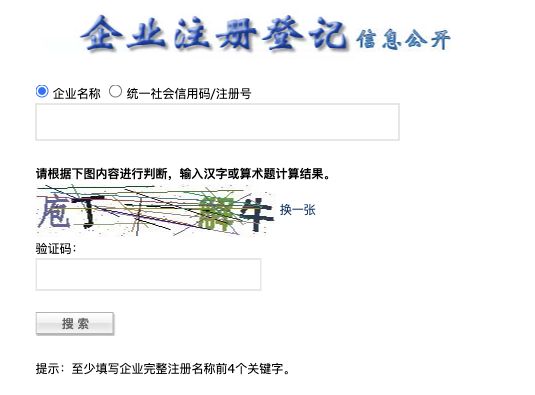
The Shanghai registration-search form displayed these labels when checked:
- 企业名称: company name.
- 统一社会信用码/注册号: unified credit code or registration number.
- 验证码: verification-code field.
Those labels help you recognize the input controls. They do not imply that other regional pages use the same layout or that verification will be identical on a later visit.
For a supplier registered elsewhere, locate that region’s relevant official service rather than submitting the company to the Shanghai example. If you do not know the region, use the registration authority or address printed on the business license as a lead. Check the region against the company record once you reach it.
A local channel is an alternative source to evaluate, not a guaranteed way around a national site’s access requirements. If it asks for credentials or verification you cannot complete, move to a route you can use normally. Do not interpret that second access problem as a second negative finding about the company.
Check the company identifier
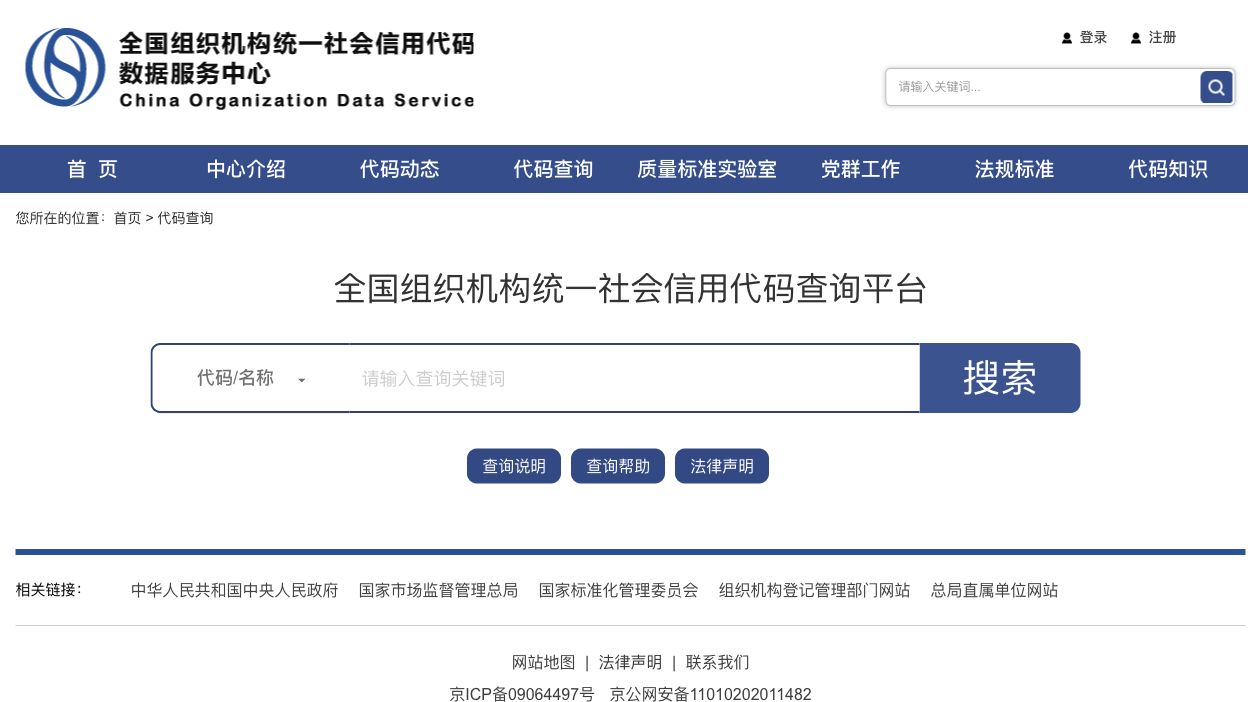
The national Unified Social Credit Code lookup, operated by the national code data service center, is another official starting point. Its help accepts an 18-character USCC or organization name. The cover image shows this platform’s actual query page.
Its published help addresses login prompts, account restrictions and periods of heavy traffic. It recommends signing in when prompted and trying later when load causes limits. These are this platform’s instructions, not a diagnosis of an error on GSXT.
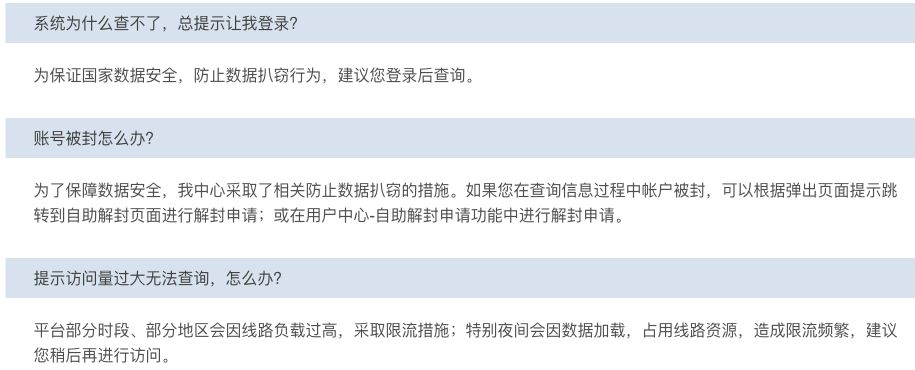
The same help notes that a newly registered or changed organization may be missing while data is being transmitted. A missing match therefore needs follow-up; it does not establish which explanation applies to your supplier.
Use an identifier lookup for the answer it actually returns. It is not a substitute for a full review of a company’s operations, ownership or transaction documents. Keep the returned name beside the code when transferring the result to a spreadsheet or supplier file.
If the code was copied from a photograph, compare it with the original before searching. Our USCC validator can help identify a format or checksum problem. Passing that check means the string satisfies the tested rules; it does not show that an organization is registered under it. Conversely, a transcription error should be corrected from a readable source, not by trying characters until some company appears.
Request a dated record
If a supplier, colleague or adviser can access the relevant register, ask for the specific record you need. This can be a practical way to continue the task without trying to reproduce their access environment. Be clear about who obtained the material: a supplier-provided screenshot remains supplier-provided evidence, even when it appears to show an official page.
A short request is usually enough. The wording below is a suggested message, not a quotation from a customer or a mandatory form:
Please send your full registered Chinese company name and Unified Social Credit Code as text. Please also send the current registration result from the official register, with the source address and the date you checked it. Keep the company name, code and registration status visible. If the company named on our quotation is different, please explain which entity will accept the order.
Adjust the final sentence to your actual documents. There is no reason to ask about a name discrepancy if none exists. Likewise, request an address or another field only when it matters to the check you are doing; a broad demand for every available document makes a simple identity question harder to answer.
On receipt, check three things together:
- The subject: the Chinese name and complete USCC identify the intended company.
- The source: the material identifies the website or issuing body, rather than showing an unexplained cropped table.
- The timing: the retrieval date is clear, and any historical entry retains its own date.
A screenshot can help a colleague locate the record, but it cannot be treated as independent authentication merely because an official heading is visible. If the supplier’s identity remains consequential and unresolved, use a separate retrieval or an appropriately scoped professional check. The next request should target the missing evidence, rather than repeat the same document request with stronger wording.
For material shared within your own team, keep the original Chinese excerpt with any translation. A translated company name alone makes later matching harder. Avoid collecting or circulating identity documents belonging to individuals when the task only requires public company particulars.
Use an English-language service
An independent service is useful when you need a readable company profile or a report that fits an internal review. Before choosing one, compare the actual deliverable: supported search inputs, fields available, language, record dates, account requirements and price. “Company verification” can describe different levels of work.
ChinaValidate offers company search and a business license check. The search interface asks for a company name, registration number or USCC. If the name and code are on a license image instead, the license tool provides the document-based starting point. Use the current pricing page and on-screen access information when deciding what to open or purchase.
These are independent services, not an English login to GSXT or a government-issued certificate. Choose a result because its identity and information fit your task, rather than because the report looks official. A well-designed PDF still needs to refer to the correct company.
Be particularly precise when handing the task to another person. “Please confirm the registered company behind this license” asks for identity work. “Please assess this supplier before a substantial deposit” asks for a wider judgment. A basic registry lookup cannot establish factory capability, control of a payment account or performance of a future order. Define the scope before comparing fees.
If a field you need is not displayed, ask whether it is available before ordering another product. Buying a second general report may simply repeat the information already obtained. The company-report comparison explains the difference between public company information and other kinds of credit or review material.
Continue with the matched company
Once an alternative route returns a record, return to the supplier document that prompted the search. Compare the complete Chinese name and USCC. Similar English names, shared brand words and the same salesperson are not enough to merge two companies.
There are three useful outcomes. A matching identity lets you review that company’s recorded status and the fields relevant to your order. A different identity requires an explanation from the supplier. An unavailable or incomplete result leaves a specific question open; record what remains missing rather than marking the business approved or rejected because a website failed.
If the search runs successfully but still produces no match, continue with the missing-company guide. If two retrieved records disagree, use the record-comparison guide. Those are different problems from getting through an inaccessible search entrance.
You can stop switching services once you have the company identity and the evidence your immediate task requires. The purpose of an alternative route is to resume a useful supplier check, not to collect the largest possible number of search results.