
Abnormal Taxpayer Status in China
Understand a Chinese supplier's abnormal taxpayer record, match the company and dates, and check whether the designation has been removed.
Start with the Chinese legal name or USCC. Confirm the matching company before opening its profile.

Abnormal taxpayer status (非正常户) is a designation made by a Mainland Chinese tax authority. It concerns missed filings and can interrupt the supplier’s ability to use tax invoices. A report showing this label calls for a check of the named company and the current status of the entry before you rely on it.
Designation and removal
When a taxpayer registered with the tax authority misses a filing deadline, the authority orders it to correct the omission within a specified period. The tax administration system automatically designates a taxpayer with filing obligations as abnormal after three consecutive months with no filings across all tax types. It also suspends use of the taxpayer’s invoice purchase book and invoices. This status describes a filing problem. It does not establish fraud, the authenticity of an individual invoice or whether the supplier is still trading. See State Taxation Administration Announcement No. 48 of 2019, Article III.
The same provision sets out the route back. Once the taxpayer accepts the penalty for late filing, pays the fine and files the overdue returns, the system lifts the designation automatically. A separate application to lift the status is unnecessary under that provision. If the supplier says it has fixed the issue, ask for a dated record that shows the outcome. An assurance that the returns were submitted describes a step taken, while a removal record establishes the outcome of that particular designation.
Tax and business status
A business licence, VAT qualification and invoice result each answer a different question. A supplier can show an active business licence and still have a tax filing issue. Conversely, an abnormal entry issued by a market regulator does not establish a tax designation. Use the Chinese label and issuing authority to tell the records apart.
| Record | What it checks | What to look for |
|---|---|---|
| Abnormal taxpayer · 非正常户 | Tax authority designation. | Date of designation and any later removal. |
| Operating abnormality · 经营异常 | A market regulator’s operating-abnormality listing. | Reason, authority and any removal of that listing. |
| General VAT taxpayer · 一般纳税人 | VAT taxpayer qualification. | The qualification that applies to the named taxpayer. |
| Invoice verification | Whether submitted invoice details match a record available to the service. | The individual invoice and its matching details. |
If the report uses a translation like “abnormal company,” ask for the original Chinese entry before deciding what to verify. The next steps differ for an operating-abnormality listing and a general VAT taxpayer qualification.
Identifying the supplier
Use the registered Chinese name and Unified Social Credit Code (USCC) for the company on the contract. If you are checking a tax invoice, identify its issuer as well. A factory, trading company and sales agent can be connected to one order while remaining separate legal entities. An alert against one does not automatically apply to the others.
If the code matches but the name looks different, check for an earlier registered name or a different English rendering. If the codes differ, ask which entity will sign the contract and issue the invoice. A shared brand, address or salesperson is too little to resolve a mismatch. Look up the registered entity using ChinaValidate Company Search or compare the licence with available company records using the business licence verification tool. Check the tax designation with the relevant tax authority.
For example, a buyer may negotiate with a factory but sign the order with a separate export trading company. If an alert names the factory, it may still matter to the buyer’s review of the manufacturer. It cannot answer whether the trading company has a tax designation or can issue the invoice agreed in the contract. Identify the subject of each check before looking up either company. This also helps if a seller proposes moving the order to an affiliate after signing.
Official lookup sources
Start with the issuing authority named in the supplier report. If the report only shows a coloured badge, ask the provider for the notice or lookup link. Tax authorities use regional services and dated announcements, so a page for one province is a starting point for records within its coverage. The Guangdong form below shows the fields to look for in that service. See the Guangdong Provincial Tax Service lookup.
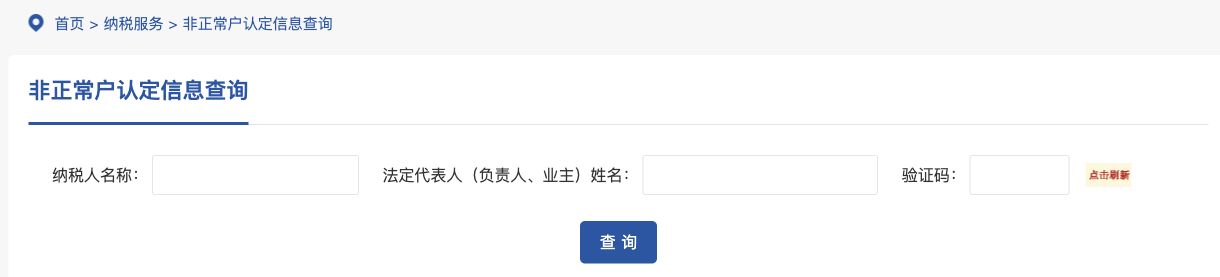
- 纳税人名称 (taxpayer name). Use the registered Chinese name of the supplier entity you identified.
- 法定代表人(负责人、业主)姓名 (legal representative, person in charge or proprietor). Check which name applies to the entity and use the details you are authorised to use.
- 验证码 (verification code). Complete the page’s verification prompt, then select 查询 (Search).
If the page returns a record, compare the displayed name and any taxpayer identifier with the company you intended to check. Other provinces can use different fields or publish information in a different format. If you cannot complete the search, ask the supplier’s tax contact for a suitable current record from its competent tax authority. An existing screenshot from the supplier is more useful if it includes the relevant page, source and date.
When you have a notice rather than an interactive result, look for the issuing office, the period covered and a company identifier in the notice or attachment. The office name matters because two local authorities may publish similar notices for different taxpayers. If the attachment is missing, ask for the original record. A cropped image of the heading can identify the type of notice, but you need the corresponding entry to connect it to your supplier.
Designation and removal dates
Read each date against the event it describes. For example, the Jinshan district tax authority’s June 2026 notice was published in July. June is the designation period covered by the notice, and July is when it appeared. The date you open the notice is a third date. A historical notice can establish that the supplier was listed in the stated period without establishing its current status. See the Shanghai Jinshan tax authority’s announcement.
Interpreting lookup results
- A designation appears. Save the official record and ask whether the supplier has later evidence of removal. If a report reproduces an old entry without an outcome, record that the earlier designation is documented and the current position is unconfirmed.
- A later removal appears. Check that it applies to the same taxpayer and designation. Keep both dates. Removal resolves that entry, while questions about an invoice from an earlier period still need to be checked against the actual transaction.
- No match appears after a completed search. Record which service you checked and when. Recheck spelling and regional coverage before drawing a conclusion. An empty result answers only the search you ran. A page that fails or will not accept the verification code leaves the search incomplete.
Consider a hypothetical order placed in May. A June notice names the supplier and a later record shows removal in August. The August record can settle the outcome of the June entry. If the buyer is reviewing a May invoice, however, the question is whether anything affects that specific invoice. Send the invoice details and the dated records together so the tax adviser can address the transaction, instead of asking for a verdict based on the latest supplier status alone.
Effects on VAT invoices
If the order requires a Chinese tax invoice, ask which company will issue it and whether it can do so on schedule. A pro forma invoice can set out the requested payment, while a Chinese tax invoice has a separate tax function. Compare what the supplier proposes to issue with what the contract or your finance team requires.
Special VAT invoices have a separate rule. A special VAT invoice from an abnormal taxpayer falls within the abnormal-voucher category if the issuer failed to declare it to the tax authority or failed to pay the required tax. The rule depends on the particular invoice and the issuer’s conduct. The taxpayer can request verification from the competent tax authority if it disputes the determination. See State Taxation Administration Announcement No. 38 of 2019 and the Shanghai tax authority’s guidance.
If the tax authority actually classifies a special VAT invoice as an abnormal voucher, the recipient’s position also matters. For a general VAT taxpayer receiving that invoice, Article III generally calls for deferring a deduction that has yet to be claimed or reversing input VAT already deducted, subject to the stated exceptions. For a purchase still being negotiated, the more immediate question may be whether the seller can provide the agreed document at all. Check which problem you need to resolve before requesting a replacement. See Announcement No. 38, Article III.
If you already have an invoice, compare its issuer, purchaser, date and amount with the order and check the document independently. A successful lookup confirms a match to an invoice record. It does not establish the issuer’s current tax status or prove delivery. If deduction or replacement matters, give your tax adviser the invoice and the dated records for the period in question. See the Chinese VAT invoice verification guide.
Supplier follow-up template
Send the original entry or its link to someone who can reach the supplier’s tax team. Specify the contracting entity or invoice issuer so the reply addresses your order.
We found an abnormal taxpayer entry for [Chinese legal name and USCC] in [source], dated [date]. Please confirm whether the entry concerns your company and explain the current status. If the designation has been lifted, please share a dated record showing the removal. Can [named seller] provide the invoice or other document agreed for our order? Please omit unrelated personal information.
我们在[来源]查到[企业中文名称及统一社会信用代码]的非正常户记录,日期为[日期]。请确认该记录是否涉及贵公司,并说明当前状态。如已解除,请提供注明解除日期的相关记录。另请确认[销售方名称]能否按订单约定提供发票或其他单据。请遮盖无关的个人信息。