
1688 Returns for Business Buyers
Understand return promises on a 1688 wholesale order, document the problem, and connect the seller, purchasing agent and return address before sending goods back.
Start with the Chinese legal name or USCC. Confirm the matching company before opening its profile.
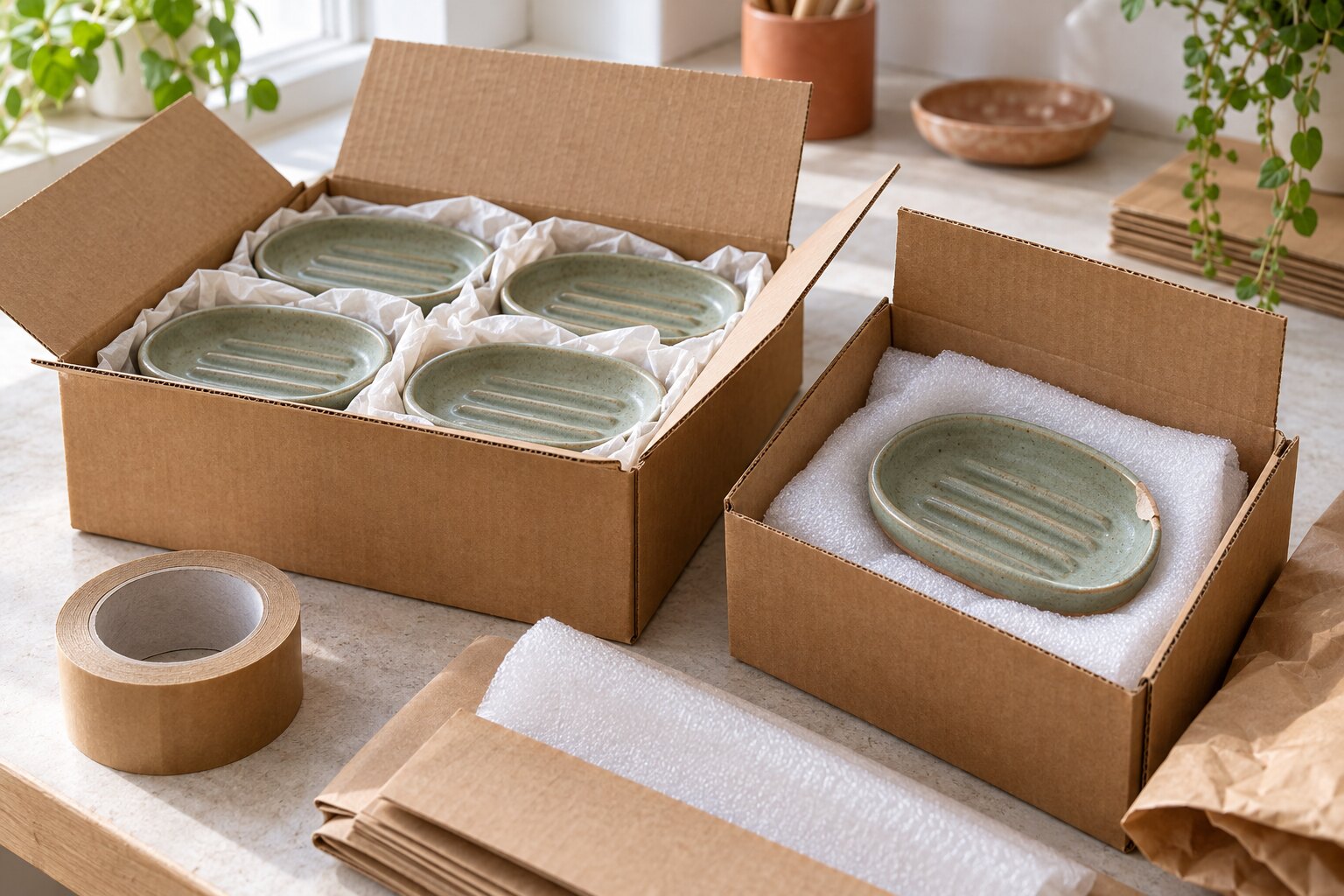
A carton of ceramic soap dishes reaches your purchasing agent's warehouse in China. Some dishes are chipped. Your overseas shop has not received the stock yet, but the 1688 order already shows a delivery event. Before arranging international shipping—or sending anything back—you need to establish which order is affected, what went wrong and which return process applies.
This is a business-purchase problem, not simply a question of how many days a familiar shopping website allows for returns. The seller's actual service promise, the purpose of the purchase, the product condition and any agent arrangement all matter. Start with the order record and its current rules rather than borrowing a general consumer-shopping deadline.
The promise attached to the order
Save the product page, selected service labels, order details and relevant messages at the time of purchase. A statement on a different product, a store banner or a seller's later explanation may not describe the service attached to your particular order. Keep the wording and any linked conditions together.
China's Consumer Rights Protection Law frames consumer protection around purchases for daily consumption. A purchase of stock for resale should not automatically be treated as the same scenario as an individual's personal shopping. That distinction does not mean a business buyer has no rights; it means the applicable contract, platform rules and circumstances need to be considered.
1688 also publishes agreements for particular voluntary services. Its 8-day no-reason return agreement, for example, describes eligible multi-channel distribution orders, supporting products and conditions. It is evidence that a defined service has a defined scope, not a promise that every wholesale order has an 8-day return right.
For your own purchase, check the service actually shown and the current instructions in the order. Identify eligibility, excluded products, the event that starts the relevant period and the steps required to make a request. A supplier's general “no problem” message is not a substitute for knowing which commitment you intend to rely on.
Describe the problem accurately
In the soap-dish example, chipped products raise a different issue from unwanted stock. Incorrect quantities, the wrong model, damage and a change of mind should not all be filed under one vague “return” label. Describe what happened and connect it to the agreed goods.
| Situation | Useful evidence | Point to clarify |
|---|---|---|
| Chipped or damaged dishes | Packaging, affected units and condition on arrival | Extent of damage and the proposed remedy |
| A different size or colour arrives | The accepted specification and received goods | Whether the delivery differs from the order |
| Fewer units than ordered | Carton labels, packing records and a documented count | Short shipment or a separate delivery |
| The buyer no longer wants correct stock | The applicable voluntary service and item condition | Whether a change-of-mind return is available |
Do not claim every unit is defective because one photographed piece is damaged. State the quantity inspected, the quantity affected and what remains unexamined. If the agent checked only the top layer of a carton, say so. A precise account is easier to assess than a dramatic conclusion unsupported by the inspection performed.
Equally, do not minimize a specification problem by calling it cosmetic when the agreed feature matters to the purchase. Compare the actual received item with the accepted description, sample or drawing. If the order itself left the feature open, preserve that uncertainty rather than inventing a specification after delivery.

Preserve the goods and the record
Ask the receiving warehouse to retain relevant outer packaging, labels and damaged items while the issue is assessed. Record the arrival condition and the process used to inspect the goods. Photographs showing only a loose broken piece may not explain which carton it came from or how the rest of the shipment looked.
Keep original image and video files when available. A short annotated copy may help explain the problem, but it should not replace the underlying record. Avoid editing that changes the apparent condition or removes context. Your aim is to make the claim understandable, not to create a more persuasive-looking version of events.
Separate affected stock from items that can be used or sold. Record any proposed partial remedy, such as replacement of the damaged units or a partial refund, with the quantity and conditions. Do not assume that accepting one shipment of replacements resolves every open issue unless that is what the parties have agreed.
Take care with timing when an agent receives goods on your behalf. Waiting until the shipment reaches your country may leave the domestic order much further along than you expect. Confirm how the order records receipt and what action is required while the goods are still in China. Do not rely on the date you personally open the final overseas parcel.
The seller and the agent
Establish who placed the 1688 order and which business sold the goods. If you bought through a purchasing agent, the agent may control the platform account and be the party able to submit the request. Your agreement with that agent is a separate part of the file.
There are at least two practical arrangements to distinguish. An agent may place an order on your behalf and provide purchasing services. Alternatively, a reseller may buy goods and sell them to you under its own terms. Do not assume that both arrangements give you the same direct access to the upstream order or the same refund route.
Ask for the order reference, seller-profile link and the business identity associated with the purchase. If the agent will not share the whole document because it includes unrelated information, agree on the relevant order evidence needed to handle your claim. An image of a carton label does not substitute for identifying the business that accepted the order.
For a Mainland seller, obtain the Chinese legal name and USCC where available. Our 1688 supplier guide explains connecting a storefront to its registered operator. Registration information helps establish who the seller is; it does not itself decide whether a return request will succeed.
Confirm the return destination
A registered company address is not automatically a return warehouse. Before dispatch, obtain the return instructions through the appropriate order or agreed channel. Confirm the recipient, complete address, contact details, accepted shipping method and any reference that must accompany the package.
If the recipient differs from the seller's registered name, ask for the connection. A logistics provider or designated warehouse may receive returns legitimately. Keep the seller's instruction authorizing that destination. Sending goods to an address found independently in a registry can create a delivery problem even when the company record is accurate.
Agree who pays the return freight and how it will be handled. A statement that the seller accepts a return does not necessarily settle international freight, domestic forwarding, inspection charges or other agent costs. List the actual charges in question instead of assuming that one refund will automatically cover every expense.
Keep tracking and delivery evidence after dispatch. A carrier's delivery event shows a logistics step; it may not establish that the seller has accepted the quantity and condition of the returned goods. Follow the applicable order process and record the seller's response. If the address or instructions change, preserve the update before the parcel moves.
The refund is a separate stage
Returning goods and receiving money are connected but distinct events. Confirm the refund amount, currency, payment route and status. Where an agent or payment service sits between you and the seller, identify each step rather than treating a seller's refund confirmation as proof that your own account has been credited.
WorldFirst's 1688 refund help describes its own process and conditions. That illustrates why the payment route matters. Its processing periods, fees or limits should not be generalized to a different service, an agent-funded order or a payment outside that route. Read the instructions for the method actually used.
If the seller approves only part of the requested amount, compare the decision with the remedy you agreed. A partial payment could be an agreed resolution, an interim step or a disputed deduction. Keep the explanation and the relevant order record so you can distinguish those possibilities.
A company lookup will not unlock a refund or reverse a platform decision. Its role is to help identify the business and preserve accurate counterpart information. Use the platform, payment provider and contractual channels appropriate to the dispute for the remedy itself. Serious or unresolved commercial disputes may require advice based on the actual transaction.
A return file that stays readable
For the fictional soap-dish order, a useful file follows the goods and money without mixing them. It contains the accepted product description, the order and seller identity, the warehouse's arrival record, the affected-unit count, the proposed remedy, the approved return instructions and the eventual payment evidence.
- Check the service and conditions attached to this order.
- Describe the defect, mismatch or change-of-mind request accurately.
- Identify who can act on the platform order.
- Confirm the authorized return destination and costs.
- Track the goods and the refund as separate steps.
This preparation can also improve the next purchase. Agree in advance when the agent will inspect arrivals, who reports defects and how instructions reach the warehouse before international forwarding. These operational choices do not create a new return right, but they make existing commitments easier to use.
To establish the Mainland seller's identity, search the Chinese company name or USCC. If you receive a license image, business-license verification can help compare its supported fields. Keep the result with the 1688 order, while leaving the return decision tied to the actual goods, terms and evidence.