
Hong Kong BRN vs Mainland USCC
Identify a Hong Kong supplier by its BRN, map an old company number and check the Mainland manufacturer separately with its USCC.
Start with the Chinese legal name or USCC. Confirm the matching company before opening its profile.
A Hong Kong supplier does not need a Mainland Chinese Unified Social Credit Code simply because it sells goods made in China. If the proposed seller is a Hong Kong company, identify it through its Hong Kong registration record and Business Registration Number (BRN). Check any Mainland manufacturer separately using that manufacturer's Chinese legal name and USCC. An eight-digit BRN is not a shortened USCC, and a factory's code does not identify its Hong Kong sales company.
This distinction becomes useful when a supplier replies to your request for an 18-character code with a business registration certificate, an older company number, or two different company names. The right next question is where the seller is registered and which entity your order will name.
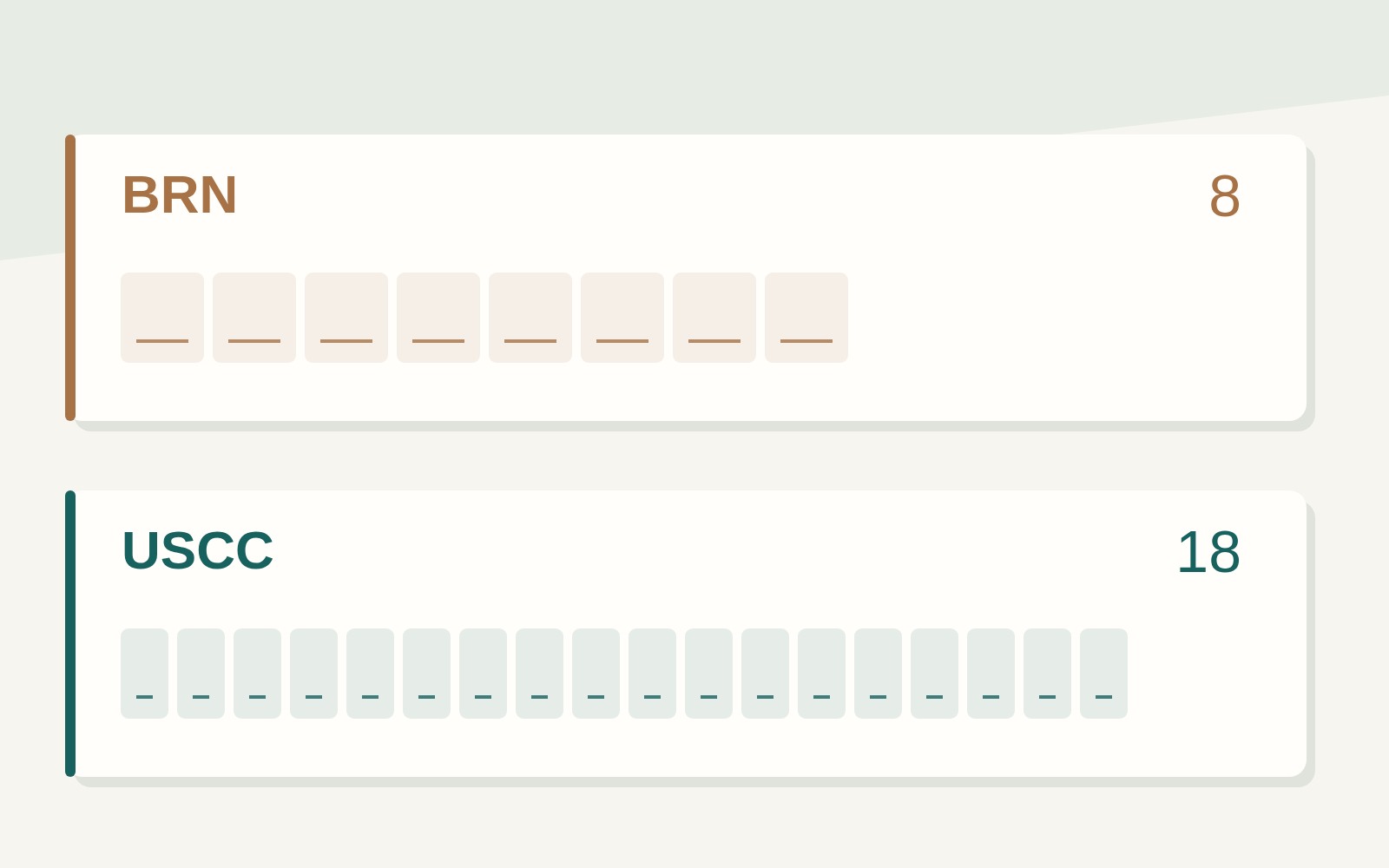
Start with the seller's registration
Ask the contact to identify the legal seller, its place of incorporation or registration, and the registration document supporting that answer. “Our office is in Hong Kong” describes a location. It does not establish that the company offering the goods was incorporated there. Likewise, a Shenzhen production address does not tell you which company will sign the sales contract.
Keep the registered name exactly as it appears in the relevant record. A supplier's catalogue name, email signature and website brand may be useful for finding the business, but should not silently replace the registered seller. If a record supplies English and Chinese names, preserve both. Do not invent a Chinese translation and search it as though it were a registered name.
For Mainland organizations, the market regulator's USCC management measures, effective from 1 February 2026, describe a nationally unique, permanent identifier. That explains the Mainland side of the comparison. It does not make a Hong Kong BRN invalid because it fails a Mainland code checker.
Also establish the type of business. Hong Kong business registration covers more than incorporated limited companies. A business registration certificate alone should not lead you to describe its holder as a limited company. Where the supplier claims to be a company, obtain the corresponding company registration information; where it identifies another business form, use the records appropriate to that form.
BRN, old company number and USCC
The Companies Registry adopted the BRN as its Unique Business Identifier on 27 December 2023. For companies and entities under the Registrar's administration, it replaced the former Company Number. The BRN is the first eight digits of the Business Registration Certificate number, rather than every character printed in that certificate-number field. The Registry explains the change and the available mapping in its current identifier notice.
| What you received | What it identifies | Useful next move |
|---|---|---|
| Hong Kong BRN | The business registration identifier adopted for entities under the Companies Registry | Match the number and registered name through the Hong Kong service |
| Former Hong Kong Company Number | An identifier used in earlier company records | Use the official CR No. / BRN Mapping function |
| Mainland USCC | The Mainland organization identified by an 18-character code | Match that organization's current Chinese name and record |
The practical benefit of the mapping is continuity: an older company document and a current supplier message can use different identifier systems without necessarily referring to different companies. Use “Quick Search > CR No. / BRN Mapping” in the Registry's e-Search service to look up the corresponding number. Keep the old value labelled as a former company number in your supplier record.
Do not manufacture a conversion by adding zeros, selecting a convenient part of the old number or pasting a Mainland factory's code into the field. If your purchasing software accepts only 18 characters, that is a limitation of the form, not proof that the Hong Kong supplier lacks registration. Separate the jurisdiction, identifier type and identifier value in the supplier master record.
Preserve the complete certificate image alongside the extracted BRN so another reviewer can see which field you used. A spreadsheet cell showing only a number removes useful context, particularly when an older document is being compared with a recent email. For the Mainland format, use the existing USCC field guide; no checksum calculation converts between these systems.
Use the right Hong Kong search
Begin with the Companies Registry's official company information service. It links to e-Search under the e-Services Portal and describes access to current registered information and images of filed documents. Enter through that official route rather than trusting an old bookmarked search address or a supplier-supplied page that only resembles a registry.
Choose the search product to answer your actual question. The Registry's public search guide distinguishes free index information from chargeable products. Basic searches can help establish a candidate company's name, incorporation or registration details, status and available filings. A Company Particulars Report and document images provide further information, with charges depending on the product. Check the current service description and fee before ordering; a search result is not automatically a complete company file.
Compare the result with the supplier's own document: registered name, identifier, company type and relevant dates. Read a former name as history, not as a spelling alternative to substitute without explanation. If the supplier claims a change, locate the corresponding record instead of accepting a newly typed certificate as the only connection.
The Inland Revenue Department maintains a separate business registration service. Its electronic services page includes BRN enquiry and applications for business registration information. This route addresses the business registration record. The Companies Registry route addresses company information within its remit. A result from one service should be described by its actual source, rather than relabelled as a report from the other.
There is a further limit worth retaining: the tax authority states that issuing a business or branch registration certificate does not establish compliance with every law applying to that business. Particular activities may require additional licences or qualifications. Its explanation of requirements beyond business registration prevents a common overstatement: “registered” does not mean “approved for everything the supplier offers.”
Keep useful results, including mismatches
A short saved comparison is more useful than a browser tab someone remembers opening. Retain the supplier's document, the official result or permitted download, the date checked and a sentence explaining whether the names and numbers matched. Save the relevant page before leaving it; the Registry's electronic search FAQ explains that online viewing results are removed when you leave the relevant screen. Keep any purchased document with its description so the next reviewer knows what it contains.
If there is no match, distinguish the possibilities before drawing a conclusion. You may have searched a brand instead of the registered name, entered a former company number into a BRN field, used the complete certificate number where only the BRN belongs, or chosen a service that does not cover the business form. A service error or incomplete page is also different from a completed search returning no result.
Return to the original document, confirm the field and search route, and ask the supplier to clarify unresolved identity details. Do not report “unregistered company” solely because a Mainland search returned nothing for a Hong Kong business. Conversely, do not mark the file complete merely because some similarly named Hong Kong company appeared.
For example, a current registry match could identify the Hong Kong seller while a supplied factory licence identifies a separate Mainland entity. Both documents may be relevant. The unresolved question is the relationship between them, rather than which number to delete. If the contact still refuses to name the legal seller, the supplier identity clarification guide provides wording for requesting an accountable entity without assuming the reason for the refusal.
Keep translations beside the original names and field labels, not over them. This makes it possible to spot a language problem without losing the underlying identifier. For instance, a translated heading that says “company registration number” may conceal whether the source meant an old Company Number, a BRN or a full certificate number. Record the original label and ask for clarification when the translation leaves the distinction unclear.
One order, two registered entities
Consider a hypothetical order for custom metal housings. The quotation names a Hong Kong seller; production photographs come from Shenzhen. The buyer receives a Hong Kong business registration certificate and a Mainland manufacturer's business licence. No real companies or registration numbers are used in this example.
The Hong Kong search may establish the seller's registered identity. The Mainland licence and matching company record may establish the manufacturer's identity. Neither finding, by itself, demonstrates that the seller owns the manufacturer, controls the production line, or can make the manufacturer honour the sales contract. Those are additional claims requiring their own support.
Write down the two roles in ordinary language: “The Hong Kong company is proposed as our seller. The Shenzhen company is proposed as the manufacturer.” Then compare that description with the draft contract and ask who is responsible for specifications, inspection access, delivery and defects. A shared brand or salesperson may explain how the introduction occurred, but does not answer those contractual questions.
If the supplier says the companies are in the same group, request material supporting the specific relationship claimed. If it says the Hong Kong seller buys from an independent factory, ask for confirmation of the manufacturing arrangement relevant to your order. Do not insist that every legitimate trader own a factory; the point is to understand the arrangement you are actually accepting.
A change of seller during negotiations deserves a fresh comparison. The manufacturer might remain the same while the company taking your order changes. Preserve the earlier and later quotations, identify which entity the final contract names, and reconcile the payment instructions separately. The invoice and beneficiary mismatch guide covers that payment issue; two successful registration searches alone do not resolve it.
For the Mainland manufacturing entity, search its Chinese legal name or full USCC and compare the returned identity before reviewing further company information. Use the official Hong Kong services for the Hong Kong entity. Keeping those routes separate avoids promising that one Mainland company report also verifies the Hong Kong seller.
A useful supplier request
Once you know why the first number did not fit, ask for the missing information rather than repeating “send your USCC.” The following wording is a purchasing suggestion, not a statutory demand:
Please confirm the registered name and place of registration of the company that will sign our sales contract. For a Hong Kong company, please provide its BRN and current registration documents, and identify any former company number shown on older documents. If a separate Mainland company will manufacture the goods, please provide its Chinese registered name and USCC and explain its role in this order. Please also confirm which company will invoice us and which entity the payment instructions name.
This request gives the supplier a way to explain a normal cross-border arrangement while leaving no ambiguity about the parties you need to check. When the response arrives, compare each identifier with its own official record and return to the proposed contract. The useful outcome is a named seller and a supported manufacturing arrangement, with any remaining question assigned to the person who can answer it.