
Chinese Branch Business Licenses
Use a mainland Chinese branch’s business license to check its registered name, code, person in charge and premises, then verify the company it belongs to and each party’s role in the order.
Start with the Chinese legal name or USCC. Confirm the matching company before opening its profile.

When a mainland Chinese supplier sends a business license ending in 分公司, start with the full name and Unified Social Credit Code (USCC) printed on that license. They identify the branch. Look up the branch under its own code, then obtain and verify the full name and code of the company it belongs to. Keep both records. You will need them to establish who is named in your contract and what the branch will do for the order.
A branch can hold its own business license and have a different code from its head company. It can also have a local person in charge and operating premises. Under China’s Company Law, a company branch lacks independent legal personality and the head company bears its civil liability. A license helps you identify the branch and its registration particulars. The contract and any authorization show how it is involved in your purchase. PRC Company Law, Article 13
Reading the branch license
Open the full document. Copy the fields in Chinese before translating them or entering a short English label. Article 6 of the market entity registration rules lists the branch’s name, type, business scope, premises and person in charge among its registered particulars. Use the actual field labels so the head company’s details do not get pasted into the branch record. Market entity registration implementation rules, Article 6
- Registered name and type
- Keep the entire 名称 entry, including the location and branch ending. Copy the 类型 field separately. The organization type helps distinguish a company branch from a separately incorporated company using a similar name.
- Unified Social Credit Code
- Copy all 18 characters from the branch license. In your supplier file, label it with the branch’s name. The head company’s code belongs beside its own name. If a quote uses the head company’s code under a shortened branch label, confirm which name the seller intends to use in the contract.
- Person in charge
- Record the name beside 负责人. The company license normally shows the head company’s 法定代表人, or legal representative. Keep those roles separate even if both records name the same person. For a signature, check the capacity in which the person is signing.
- Business premises and scope
- Read 经营场所 as the branch’s registered place of business. Compare it with the address you were given for the part of the order handled by the branch. Keep the full 经营范围 entry if the activity matters. Check a required permit by its own holder, site and scope.
The enterprise name rules explain why a long branch name often contains the full name of the company it belongs to. Article 13 calls for the enterprise name at the front and a branch designation such as 分公司, 分厂 or 分店. A place or industry term can distinguish the branch. Use the wording as a lead to the head company, then verify the relationship from registration evidence. Enterprise name implementation measures, Article 13
The head company in the filing
Look at the first page of the standard branch registration application. Table 1 records the branch name and provides a place for its code. The code is left blank at initial establishment registration. Table 2 identifies the organization the branch belongs to, with its own name, code, type and registration authority. Table 3 records the branch’s premises and proposed scope for establishment. The layout shows which details belong to each record. A completed application describes what an applicant submitted. Use an issued license and registration evidence to check what was registered.
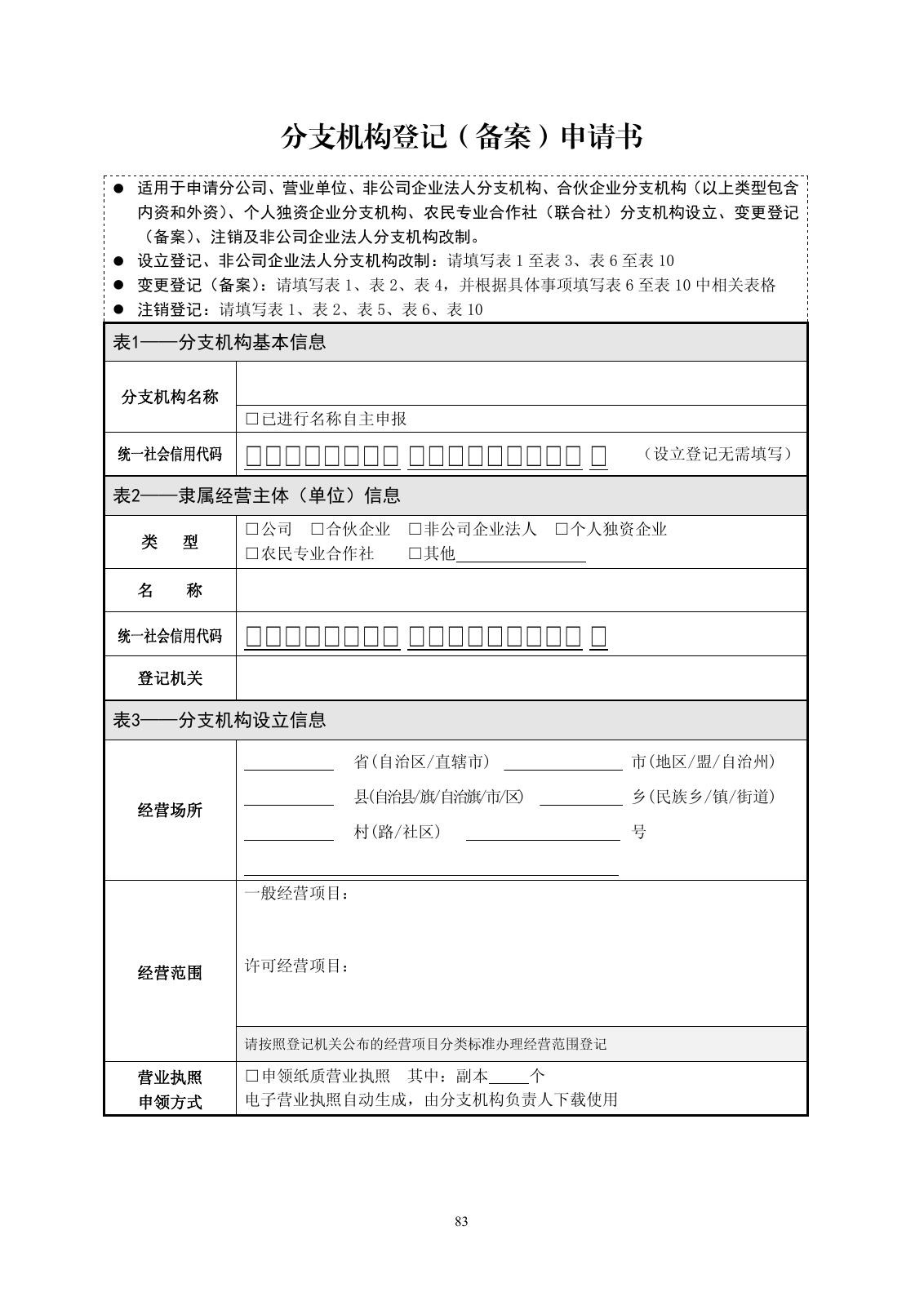
The Beijing branch registration guide illustrates the supporting documents: a copy of the head company’s license, material for the business premises and confirmation of the person appointed to run the branch. The filing checklist is addressed to the applicant. For a purchase, you can ask for the branch’s current license, the head company’s full name and code, and the record or extract that shows the connection. You generally need the person’s business role for this check. The applicant’s private identity documents belong to the registration procedure. Beijing branch registration guide
Search the branch and the head company separately using China company search. Compare the full names, codes and current statuses. Look for the affiliation in the branch’s registration information or in a reliable record from the head company’s side. If the result gives the branch’s name but omits its affiliation, ask for dated registration evidence identifying both parties. A headquarters listed in a presentation may be the group’s management office. You need the company to which the branch is actually registered.
Responsibility for the order
Article 74 of China’s Civil Code provides for a branch to carry out civil activities in its own name. The legal person bears the resulting civil liability. The law also allows property managed by the branch to be used first, with the legal person responsible for any shortfall. The existence of a branch name on a document therefore calls for reading both the name on the agreement and the relationship in the registration records. PRC Civil Code, Article 74
Read the seller block and signature block together. If the head company sells and the branch performs local service, name the head company as seller in the vendor and contract records and put the branch beside the service obligation it handles. If the branch is named on the agreement, confirm which head company it belongs to and who may sign for this transaction. Where the person in charge or a salesperson signs on behalf of the head company, check the authority for the particular agreement. A registered appointment and a grant of signing authority answer different questions.
Record the account holder from the payment instructions and compare it with the approved arrangement. If finance sees the branch code next to the head company’s name, return to the source document to identify the field that was copied from the wrong record. If the branch is expected to collect payment on a contract naming the head company, ask for written instructions that identify the branch and the order and explain how payment will be applied. A new payee also goes through your regular payment approval.
A branch, a subsidiary and a site
A subsidiary can share the group’s brand while being a separate legal person under Article 13 of the Company Law. If the license names a company with its own legal representative and the register shows a company rather than a branch, check that company as a separate seller or service provider. A group relationship can explain a shared name or website. If the order relies on another company’s promise, obtain the undertaking from the entity that is supposed to provide it.
An ordinary sales desk, showroom or warehouse may be called a “branch” on an English brochure. Ask for its exact registered name and code if the supplier presents it as a registered branch. A sales location may instead operate under the company’s registration or a premises filing, subject to the local arrangements. When the location appears in the purchase documents only as a pickup or service point, check the address and operator in that role. If an independent warehouse company is involved, keep its details with the shipping instructions. Confirm the seller from the agreement.
A service renewal with an older license
Suppose a buyer is renewing maintenance for a machine. The original contract named the head company. A regional service team sends a scan of the local branch license and a draft renewal headed with the group’s English brand. The person in charge on the branch license differs from the person who signed the original contract. The service address on the newest schedule also differs from the premises on the scan.
The buyer first reads the branch name and USCC from the scan, then looks up the current record by that code. If the current branch address is the one in the schedule, a dated change record and a current license can explain the older copy. If the schedule uses an address for the customer’s machine or a shared workshop, record that site as a service location and ask the team to explain who operates it. The branch’s registered premises and the place where the engineer will work serve different purposes.
Next the buyer looks up the head company using its own code from the original contract, and checks whether the branch still belongs to that company. The difference in names beside the signatures may be expected if the old signer was the head company’s legal representative and the new name is the branch’s person in charge. The draft still needs a named contracting party and evidence of authority for the person who will actually sign. The buyer can ask for a corrected renewal naming the verified head company, a schedule identifying the branch as the service provider, and a clear statement of who will handle claims under the renewal.
If the supplier says the regional branch was closed and a new subsidiary now provides the service, keep the old license with the original contract. Open a separate check on the subsidiary’s current license and company record. Find out which party will honor existing commitments and which entity will accept the renewal. An old service address or a familiar representative may stay the same even when the party to future work changes.
The branch evidence in your file
Save the issued branch license, dated branch and head-company records, and the evidence linking them. Use separate name and code fields for the two registrations. Put the contract, signature authority and service or payment instructions alongside the parties they concern. If a difference remains, identify the exact field or document you need. For example, ask for the dated affiliation record if all you have is a branch name with the head company’s old wording.
Use the business license check to compare the extracted details on a mainland license copy with a company record. For a broader search starting with the head company rather than a license in hand, see the guide to finding a Chinese company’s branches. This check is complete when the next colleague can identify the branch and head company from their own records and see which part of the order each handles.