
CCC Certification Coverage for Chinese Factories
Check that a Chinese factory’s CCC certification covers the model and site for your order, including after a move or manufacturing change.
Start with the Chinese legal name or USCC. Confirm the matching company before opening its profile.
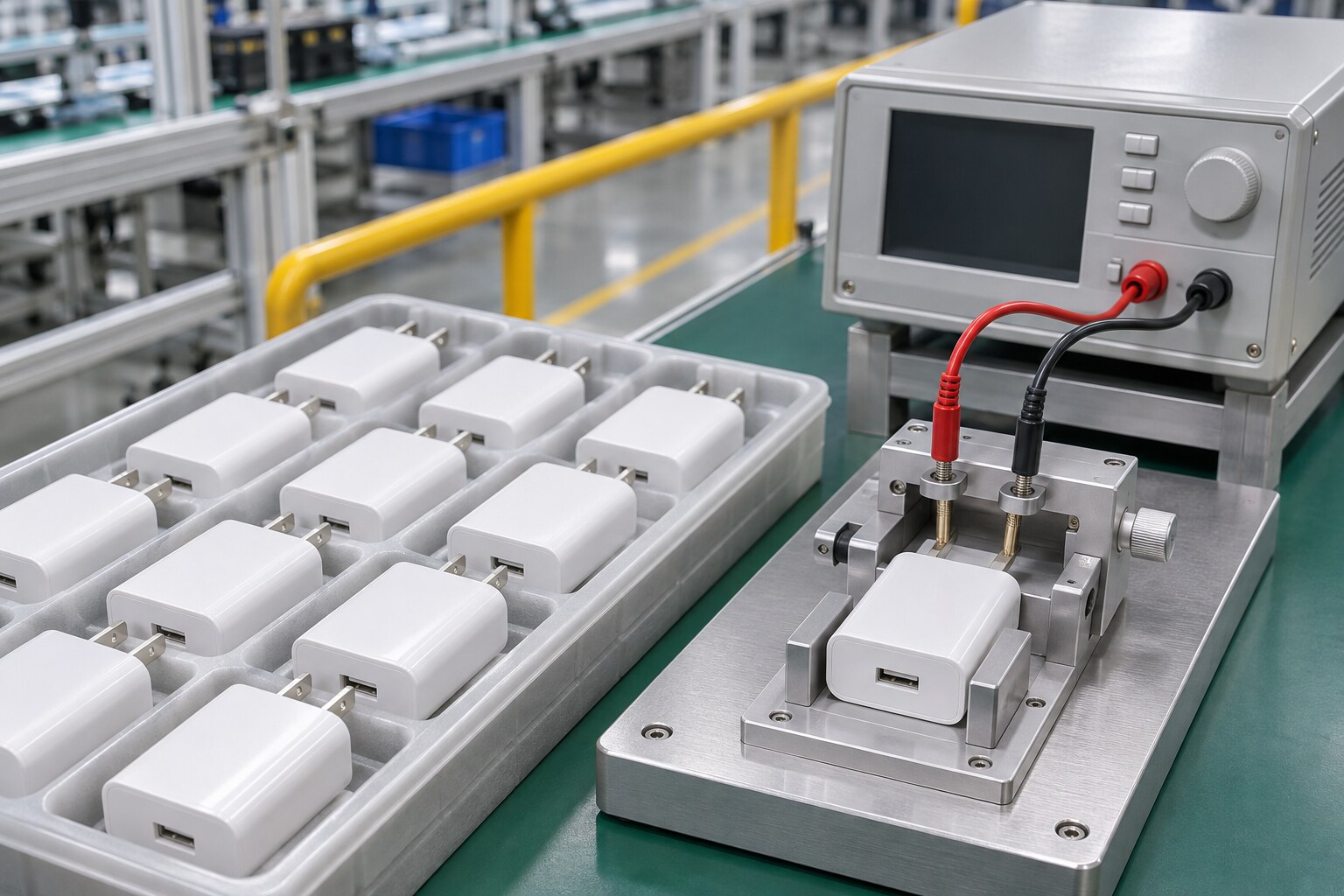
A factory shows you a valid China Compulsory Certification (CCC) certificate for a model you want to buy. Then the production team says the next order will be made at a new site. Ask for evidence that the certification covers the actual combination of product, model and production location. A valid record for the former site may still be useful for older stock. The new batch needs its own comparison.
Start with the certificate and every annex that describes coverage. Match them to the order and production records. If the factory has moved or changed, ask the certification body’s documented decision about that change. The job is to establish what the certificate applies to, rather than to approve a whole factory based on one product record.
The product and its model
Write down the full model name from the specification, sample label or purchase order. Keep the suffix if the manufacturer uses one. A certificate for a product family may list coverage on an annex. Ask the supplier where the exact model or configuration appears. If the supplier points to a similar product, clarify whether it is a variant covered by the record or a different model.
Check the product category and technical description against the scope on the record. A component and a complete product can have different certification questions. A supplier might show an adapter’s certificate when you asked about the finished unit. Confirm what the order actually includes and ask which products need which records. For a regulated shipment, consult the current applicable certification rules for the product category. Do not assume the rule is the same for all goods or all destinations.
The companies on the certificate
The seller, certification applicant, manufacturer and production enterprise can be different organizations. The certificate rules distinguish the roles and include name and address information. A trading company can handle your sale without operating the production site. A manufacturer may be responsible for the design while a named factory makes the units under an agreed arrangement. Write down the role beside each company, then match each one with the relevant part of the order. CCC administrative provisions
Use the manufacturer’s and production site’s exact Chinese names if available. A supplier’s informal English name can be shorter or describe a group rather than a registered company. If two companies appear on the certificate and quote, identify the seller, the holder of the certificate and the operation that will make the goods. A company search can help you establish which registered entity is in each role. Check the Chinese company names
A coverage comparison
Build the comparison around the actual order. A compact record with the three coverage questions can be enough to find the missing evidence. For example, consider a hypothetical order for a power adapter. The seller says the model is the same as last year, but the new batch will be made at a second plant.
| Detail | What the buyer has | What the buyer still checks |
|---|---|---|
| Model | The order names the same model as last year. | Confirm the full designation on the certificate or annex and on the production label. |
| Site | The current certificate file names the first factory address. | Obtain evidence that the second site is covered for the same model if it will make the order. |
| Batch | The supplier has both old stock and planned new output. | Identify which site made the shipped units and use the evidence relevant to that batch. |
The open item in this example is the site. Matching the model and finding a valid certificate are good findings that you can keep. You still need information about where the shipped units were made. If the seller later says the order will come from old stock, ask it to identify the production lot and show which site produced it, rather than assuming the scope question has gone away.
A change to the factory address
Ask what actually changed. A municipality can rename a street while the production line stays where it was. A factory can move equipment and processes to another location. An additional plant or subcontractor can join the arrangement. Those are different circumstances. Use dated evidence to establish which one happened and ask which approval or certificate change applies.
The CCC administrative provisions distinguish changes to names or address names from changes to the physical location or production conditions. The rules describe verification for certain administrative changes and renewed factory inspection when the production location or production conditions change. Follow the applicable product rules and the certification body’s decision for the specific site and product. CCC administrative provisions on certificate changes
A new business licence can help show the company’s registered address or identity. It does not determine where certification coverage applies. Ask for the updated certificate or annex, or other official change evidence that identifies the relevant factory and the model. Compare it with the certificate record and the manufacturing location on the supplier’s production documents.
Replacement or additional site
Ask whether the new site replaces the old one or whether both are covered. A buyer with orders at both sites needs the scope for each. If one certificate version replaced another, note the relevant dates and the supplier’s explanation of when the line started shipping from the new plant. A certificate number that remains the same can still have a change history or a newer annex.
Production and shipping locations
A collection warehouse or freight forwarder’s address can differ from the production location. Identify where the batch was made using the manufacturer’s confirmation, lot records or a production document that ties the model to the site. Keep the warehouse separately in the shipment file. If the supplier can confirm only the departure address, the coverage check still needs a production location.
A lot that crosses the move
Keep the production dates separate from the dates of invoicing and dispatch. Goods packed this month may have been manufactured before the equipment moved. If the supplier says it is shipping remaining stock, ask for evidence that links the batch or serial range to the former plant. If it is shipping fresh output, obtain the evidence that covers the new plant for the same model.
In an illustration, a buyer originally ordered a full shipment from the old factory. The seller kept some adapters in stock and wants to make the rest at a second plant. Both sets of products have the same outer packaging. Ask the seller for a lot breakdown and check the label or receiving label against it. A single packing list for the shipment can aggregate the quantity while the certification review needs the two production groups kept separate.
With a split shipment, the evidence can be recorded by lot in a purchasing note. Give each line the plant, exact model, date or date range, certificate version and source of the batch link. If a lot cannot yet be separated, record what information the supplier needs to provide and resolve it before relying on the scope check. Once you have reviewed that batch, identify any later batches that are outside the evidence you just accepted.
Two models from one factory
A supplier can also send several models from the same address. Confirm the scope for each one in the certificate or annex. Two housings can look identical but have different ratings, components or model suffixes. Ask which identifier belongs on the product and which one the certificate uses. When the supplier relies on a model family, ask it to point to the inclusion in the scope instead of taking a description such as “same series” as proof.
Changes in the production arrangement
A buyer may see a manufacturer’s name on the certificate and a different registered company on the factory confirmation. Ask whether the factory is the named production enterprise, an approved additional site or an operation the buyer has not yet seen in the certificate file. Where an OEM or ODM arrangement is involved, get the relevant certificate and attachment for the product and arrangement. A valid licence for the new operation helps establish its identity. Coverage still depends on the applicable certification evidence for that operation.
Agree on what to do if the production plan changes after approval. A line in the order asking the supplier to identify a planned model or site change gives purchasing a chance to check the document before the goods are made. Ask for the relevant decision or scope amendment and the date the new plan starts. Keep that communication with the order so quality and purchasing can use the same version of the evidence.
The latest certificate file
Ask for the current certificate and annex and look up the active record through the issuing body or authorized system. China’s certification authority has issued rules on electronic CCC certificates and certification marks. Request the document in a format that preserves the identifying details and can be checked through the applicable route. A supplier’s shared image can help you identify the record, and you can compare it with the official record and change evidence. CNCA notice on CCC certificates and marks
Where the certificate indicates that further evaluation or an extension is needed for another model or site, ask the supplier to show the result when it becomes available. A submission receipt or a schedule for a factory inspection can explain progress. Keep the planned production method open until the applicable result permits you to make the decision. If the delivery date is approaching, tell the buyer exactly which site or model still needs confirmation.
Working with the certification body
When the supplier’s copy and the current record do not line up, use the exact certificate number and issuer to frame the question. Share the model designation and address as shown in the two records and ask which particular version and annex apply. If one address is a translation or uses an industrial park name, locate the original Chinese words before assuming it is a move. That makes it easier to find the relevant scope record.
Ask the certification body or the authorized certificate holder to identify whether the change is completed, pending or outside the certificate's scope. For completed changes, ask what document and effective date can be used to identify coverage. A new inspection report can be part of the process while the updated scope still needs confirmation. If the supplier uses a different certificate for the new plant, request that record directly and check the combination again.
A change after sampling
Compare the site behind the approved sample with the site making the production order. Quality teams may have inspected one location at the sampling stage. Purchasing may learn about a second site only when the supplier confirms capacity. Write down which site the sample represents and which site the certificate and latest purchase commitment identify. Where those differ, make the updated evidence visible before the new line starts production.
The batch record
Give purchasing a conclusion it can apply to the order. Record the exact model, production site, lot or date range, certificate identifier, and the version or change document checked. If the model matches and the new site is covered, record which source establishes that. If one batch was made at the old site and another at the new one, separate the two lines. The file should show whose evidence you used and which units it covers.
Use a narrowly phrased request when something is missing: “Please confirm the factory that will produce this model for our order and send the current CCC certificate or annex showing its coverage. If production moved, please identify the change record and the batches made at each location.” This gives the supplier a clear question and makes the next review faster.