
China Certificate of Origin vs Certificate of Conformity
A certificate of origin and a certificate of conformity answer different questions about Chinese goods. Learn which evidence belongs to customs origin, destination requirements and the supplier behind the shipment.
Start with the Chinese legal name or USCC. Confirm the matching company before opening its profile.

Your Chinese supplier writes, “The COC is ready,” and attaches a PDF. The shipment is nearly packed. Before forwarding that file to your customs broker, read its full title. A certificate of origin and a certificate of conformity can sound similar in a hurried email, but they are intended to answer different questions.
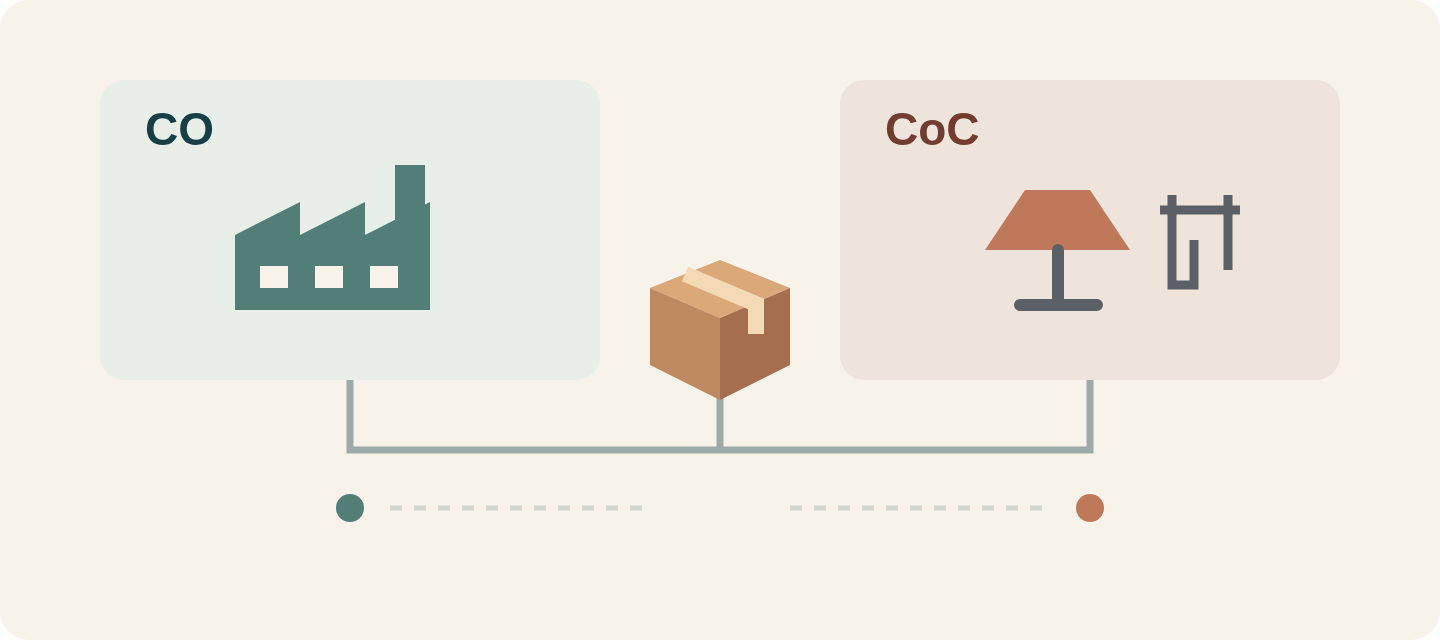
A certificate of origin concerns where goods qualify as originating. A certificate of conformity concerns whether specified goods meet stated requirements. The first is commonly abbreviated CO or C/O; the second is often CoC. Capitalization and filenames are unreliable substitutes for the actual document title, issuer and applicable scheme.
For a purchase from Mainland China, you may need one, both, or a different form of evidence. The answer depends on the goods, destination, customs treatment and relevant product rules. Asking for “all certificates” can produce a thick folder while leaving the one requirement that matters unresolved.
Two documents, two jobs
Keep the distinction visible in your purchasing file. Origin is not a general quality rating, and conformity is not a statement that the goods qualify for a particular tariff. The comparison below describes their different functions; it is not a universal list of mandatory fields.
| Point to compare | Certificate of origin | Certificate of conformity |
|---|---|---|
| Main purpose | Evidence of the goods' origin under applicable rules. | Evidence of conformity with requirements identified by a particular scheme. |
| Key question | Where do these goods qualify as originating? | Which requirements do these goods meet? |
| Important references | Goods description, origin information, exporter and relevant consignment details. | Product or model identification, standards or regulations, issuer and applicable scope. |
| Common use | Customs origin requirements or an eligible preferential-tariff claim. | A destination's product conformity process or another specified assurance requirement. |
| Not established by the title alone | Safety, performance, authenticity of a brand or eligibility for every trade preference. | Chinese origin, preferential tariff eligibility or approval in every country. |
Scope of origin evidence
The International Chamber of Commerce describes certificates of origin as evidence of the origin of traded goods and distinguishes preferential from non-preferential certificates. That distinction matters: a document establishing origin is not automatically the document required to claim a reduced duty under a trade agreement.
For China, the Customs rules effective from 1 September 2024 identify Customs and the China Council for the Promotion of International Trade, together with their relevant local institutions, as issuing authorities. Exporters or manufacturers can apply, including through an authorized agent. Different types of origin certificate exist, and special rules in the relevant preferential arrangement can apply.
This explains why an exporter on an origin document need not be the factory that assembled the goods. A trading company may sell and export goods produced by another Mainland company. The relationship needs evidence, but different names are not, by themselves, proof that the document is false.
It also explains why “shipped from China” is an incomplete answer. The CCPIT Sichuan explanation links Chinese origin to goods wholly obtained or sufficiently manufactured or processed in China under the applicable rules. A warehouse address or a loading port does not replace that analysis. Avoid treating every item bought from a Chinese seller as automatically Chinese-origin goods.
Start with the destination broker's actual requirement. Record the certificate type or origin evidence requested, the trade arrangement if any, and the goods it should cover. A general request for a “China CO” is too vague when the buyer expects a specific preferential claim.
Conformity requirements
“Certificate of conformity” does not identify one worldwide Chinese export document. Read what the particular document certifies, who issued it, which products it covers and which rules it references. A supplier's own statement, an independent test report and a regulator-recognized conformity certificate may contribute different evidence; their labels do not make them interchangeable.
Mozambique provides a concrete example. Its conformity assessment programme covers goods within its regulated scope. Intertek's Mozambique programme information describes conformity assessment against applicable Mozambican technical regulations and standards in the exporting country. This is a destination-specific process, not a rule that every shipment from China requires the same CoC.
The INNOQ programme FAQ explains that product scope and assessment routes matter, and that existing certificates can support an application without automatically replacing its requirements. Consult the current regulated-product list and the authorized programme operator before arranging shipment. Do not assume that another country's certificate will be accepted or that the same paperwork can always be obtained after departure.
The word “shipment” also needs care. A conformity scheme may define coverage by an order, consignment, product registration or another route. Do not infer from a single example that every CoC covers exactly one container or remains valid for all future orders. Obtain the applicable coverage conditions from the scheme and issuer.
One order, separate evidence
Consider a hypothetical purchase of two table-lamp models from a Mainland trading company. One has a ceramic base; the other has a metal base and a different electrical assembly. Both will ship together. This example illustrates document matching; it does not classify either lamp under a particular country's regulated-product list.
The origin file addresses the relevant origin rule and supporting production information. The conformity file addresses the requirements applicable to the actual product models and destination. A single invoice listing both lamps does not demonstrate that a test or certificate for the first model also covers the second.

Suppose the supplier sends an origin certificate and a conformity document that names only the ceramic model. You have two different findings: the origin evidence has arrived, while conformity coverage for the metal model remains unresolved. Asking for “a better CO” will not resolve the missing product scope.
Now reverse the problem. Both models appear on the conformity evidence, but the buyer expected preferential origin documentation and received a non-preferential certificate. The product evidence does not cure the origin-document mismatch. Give the supplier and broker the exact missing requirement rather than calling the entire file simply “invalid.”
A third possibility is an ordinary naming difference. The invoice uses a commercial English name, the Chinese business licence uses a Chinese legal name, and the certificate identifies an exporter. Build the relationship between those entities and roles before deciding there is a contradiction. If the proposed manufacturer changes, revisit any evidence that depended on that factory.
The company behind the paperwork
Documents become more useful when the buyer knows who supplied them. Ask for the contracting seller's Chinese legal name and Unified Social Credit Code, then identify the exporter, manufacturer and certificate holder where relevant. These can be the same company, but do not collapse them into one name just to make the file look tidy.
Use Chinese company search to check the registered business identity. If the supplier has provided a licence image, business licence verification can support checking the company information shown on it. Keep the exact registered name alongside the supplier's English trading name in your purchasing record.
That step connects your commercial counterparty to the documents. It does not authenticate a certificate of origin, determine a product's conformity or replace the relevant issuer's verification service. A valid company record and a valid product certificate answer different questions; neither automatically proves that the delivered goods match the order.
If a trading company sends a factory's certificate, ask how the named factory relates to the proposed production. If an agent sends the origin document, identify the exporter it represents. Preserve the supplier's explanation and supporting records instead of silently editing names to match across PDFs.
Keep authenticity and suitability as separate decisions. A genuine document can still be unsuitable for your order: the wrong origin-certificate type, a different product model, an unrelated certificate holder or a destination programme outside its scope. Conversely, an unexplained discrepancy is a reason to investigate, not permission to label a supplier fraudulent. Ask the issuing body or responsible programme operator to resolve questions about its own document.
For example, a sales assistant may send a certificate from a previous order because the products look alike. First establish whether it is offered only as a sample of the supplier’s past experience or as evidence covering your purchase. Those are different claims. Mark a reference sample as such and request the evidence required for the current order; do not let a sample quietly become the document on which the shipping decision relies.
For a deeper origin-specific review, our Chinese certificate of origin guide covers issuance, shipment matching and origin questions. Keep that verification work separate from the conformity review. Using two clear review records makes it easier for the broker, buyer and supplier to see which issue is still open and who needs to answer it.
A clear request before booking
Send a short, specific document request once the product and destination are known. It should separate the origin requirement from the product requirement and name who will confirm each. The following is a purchasing template, not a claim that every export requires both documents.
For this order, please confirm the origin evidence required by our destination broker and the product-conformity evidence required by the applicable destination scheme. Give each document's full title, proposed issuer, covered goods or models, and the names of the exporter and manufacturer. Identify any model, quantity or production-site change that would require an update before shipment.
Attach the current product list and purchase reference. A request based on an earlier sample, an old model name or last year's destination can produce plausible documents for the wrong transaction. Agree which party will resolve scope questions with the broker or programme operator, and keep its written response with the order.
Before the shipping deadline, compare the received documents with that request. Record a specific outcome for each: received and matched, awaiting confirmation, or correction required. Check whether the issuer's process requires a replacement or amendment; do not alter an issued document yourself.
The practical goal is a coherent shipment file: the right origin evidence, the right conformity evidence where required, and an identified Chinese supplier behind the goods. Two documents with impressive titles are not enough. Each must answer the particular question for which you requested it.